


(April 12, 2026) Over a decade ago, while he was still learning his ropes as a trainee chef, Kamal Sen was asked to showcase his cooking skills before a senior chef. He quickly put on his apron and got down to the job. As luck would have it, his preparation got slightly burnt. He later confessed that his attention had been divided in the kitchen, perhaps due to the multiple tasks involved. The calm and composed senior chef then gave him a piece of advice — “First, learn to respect the fire,” he said. This lesson stayed with Kamal throughout his journey. It made him want to learn more, understand better, and take the craft seriously.
“Kitchens teach humility very quickly; you cannot fake your presence. Cooking is not work done in isolation — what we do affects guests, colleagues, and everyone working with us,” smiles Kamal Sen, Executive Chef at Hyatt Regency, Pune, in a chat with The Global Indian.
“For me, leadership in the kitchen is about clarity, accountability, and setting the right example every day,” says the chef, who has worked in some of the best kitchens in India and Sri Lanka. He is well known for Indian cuisine, Asian flavours, Sri Lankan food, Mediterranean cooking, and global contemporary menus. Kamal brings over 11 years of experience across luxury hotels, world-class resorts, and pre-opening projects. His strength lies in combining modern operational practices with strong kitchen fundamentals, while building teams that perform consistently under pressure.
Inside a demanding first kitchen
Chef Kamal’s professional foundation was built at JW Marriott Aerocity, New Delhi, where he was part of the pre-opening team. “That environment was demanding and very structured. Standards were clear, systems were strict, and expectations were high,” recalls the senior chef, pointing out that consistency mattered more than creativity.
Everyday work there meant long hours, repetitive tasks, detailed prep, and constant checks. It was physically exhausting at times, but it taught him discipline and patience. “Quality is built through repetition, not excitement,” says Kamal, who also worked at Roseate Hotel in New Delhi.
Lessons from Sri Lanka
Working in Sri Lanka was a completely different experience for Kamal. As a Sous Chef at Amari Galle and later as Chef De Cuisine at Weligama Bay Resort & Spa, he worked in kitchens where food was deeply connected to local produce. “Sri Lankan cuisine doesn’t hide behind complexity. It is bold, direct, and honest,” says Kamal. His daily routine there involved working closely with local suppliers, managing kitchen operations, mentoring young cooks, and adjusting to a different pace of life.
Learning to adapt in another country
“Living in another country teaches humility. You learn to listen, adapt, and respect cultural differences. That phase shaped me enormously, both personally and professionally.” From managing all-day dining restaurants and executing multi-cuisine menus to leading diverse kitchen teams, this phase added a different dimension to his professional growth.
“Working in an international environment strengthened my adaptability, people management, and operational decision-making,” says the chef, who believes that food is always collective. This is a thought that he carries with him every day. Over the years, cooking moved beyond execution and became a responsibility to deliver consistency, uphold standards, and lead teams.
The business of ingredients
Ingredient sourcing is always a top priority for Kamal. “Over the years, I’ve learned that where an ingredient comes from makes a difference — not just to flavour, but to how you treat it.” He believes local produce reflects the region, the season, and the people behind it, and therefore prefers sourcing locally.
Vendor coordination and procurement form key part of his role. Ensuring hygiene, quality, and food cost controls, and liaising with senior management to align operational and financial objectives, are also part of his everyday work. Once service winds down, he reflects quietly on the day — what worked, what didn’t, and what can be improved. “The days are long and physically tiring, but routine and structure help keep things balanced.”
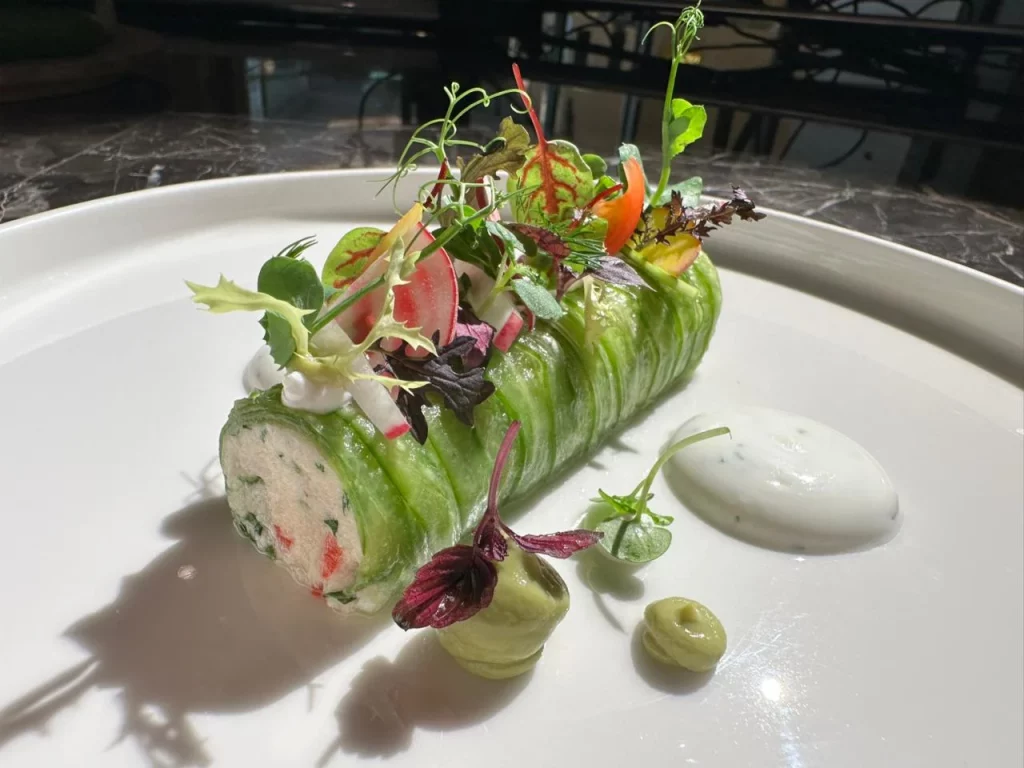
“Working closely with local suppliers teaches patience. It taught me that availability isn’t guaranteed every day, and that we must adjust rather than force ideas, while building respect for farmers, vendors, and everyone involved in the chain,” says Kamal. He believes that good ingredients don’t need excessive handling. “They don’t need to be overstyled or overworked. They need understanding and restraint. Seasonality teaches humility — it reminds us that we can’t control everything.”
Inside his current role
At Hyatt Regency, Pune, Kamal’s daily routine involves overseeing complete kitchen operations, menu planning and innovation, staff scheduling, training, and performance monitoring.
His days usually start early. “Mornings are important because that’s when planning and clarity happen. I spend time reviewing the day ahead and speaking with the team.” As the day progresses, he stays deeply involved — checking preparations, tasting food, supervising work, guiding team members, and handling unexpected issues.
He firmly believes that being present in the kitchen is essential. “You understand much more by watching things unfold rather than hearing reports later. Evenings are the busiest and most intense — that’s when execution matters most.”
A Delhi upbringing
Born in New Delhi, Kamal completed his schooling at Sri Guru Tegh Bahadur Khalsa School. He grew up in a middle-class household where life followed a steady rhythm. There wasn’t a constant conversation about success or ambition. “The focus was on responsibility — showing up where you were supposed to, doing your work honestly, respecting people, and not taking shortcuts,” recalls Kamal, whose early years were shaped by routine and discipline.
The power of observation
Kamal was among those who took his education seriously. “I wouldn’t say I was a brilliant student, but I was sincere and consistent. I did what was expected of me.” Along with academics, he enjoyed sports and group activities. He liked being part of a group where effort was shared and responsibility mattered. “I observed more than I spoke, paying attention to how people handled pressure, how elders behaved, and how small habits shaped daily life.”

Stepping into hospitality
At that stage, food had no special meaning for him beyond being part of routine. “Meals were eaten together, and that was it. I never imagined cooking would become my profession later on.” Kamal went on to study at the Institute of Hotel Management, Srinagar, where he completed his Bachelor’s degree in Hospitality and Hotel Management. To broaden his understanding, he also completed a B.Com in Tourism Management from Indira Gandhi National Open University (IGNOU).
Composure under pressure
While cooking, Kamal remains sharply focused. He says kitchens demand presence — not just physical, but mental attention — as chefs have to multitask, ensuring taste, timing, hygiene, coordination, and people, all at once.
“Mentally, I try to stay calm. Kitchens react instantly to energy. Panic or aggression moves quickly through a team,” says Kamal, who has learned that steadiness creates confidence, which in turn creates better work. “For me, cooking feels meditative. Once involved, everything else fades into the background.”
Personal food choices
So what kind of food does Kamal personally like to eat? “When people work closely with food all day, their relationship with eating changes,” smiles Kamal, for whom his own food choices have become simpler over time. Homestyle Indian food is what he enjoys most — rice, dal, vegetables, and simple, well-made curries. “It makes me feel grounded, reminds me of routine and balance.” He also enjoys seafood, especially when it’s fresh and cooked cleanly, without too many layers or unnecessary flavours.
“I’ve realised that simple food carries a certain honesty. It doesn’t try to impress you, but it stays with you. That’s something I value deeply,” says the executive chef, who doesn’t look for elaborate meals when he sits down to eat. “I look for comfort.”
Indian cuisine has always remained close to his heart, as it has shaped his palate from the beginning. “What makes Indian food special is its diversity. Every region, and often every household, has its own interpretation. That depth is rare.”
However, he does not believe that any particular cuisine is “the best.” “Every cuisine comes from its own geography, climate, culture, and necessity. As a cook, I try to approach all cuisines with respect rather than comparison.” He focuses on understanding balance, flavour, texture, and execution — regardless of cuisine. Rather than comparing cuisines, he believes the strength of a chef lies in respecting each cuisine’s identity and executing it authentically.
Beyond cooking
Outside the kitchen, Kamal enjoys travelling, particularly to places where he can observe everyday food culture. “Local markets, street food, and small kitchens teach honesty. They remind me why food exists beyond presentation.”
He also values quiet time. “Reading, thinking, and stepping away from constant activity helps me maintain balance. In an industry that moves fast, these pauses are necessary to stay grounded.” He believes no one builds a journey alone. “Every stage of my life and career has been shaped by people — mentors who guided me, peers who supported me, juniors who trusted me, and many others whose work often goes unnoticed.”
At this stage of his career, Kamal plans to focus on mentoring younger chefs. He wants them to feel supported, understand that mistakes are part of learning, and recognise that dignity matters just as much as skill. “If I can help build environments where people can grow steadily without fear or burnout, I would consider that meaningful work,” he signs off.
- Follow Chef Kamal Sen on Instagram
ALSO READ: Chef Anuj Sarkar: From global kitchens to Gauri Khan’s Torii, a culinary destination with SRK ties