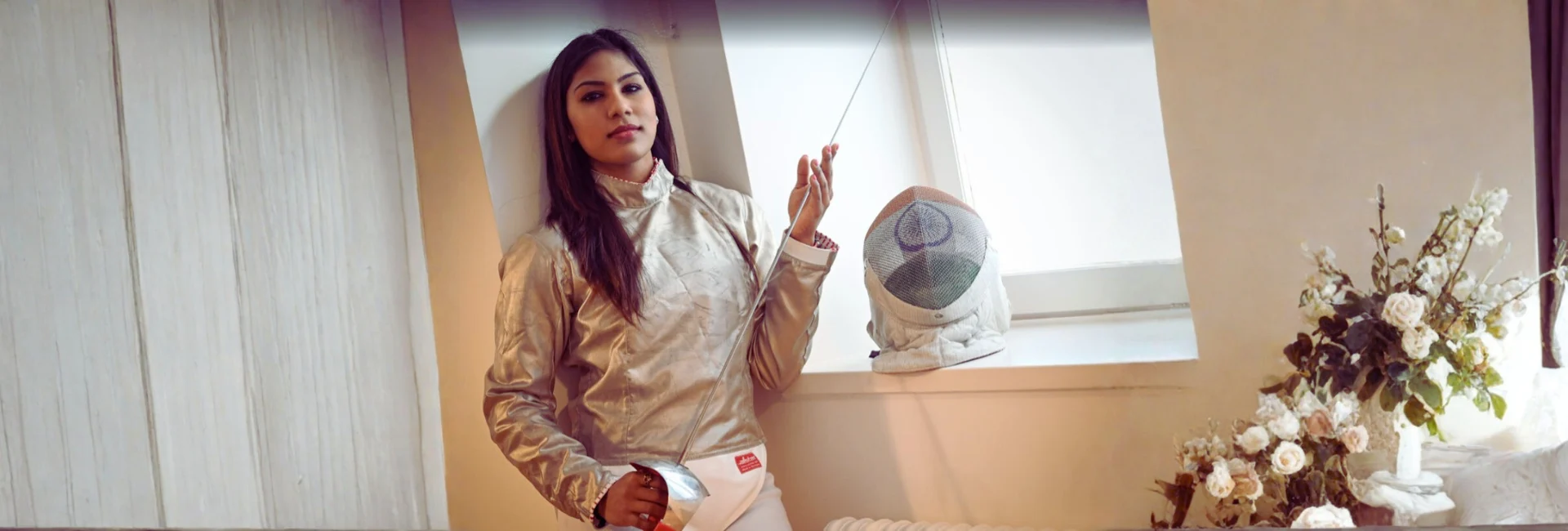


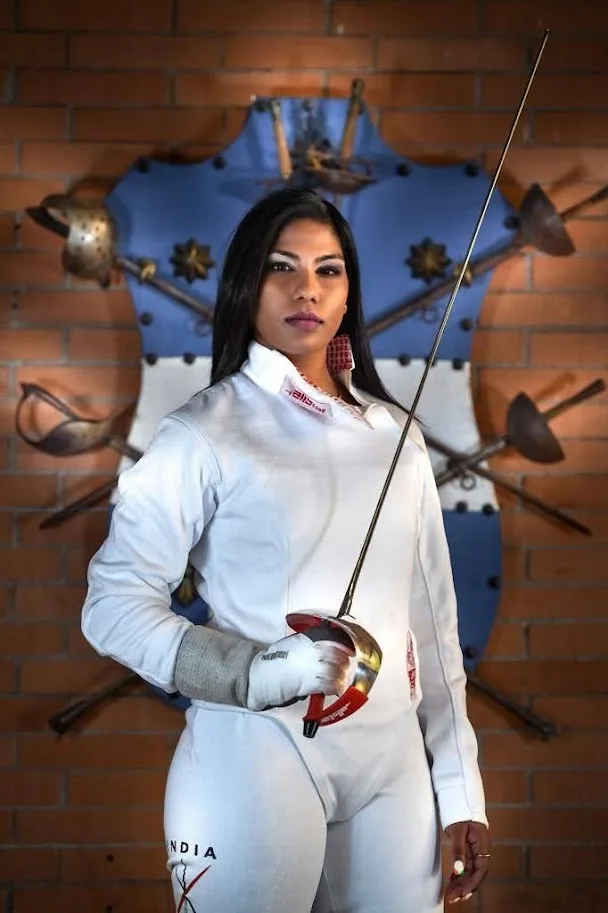
(March 7, 2026) In a country where cricket is religion and badminton commands primetime, fencing was once a whisper. So when Chadalavada Anandha Sundhararaman Bhavani Devi stepped onto the Olympic piste (fencing strip), she altered India’s sporting vocabulary. Children who had never heard of sabre fencing suddenly Googled it, sports federations recalibrated priorities, and media attention flickered towards a once-obscure discipline.
Having picked up a sabre not out of strategy but by chance, she went on to become the first Indian fencer to qualify for the Tokyo 2020 Olympics, won a double gold at the Commonwealth Championships, and also became the first Indian to win a bronze at the Asian Championships in 2023.
“The science of sabre fencing is explosive. Bouts are short and margins microscopic. Preparation, however, is exhaustive. In fencing, hesitation costs milliseconds and matches,” smiles ace Indian fencer and Arjuna awardee CA Bhavani Devi, in conversation with Global Indian.
Having overcome a mountain of challenges to reach where she is today, Bhavani’s journey embodies discipline, defiance and destiny.
PM Modi’s praise
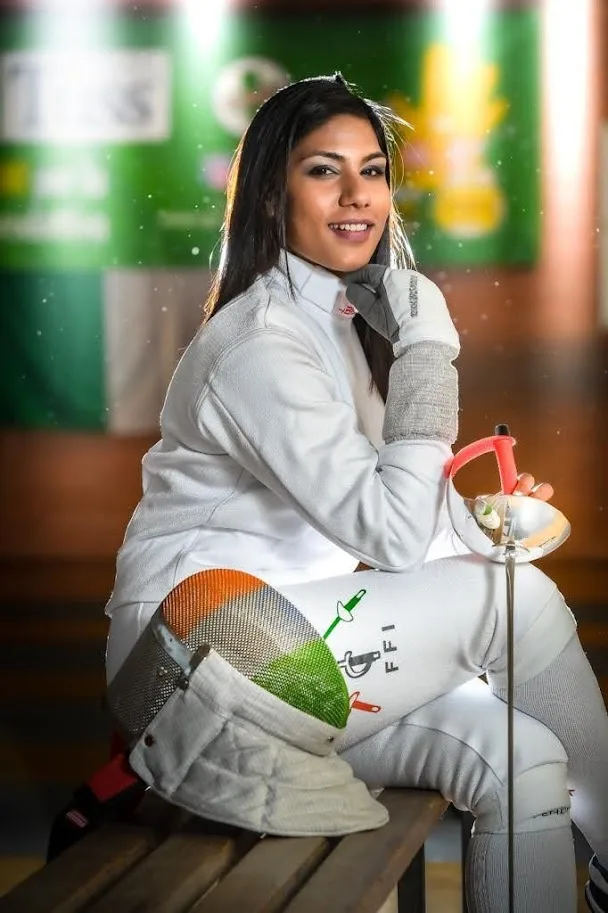
“Fencing is about drawing lines, about distance and precision. It is about the space between attack and defence,” says Bhavani, who has drawn a new line for Indian sport, one that stretches to the world stage. Even Prime Minister Narendra Modi lauded her commendable performance at the Tokyo Olympics.
International events
Beginning with a bronze medal in sabre at the 2009 Commonwealth Championship held in Malaysia, Bhavani has bagged many laurels, including bronze at the 2010 International Open held in Thailand, bronze at the 2010 Cadet Asian Championship held in the Philippines, and another bronze at the 2010 Asian Championship held in the Philippines.
She also won silver and bronze at the 2012 Commonwealth Championship held in Jersey and went on to win silver in the under-23 category at the 2014 Asian Championship held in the Philippines, becoming the first Indian to do so.
The Turkey experience
Bhavani’s first representation overseas began with the Cadet and Junior World Fencing Championship in Turkey in 2007. She had just completed class 10 and joined the Sports Authority of India Centre in Thalassery, Kerala. The expenses of travelling and buying equipment for fencing were not easy for Bhavani’s family. “My mother had to borrow money from friends and family to meet the expenses,” recalls the ace fencer, who was 15 then.
Learning the hard way
But her first international competition ended even before it began. Delayed by minutes to the venue in Turkey, she received a black card, meaning disqualification. She never got to compete.
For many, such a debut might have scarred confidence. For Bhavani, it forged precision. “Timing became sacred and preparation became meticulous. From packing equipment to travel schedules, I would never again allow a preventable error to cost me an opportunity,” says Bhavani, describing her Turkey experience as harsh but permanent in its lessons.
The Olympic threshold
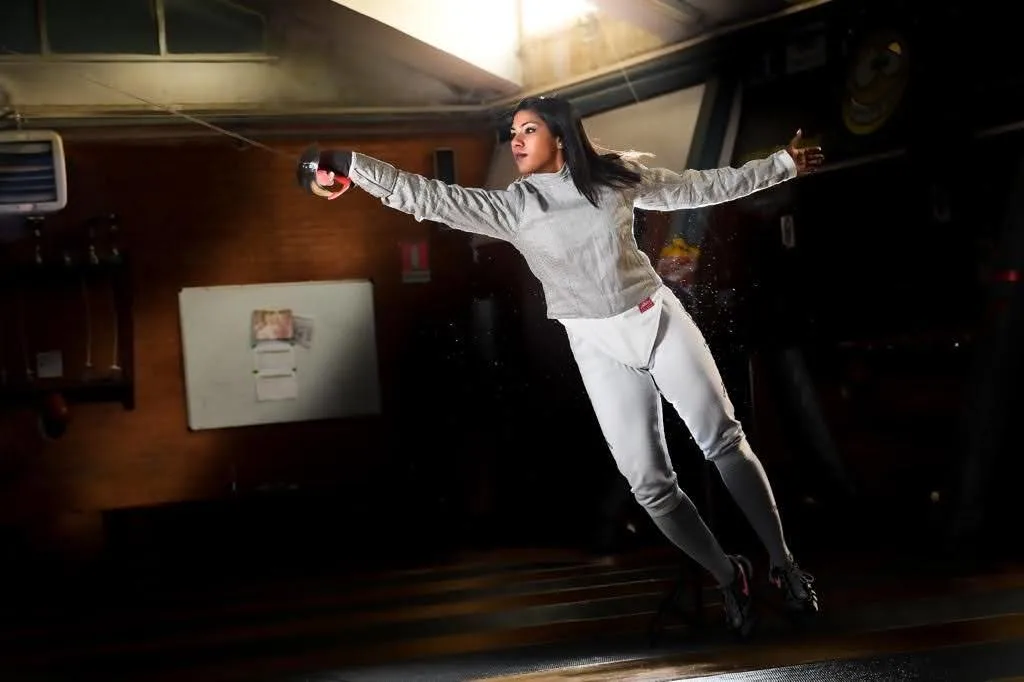
“Olympic qualification is not a moment; it is a marathon of rankings, points and relentless travel,” reflects Bhavani, for whom the campaign coincided with personal grief. She lost her father a year before the Tokyo 2020 Olympics. Bhavani chose to let grief fuel her ambition. When she qualified for the Tokyo Games, the weight of history settled on her shoulders.
“I was not simply representing myself or Tamil Nadu. I was representing an entire discipline that had never before seen Olympic light,” says Bhavani, who made history by becoming the first Indian to win a gold medal at the Senior Commonwealth Fencing Championship in Australia in 2018 in the sabre event.
India at Olympics
At the Tokyo Olympics, her mother watched from the stands, just metres away from the piste. Pandemic restrictions had limited attendance, but the image was indelible: a daughter fencing at the highest stage, a mother witnessing the culmination of sacrifice.
“It was indescribable, joy braided with longing. I wished my father could have seen it too. The bout itself mattered, but the qualification mattered even more. India was finally in Olympic fencing.”
At Commonwealth
A major highlight in Bhavani’s journey was the double gold at the Commonwealth Championships. But there was a complexity. Fencing is not part of the Commonwealth Games programme. Instead, a separate championship is held every four years. “The medals are prestigious but lack the mass attention of Games inclusion. Still, they signalled validation for myself and for Indian fencing,” says Bhavani, who broke a 44-year-old fencing record by winning gold.
Asian Championship
At the 2023 Asian Championships in Bangkok, Bhavani secured bronze, the first Asian Championships medal for an Indian fencer. “On a continent dominated by powerhouses like Korea and China, the podium felt tectonic.”
She speaks of the 2022 Asian Games in China with a mix of pride and regret. After ranking first in the pool rounds, she lost in the knockout stages, a reminder that emotional equilibrium is as critical as physical conditioning.
“It taught me to stay calm in all situations. Calm in fencing is not passive. It is alertness without panic, reaction without haste,” says the fencing champion, who also won bronze at the 2015 Under-23 Asian Championship held in Mongolia and the 2015 Flemish Open held in Belgium, for which the then Tamil Nadu Chief Minister J Jayalalithaa honoured her.
The last name on the list
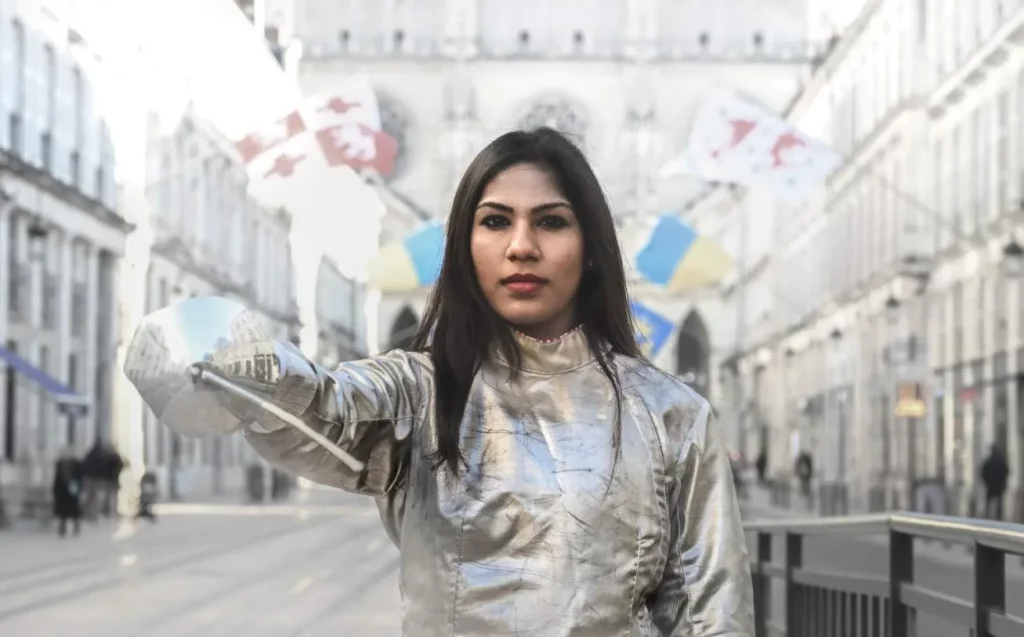
Bhavani took her first steps in fencing in 2004 while studying at Muruga Dhanushkodi Girls’ Higher Secondary School. In sixth standard, when senior students visited her classroom to introduce five new sports, each with limited slots, fencing was the final option left by the time her turn came. “I signed up just out of curiosity,” recalls Bhavani, who had already enrolled in singing classes, Bharatanatyam, taekwondo and even squash before trying fencing. “I just loved doing different things.”
Sport sharpened her mind
She lost her first school event and watched classmates collect medals. “The disappointment was sharp but clarifying,” says Bhavani, who realised that if she could feel so deeply about losing, she cared deeply about winning too. She began training seriously. Bhavani was not a top academic performer before she took up fencing, but the sport sharpened her mind. “Discipline seeped into studies and marks improved. The blade, it seemed, was teaching more than footwork.”
The discipline of dawn
For five years, Bhavani’s life followed an almost monastic rhythm. At 5 a.m., she would board a bus from home to Nehru Stadium in Chennai. After training till 8.30 a.m., she took another bus back to school.
“Parents would sometimes wait midway to hand over breakfast and lunch,” smiles Bhavani, for whom the first period at school became breakfast hour. Once her classes ended, she would return to the stadium until 8 p.m. “This was my everyday schedule for five years,” says Bhavani, who has won 17 medals and ranks 40th in sabre fencing with 33.5 points.
Bhavani trained under the hot sun. “I couldn’t afford to buy an electric sword and often borrowed swords from other players while going for tournaments,” says Bhavani, who completed her bachelor’s degree in Business Administration at Government Brennen College, Thalassery in Kerala.
Nationals
Her national representation began in 2004 at Madhya Pradesh. Since then, she started playing sabre professionally while training at Jawaharlal Nehru Stadium in Chennai. By the under-14 nationals, she had won gold for Tamil Nadu, the state’s first in that category. By under-17, she was defeating senior-level fencers. The arc of her rise was swift but never accidental. Bhavani later pursued an MBA from St Joseph’s Engineering College in Chennai.
Mother’s role
Bhavani was born in 1993, to CA Ramani and C Anandha Sundhararaman in Chennai, Tamil Nadu. Ramani is a homemaker and Anandha Sundhararaman was a priest. Bhavani is the fifth child in a middle-class family, with two brothers and two elder sisters. Her mother stood firmly behind her journey while her father was a pillar of encouragement.
“On competition days, if fees were due, she would return home to arrange money and come back. There was no fundraising or corporate sponsorship, just quiet, persistent sacrifice,” says Bhavani, who missed many international events because her family could not afford the travel expenses. Yet, her mother did not give up.
Challenges
Financial struggle was one opponent; lack of exposure was another. “I faced many challenges in the initial days while travelling alone. I was not fluent in English. Finding pre-booked hotels and communicating with people was a tedious task.”
Many people asked her parents to stop her from travelling alone to international competitions. “But I was not ready to give up. I just wanted to win for India,” says Bhavani, who was inspired by athletes like PT Usha and Sania Mirza. Her idol is American fencer Mariel Zagunis.
Fighting more than opponents
“Talent alone does not forge champions. Infrastructure, funding and awareness shape possibility, and in early 2000s India, fencing had very little of any,” says Bhavani. Entry fees for competitions, ₹100 or ₹200 per category, were burdensome. “Equipment was expensive and difficult to source. If a sabre broke, replacement was not immediate. So I trained with sticks to preserve actual gear for tournaments,” recalls Bhavani.
Training in Italy
Currently training in Italy under coach Nicola Zanotti, who has been her coach since 2016, Bhavani toggles between morning and evening sessions. “There is little off-season. Even rest periods are active recovery. Consistency is the only secret,” she says. Training abroad helped her improve her fencing skills while also shaping her as a person. “Training with the best athletes has been a learning experience. I learned how they handle success and failure and prepare for competitions.”
Reaction time
Warm-ups before competition can last up to 45 minutes, activating muscles from head to toe. “Reaction time is everything,” says Bhavani, whose training spans five to six hours daily: physical conditioning, sprint work, agility drills, weight training, physiotherapy, technical sessions and tactical bouts.
The invisible opponent
Bhavani suffered several injuries during her journey but emerged stronger each time. In 2015, a lower back injury tested her resilience. Pain became a familiar undertone. In June 2024, during the Asian Championships, a shoulder injury escalated. She completed the tournament, including the team event, before realising the severity. “The next day, I could not lift my arm. Physiotherapy followed and tournaments continued.”
Surgery in Rome
In November 2024, she opted for surgery in Rome. “Recovery demanded a new kind of strength, stillness. I was alone in the hospital. My mother, unwell herself, remained in India. The night after surgery, panic crept in.”
For someone who had trained daily for over a decade, being told not to move her arm was psychologically destabilising. A psychologist helped recalibrate her mindset. “Rehabilitation became training of a different kind, patience as muscle memory.”
Recognition
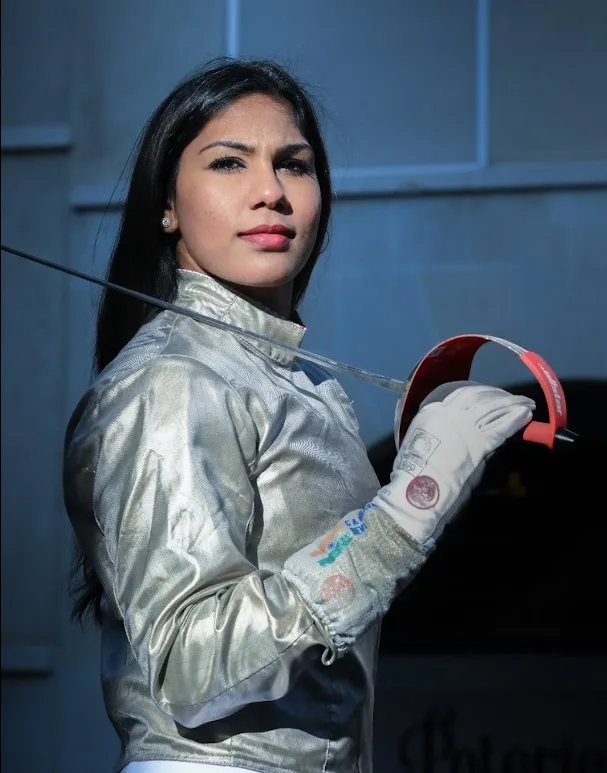
Bhavani received the Arjuna Award in 2021. A year earlier, when her name was absent, she felt disappointed. But the following year, pride took over. Though tournament commitments prevented her from receiving it from the President, she later accepted it from the Sports Minister.
Limited opportunities
Bhavani is passionate about popularising fencing. “It must reach schools and colleges. Infrastructure must deepen and access must widen,” says Bhavani, who believes that while there is immense talent around, opportunities remain limited.
Work and life beyond fencing
Ask her what defines a champion and she speaks of effort. “Just give your 100 percent. There is no room for ego, only work,” says Bhavani, who fought through financial constraints, emotional loss, injury and international pressure to reach where she is today.
Her mantra is simple: recovery first, return to form and strategy refinement. In 2015, she became one of the 15 athletes selected by the GoSports Foundation for the Rahul Dravid Athlete Mentorship Programme.
Off the piste, Bhavani enjoys reading, watching movies and listening to music. During rehabilitation, she also took to cooking and exploring subjects beyond sport.
- Follow CA Bhavani Devi on Instagram
ALSO READ: Bilquis Mir: Meet the first Indian woman on the jury of Paris Olympics 2024