
April 29 2026
Apeksha Niranjan: An Indo-Polish connection, and a global Bharatanatyam journey
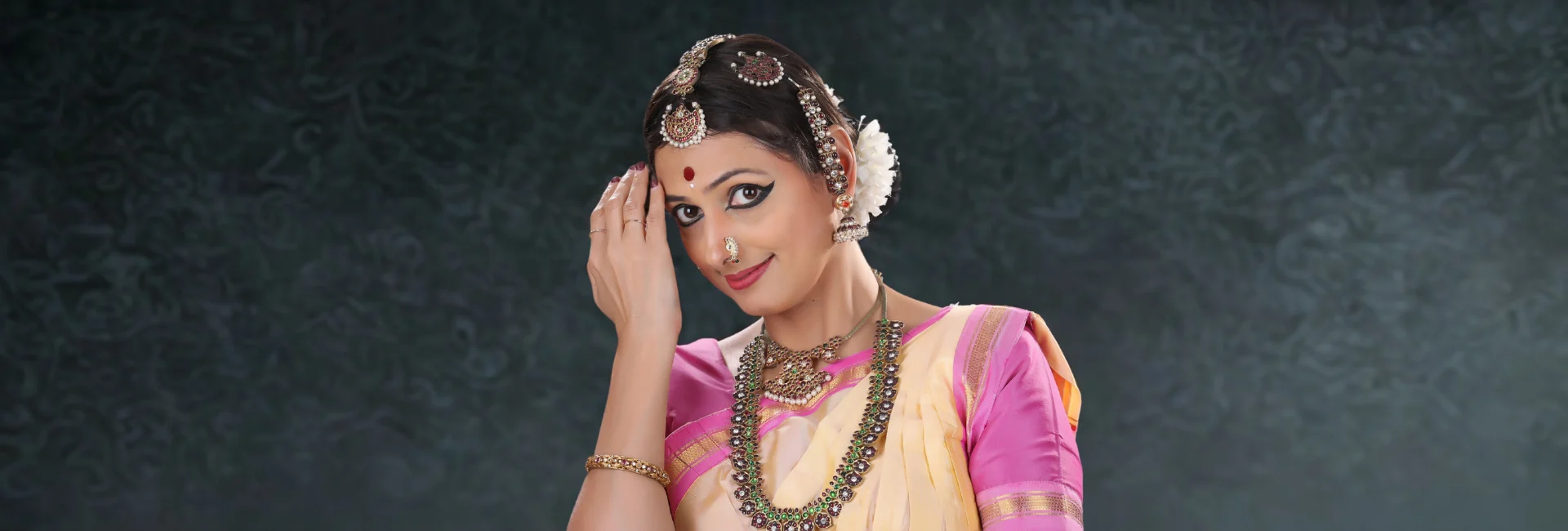
(April 29, 2026) Decades after Maharaja Digvijaysinhji Ranjitsinhji Jadeja sheltered Polish refugees during World War II, the story lives on in Apeksha Niranjan’s work. As displaced children arrived in India, he offered them refuge and dignity in camps such as Valivade. With a personal connection to this history, the Bharatanatyam exponent uses dance to preserve memory and build connection. Having performed nearly 50 recitals in Poland, she continues to carry this legacy to global audiences.
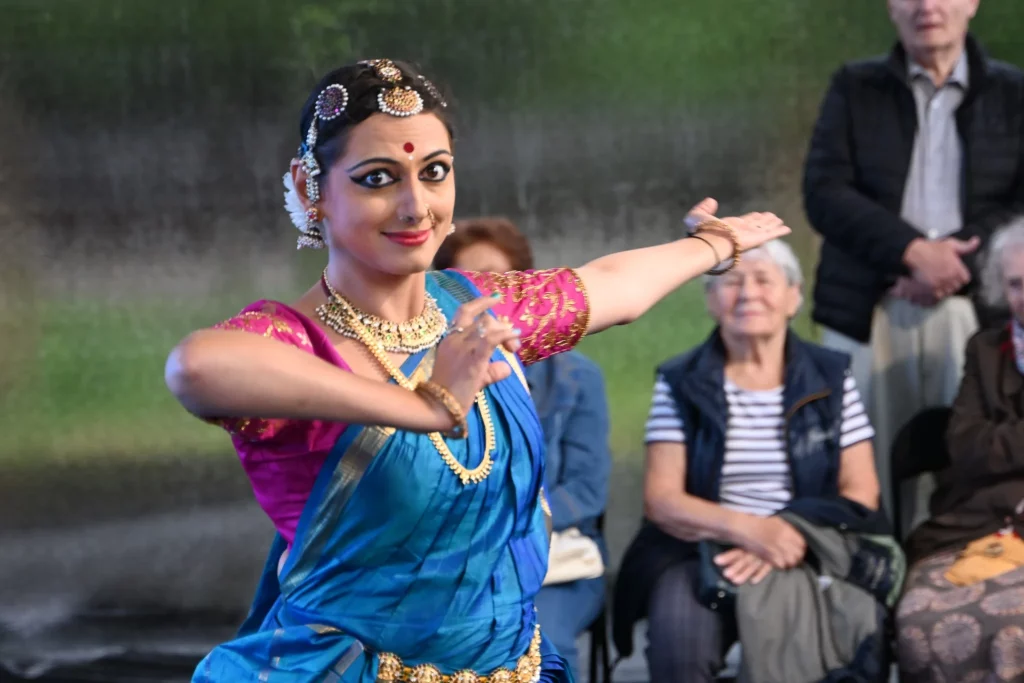
The first time Apeksha Niranjan performed in Poland, she stood backstage with a mix of excitement and quiet anxiety. The auditorium was filled with an audience unfamiliar with the grammar of Bharatanatyam: its mudras, its rhythms, its deeply layered storytelling. And yet, minutes into the recital, the audience were hooked. The stillness in the room turned into absorption; by the end, it dissolved into a standing ovation that lingered long after the final pose. “They didn’t know the language,” she recalls, “but they understood the emotion.”
That moment captures the essence of Apeksha’s journey, one that has taken a classical Indian dance form from the heart of India to global stages across France, United States, Canada, Italy, Georgia, Thailand, South Korea, and Sri Lanka, among others. A celebrated Bharatanatyam dancer, choreographer, teacher, and cultural ambassador, the 42-year-old has built a remarkable international presence, particularly in Poland where she has performed nearly 50 recitals and continues to deepen an extraordinary cultural dialogue between the two nations. On the occasion of the World Dance Day, she speaks exclusively to The Global Indian about bridging gaps through dance.
View this post on Instagram
The Poland connection
The danseuse’s global journey is deeply intertwined with a personal story that transcends borders. Her grandmother was Polish: one of the refugees who found shelter in India during World War II. That legacy would later shape her role not just as an artist, but as a cultural bridge between India and Poland.
Her first performance in Poland in 2019 was a homecoming of sorts. Invited by a cultural centre in Warsaw, she carefully curated her repertoire to connect emotionally with the audience. “I chose themes like the bond between a mother and child, Radha and Krishna, and the nine rasas. I wanted them to feel it.”
The response was overwhelming. “After the performance, they kept clapping. I didn’t understand what was happening at first. Then I realised: they wanted an encore.”
Over the years, she has performed 49 recitals in Poland, with her 50th milestone performance scheduled soon. The emotional resonance of her work is evident in the stories she shares. “One elderly woman came and touched my feet after a performance. She said she saw Lord Rama and his mother in my dance. Another young girl hugged me and cried because she was so moved.”
Today, Apeksha serves as a cultural ambassador for Poland House, an initiative that supports Indian children, particularly those affected during the COVID-19 pandemic. Through fundraising performances, she has used Bharatanatyam not just as an art form, but as a vehicle for compassion and connection.
“This is not just history,” she says of the Indo-Polish connection. “It is a story of humanity. When India helped Polish children during the war, it was not about nationality—it was about kindness. I want to share that story with the world.”
A Maharaja, a refuge, a shared history
For the Bharatanatyam exponent, the cultural bridge between India and Poland is not just artistic: it is deeply personal, rooted in family history and shaped by one of the most moving chapters of World War II.
“This story of Maharajas of India and Polish children is my personal story,” she says. Her grandmother was among the Polish refugees who arrived in India during the war, finding shelter in camps such as Valivdeh. It was there that her life took a new turn: she met Apeksha’s grandfather, Vasanta Kashikar, and the two eventually married.
What began as survival soon transformed into belonging. For Apeksha, this legacy is not just a piece of family history but a powerful emotional inheritance. “I know their sufferings, and I know the beautiful bond they share with India,” she explains. “When no one else accepted them, India opened its doors.”
This humanitarian gesture (led by Indian royals including Maharaja Digvijay Singh Ji and the King of Kolhapur) left an indelible mark on generations of Polish families. It is a story Apeksha now carries across the world through her performances. “It is not only about my history or Indo-Polish history,” she says. “It is a story of humanity. They did not help because the children were from Poland. They helped because they were children in need.”
Through her dance, she brings this narrative alive: often moving audiences to tears, especially in Poland, where the memory of India’s kindness continues to resonate deeply. For Apeksha, sharing this story is both a responsibility and a calling. “Whenever we have the opportunity to help someone, we should,” she reflects. “That is the message I want to spread across the world.”
View this post on Instagram
Where it all began
Born and raised in Kolhapur, Apeksha’s artistic journey began early, though not in the way one might expect of a globally acclaimed performer today. “At the age of six, I started learning Kathak, and two years later, Bharatanatyam,” she says. But unlike many dancers who grow up surrounded by live performances, her exposure was limited.
“There was no opportunity to watch live performances in my childhood,” she shares. Instead, her earliest influences came through television: particularly India’s national broadcaster Doordarshan. “I used to watch the National Programme of Dance, and I would get completely absorbed. That is what inspired me.”
Programs like Surabhi and even glimpses of classical dance through popular culture shaped her imagination. “I have faint memories of watching a serial presented by Hema Malini. Later I realised it was about a Kuchipudi dancer. These fragments stayed with me.”
What stands out is that Apeksha’s journey was not driven by access, but by intent. Her learning began under the guidance of Guru Pandit Badrinath Kulkarni and later continued through rigorous training in Mumbai at the Nalanda Dance Research Centre. Over the years, she trained under distinguished gurus including Dr. Alka Lajmi and Dr. Suchita Sapekar, absorbing both the discipline and the evolving possibilities of Bharatanatyam.
Even as a child from a middle-class family, the path was not easy. “Classical dance can be expensive,” she admits. “Costumes, jewellery, training: it was a responsibility for my parents. But they never stopped me. They always encouraged me.”
Taking Bharatanatyam global
What makes Apeksha’s performances resonate across continents is her understanding of Bharatanatyam as a universal language.
“Dance is not just external: it is internalised,” she explains. “Through Bharatanatyam, we express emotions, and emotions are universal. There are no barriers.”
Her performances in global cultural hubs like Paris stand out as defining moments. At Le Mandapa in France, she presented Nayanam, a deeply personal production. “The audience was saying ‘bravo’ during the performance. After it ended, they told me to come back again. That meant everything.”
While performing abroad, Apeksha adapts thoughtfully without compromising the integrity of the form. “I tweak my performances depending on the audience,” she says. “It should not be an overdose of unfamiliar concepts. But I also ensure I don’t lose the grammar of Bharatanatyam.”
This balance has led her to experiment with unique themes: from traditional mythology to scientific narratives like Marie Curie’s life, and even incorporating elements such as Gregorian chants to create cross-cultural resonance. “It’s about connection,” she says simply. “If they understand and feel it, then the purpose is fulfilled.”
Her work also extends into teaching through her institute, Nrityanjali Performing Arts, which she founded over two decades ago. With students across India and abroad (including Poland, the US, and Dubai) she continues to nurture the next generation of dancers.
“I always tell my students: don’t just become good dancers. Become good human beings. That is more important.”
Beyond borders: Art, identity, and the future
For Apeksha, global exposure has only deepened her identity. “My global experiences have made me a better artist and a better human being,” she reflects. “I have realised that art is beyond boundaries. We may start with our own culture, but we can connect with stories from anywhere.”
Her choreographic work increasingly reflects this philosophy: blending Indian classical frameworks with global narratives, without losing authenticity. Whether it is presenting Marathi abhangas, exploring women’s empowerment through Nari Shakti, or telling stories of Indo-Polish history, her work continues to evolve while remaining rooted.
She is also acutely aware of her responsibility towards the art form. “Bharatanatyam is over a thousand years old. It has survived because of discipline, devotion, and respect for its grammar. While innovation is important, we must preserve its purity.”
Looking ahead, her calendar is filled with international tours, workshops, and collaborative productions across Europe and beyond. Yet, at the heart of it all remains a simple intention: to connect.
“When I see audiences across the world responding to Bharatanatyam, I feel grateful,” she says. “Because it proves that art has the power to unite us in ways nothing else can.” From a young girl in Kolhapur watching dance on television to a global ambassador of Indian classical art, Apeksha Niranjan’s journey is as much about performance as it is about purpose.
- Follow Apeksha Niranjan on Instagram
ALSO READ: Ukraine’s Vijaya Bai: How Viktoria Burenkova promotes Bharatanatyam in Kyiv
Share with



Written By: Amrita Priya
Reshma Rajeev: Bridging cultures through Bharatanatyam in Trinidad and Tobago

Written By: Amrita Priya