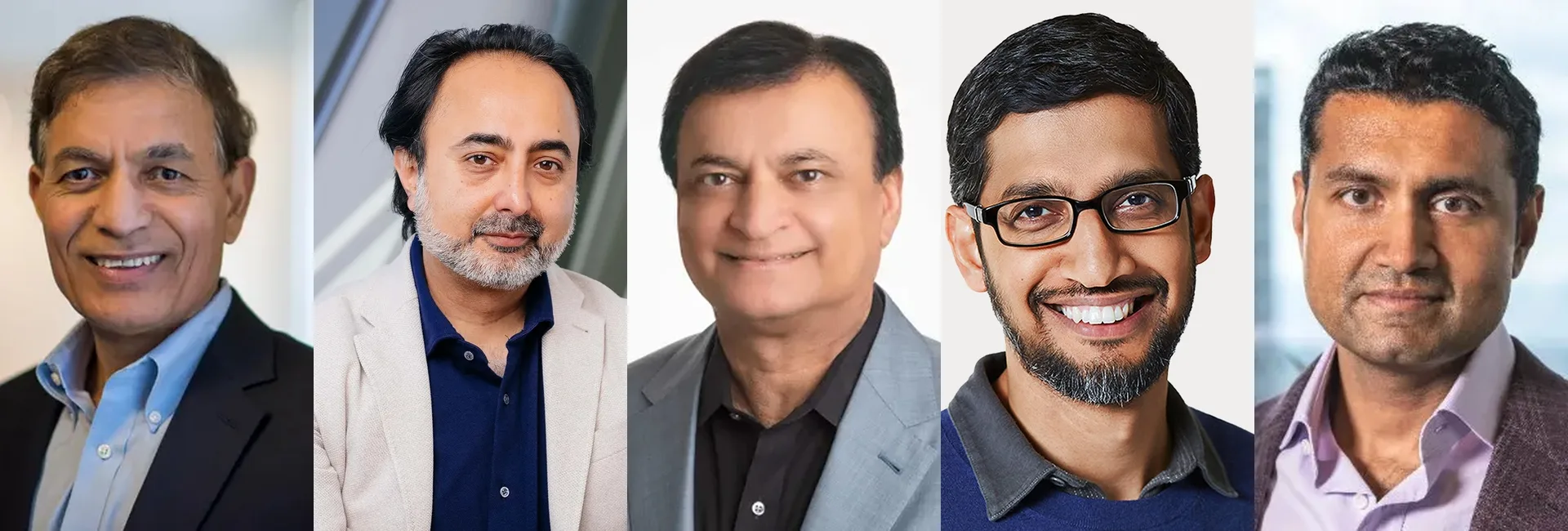


(April 11, 2026) “The American Dream is built on the audacious belief that anyone can make it to the top,” states the introduction to the Forbes 250: The Greatest Self-Made Americans list, released as the United States approaches its 250th Independence Day on July 4, 2026. The Forbes ranks the 250 greatest living self-made Americans from Oprah Winfrey, who rose from rural poverty to become a media mogul, to Harold Hamm, the 13th child of Oklahoma sharecroppers who built an oil empire, and David Steward, who grew up in a working-class family and went on to become a tech industry leader.
Among them are five Indian-origin names. The Indian presence on this list is defined by its range, stretching across cybersecurity, venture capital, IT staffing, big tech and artificial intelligence. These are not people who rode the same wave, rather each carved a distinct path, in a different decade, from a different starting point. Together, they offer a powerful portrait of how India has helped shape the American century. The Global Indian turns the spotlight on these five leaders.
Jay Chaudhry
Founder & CEO, Zscaler | No. 47 on the Forbes Self-Made 250
“The tech billionaire’s home in a village in India had no electricity or running water,” notes Forbes.
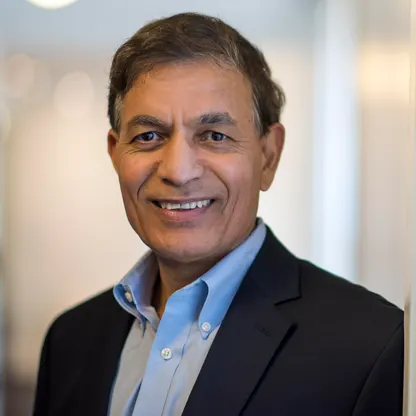
Jay Chaudhry grew up in Panoh, a small village in Himachal Pradesh where basic amenities were absent through much of his childhood. Evenings meant darkness, so he often stepped outside to study under the open sky. School required a daily walk of several kilometres, a routine that quietly built discipline early in life. His parents were subsistence farmers, and higher education was not an obvious path.
At 22, he left India for the first time, travelling to the University of Cincinnati on a scholarship. The move opened up a new world and set him on a path that would span multiple ventures. Over the next two decades, he founded and exited four cybersecurity companies, gaining both capital and conviction.
When he launched Zscaler in 2007, he focused on a cloud-first approach to security at a time when most systems relied on physical infrastructure. His belief that organisations needed to rethink how networks were protected has since become widely accepted. Zscaler today serves thousands of enterprises worldwide, and Chaudhry remains closely involved in shaping its direction.
Hemant Taneja
CEO, General Catalyst | No. 53 on the Forbes Self-Made 250
“The venture capitalist immigrated from India at 15 and worked full-time during high school to help support his family,” Forbes writes.
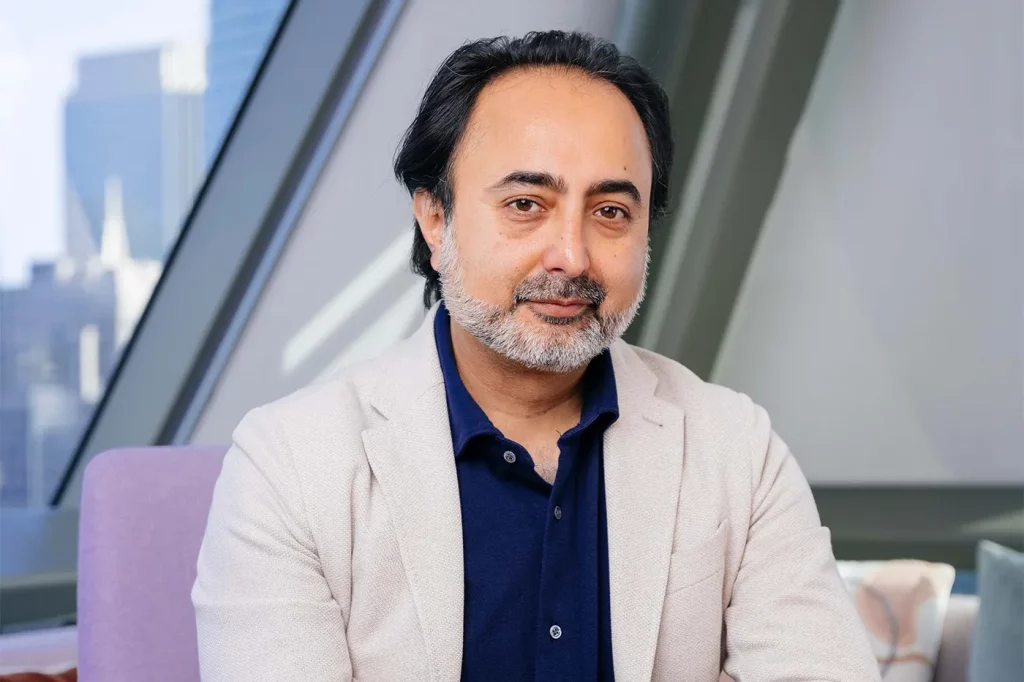
Hemant Taneja arrived in the United States as a teenager, joining his family in Boston at a time when adjustment came with immediate responsibility. He attended high school while working to contribute to household expenses, learning early how to balance competing demands.
At the Massachusetts Institute of Technology, he pursued studies across several disciplines, ranging from engineering to life sciences. This academic range shaped the way he approached problems later in his career, especially in fields where technology intersects with complex systems.
Taneja joined General Catalyst in 2002 and grew with the firm as it expanded its reach and influence. Over the years, he has backed companies that went on to define categories, including Stripe and Snap, as well as newer firms working in artificial intelligence. His work reflects a long-term view of innovation, one that considers both opportunity and consequence.
Now serving as CEO, he has become a prominent voice in conversations around how technology should be built and deployed, particularly in areas that carry wider societal impact.
Raj Sardana
Founder, Chairman & CEO, Innova Solutions | No. 85 on the Forbes Self-Made 250
“The IT billionaire spent his childhood in a 225-square foot government flat in India with no heat, refrigeration or phone. He came to Georgia Tech in the 1980s with $100,” describes Forbes.
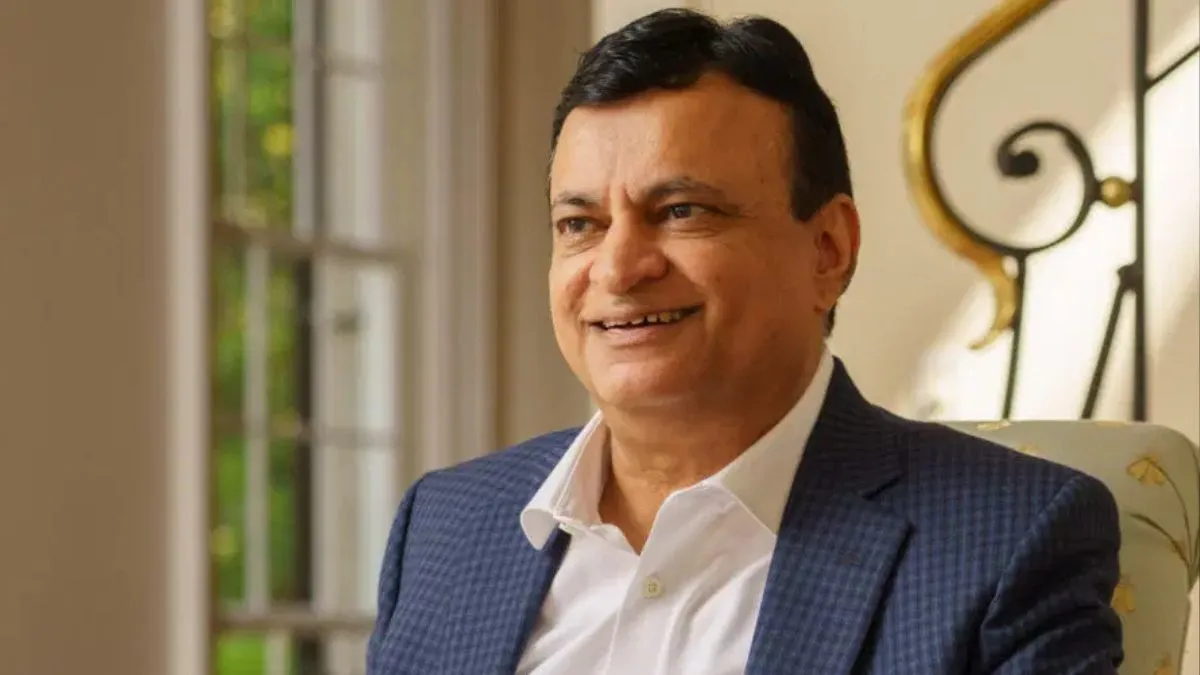
Raj Sardana grew up in Delhi in a one-bedroom government flat allotted to his family after Partition. His parents had rebuilt their lives from scratch, and their focus on education shaped his early years. Resources were limited, but expectations were clear.
He went on to study engineering in Delhi before moving to the United States in the early 1980s. Arriving with limited savings, he supported himself through part-time work while completing his degree at Georgia Tech.
Sardana began his career in the aerospace and defence sector, but a downturn following the Cold War brought that phase to an end. Faced with uncertainty, he chose to start his own company in 1998. What began as a small IT staffing firm grew steadily over the years into Innova Solutions, a global business with tens of thousands of employees.
His journey reflects persistence across changing circumstances, shaped as much by early constraints as by later opportunities.
Sundar Pichai
CEO, Google & Alphabet | No. 142 on the Forbes Self-Made 250
“Google’s current CEO slept in the living room of his family’s two-room apartment in India,” notes Forbes.
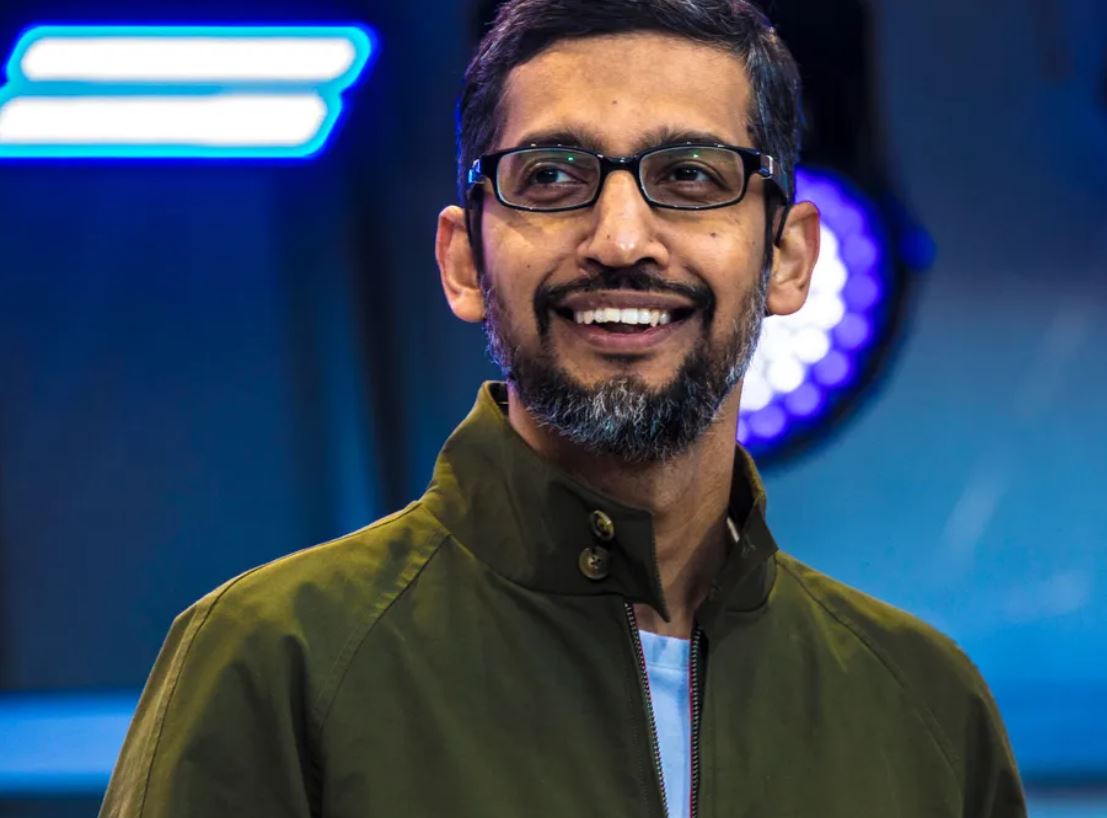
Sundar Pichai was raised in Chennai in a modest home where space was shared and resources were limited. He slept in the living room while the family managed within two rooms. His father, an electrical engineer, played an important role in introducing him to technology at an early age.
He studied metallurgical engineering at IIT Kharagpur before moving to the United States for further education at Stanford and later the Wharton School of the University of Pennsylvania. His academic journey laid the foundation for a career that would unfold steadily rather than suddenly.
After joining Google in 2004, he worked on several key products including Chrome and Android. Over time, he took on broader responsibilities within the company, eventually becoming CEO of Google in 2015 and of Alphabet in 2019.
Under his leadership, the company has expanded its focus on cloud computing and artificial intelligence while managing the scale and complexity of a global technology business.
Shyam Sankar
CTO & Executive Vice President, Palantir Technologies | No. 244 on the Forbes Self-Made 250
“Born to immigrant parents whose dry-cleaning business went bankrupt, Sankar is now Palantir’s CTO,” Forbes points out.
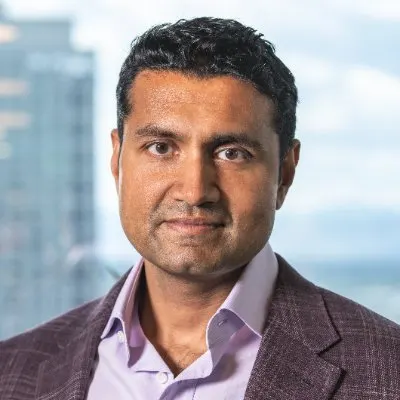
Shyam Sankar was born in Mumbai and moved to the United States as a child, growing up in a household shaped by small business efforts and financial uncertainty. His parents worked across ventures, including a dry-cleaning business that eventually failed, leaving a lasting impression on him about risk and resilience.
He studied electrical and computer engineering at Cornell and later pursued further studies at Stanford. Early in his career, he chose to join Palantir, then a relatively small and lesser-known company, rather than take a more conventional route.
At Palantir, he played a key role in shaping how the company worked with clients, including developing a model that placed engineers directly on the ground with users. Over time, he rose to become chief technology officer, contributing to the company’s growth in areas such as data analytics and artificial intelligence. Today, his work sits at the intersection of technology and decision-making systems used by governments and organisations.
Together, these stories trace a path from modest beginnings in India to positions of influence in the United States. In doing so, they reflect how Indian-origin leaders have become integral to shaping modern American enterprise.
ALSO READ: Time 100 trailblazers Manjusha Kulkarni and Priyamvada Natarajan named Great Immigrants of 2025