
May 08 2026
First Indian to win Rolex National Geographic Explorer of the Year, Krithi Karanth has dedicated her life to wildlife
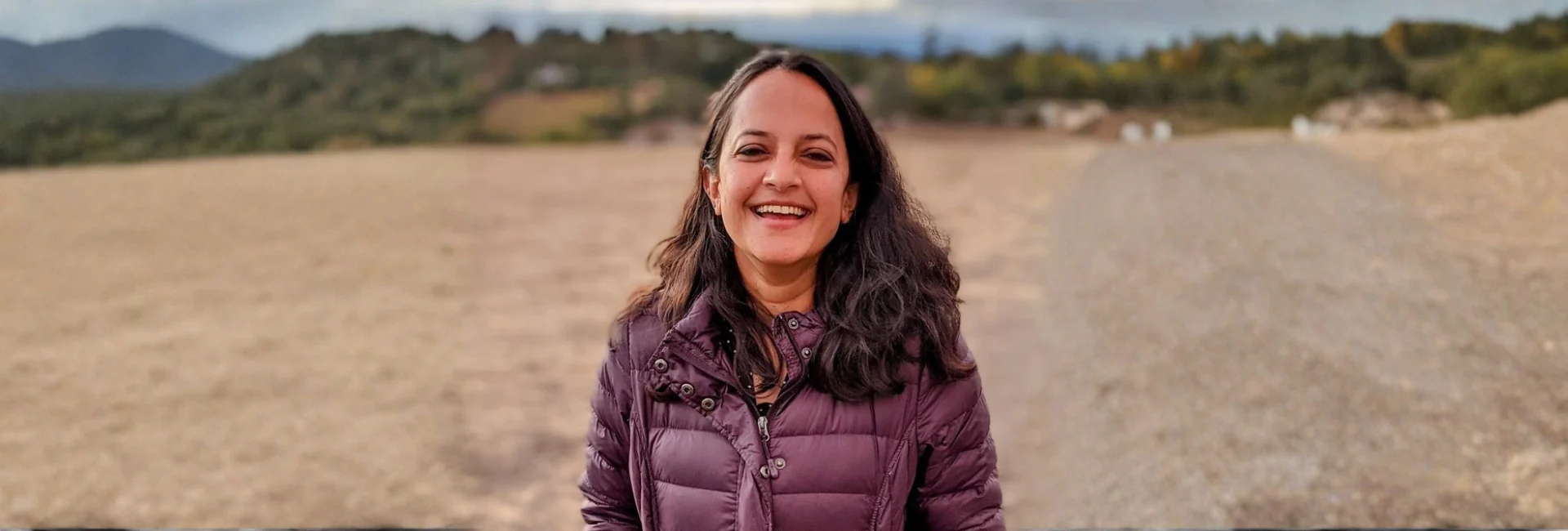
(May 8, 2026) By winning hearts in classrooms and fields, conservation biologist Krithi Karanth has become the first Indian to be named the 2026 Rolex National Geographic Explorer of the Year. She describes her life’s work as advancing “evidence-based solutions to some of the most complex challenges facing wildlife and people today” and, nearly three decades in, she is only picking up pace.
A tiger at dusk
Most toddlers encounter big cats behind glass, in the safe confines of a zoo. Krithi Karanth was three years old when she saw her first tiger in a jungle. It was a beautiful early evening at Nagarhole National Park in Karnataka, the light filtering through the canopy, her father beside her, one of India’s most celebrated tiger biologists. That encounter set the course of a life.
Growing up in a household where the wild was not a place you visited but a place you belonged to, Karanth learned to track tigers, set camera traps, and read a forest floor like a map. Her grandfather was an environmentalist. Her father was a conservationist. Yet for a long time, she resisted the family calling. She wanted an academic career of her own and set off for the United States to build one. Dual bachelor’s degrees in science and arts at the University of Florida came first, then a master’s in environmental science from Yale, and eventually a doctorate from Duke.
The field finds her
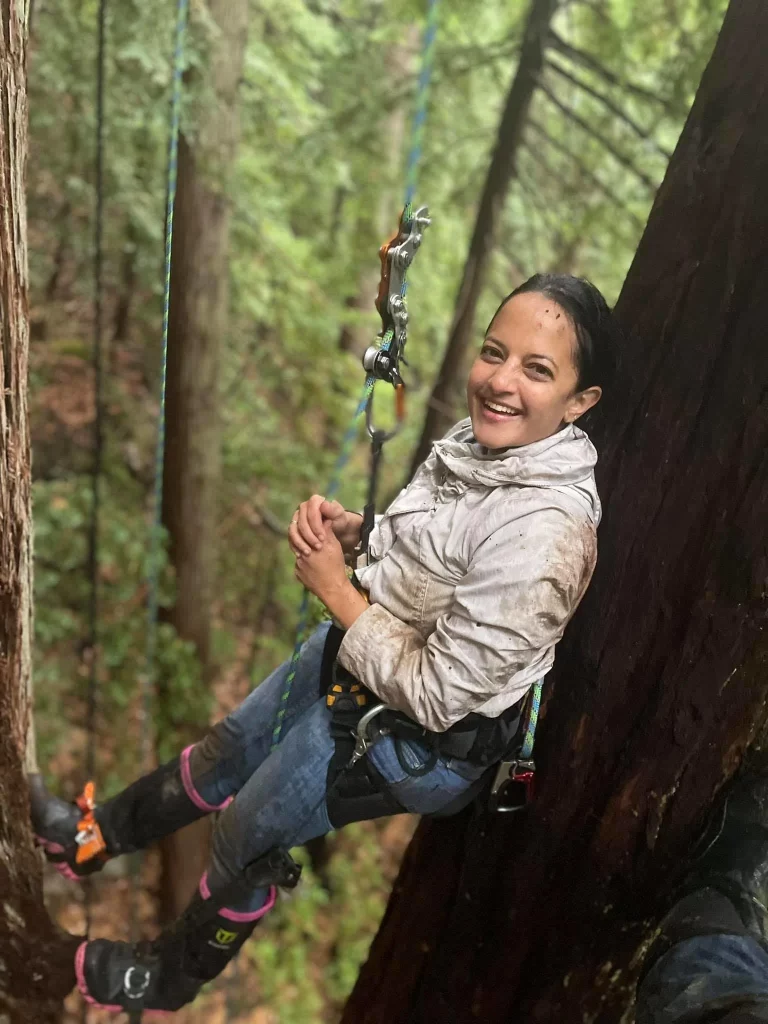
It was during a four-month stint at Bhadra Wildlife Sanctuary, undertaken as part of an interdisciplinary project at Yale, that the pull of fieldwork became impossible to ignore. “I was doing ecological and social science research. I love both. I’ve always been an interdisciplinary person. That trip made me realise I wanted to get into conservation,” she recalled. Even after fracturing her leg in an accident mid-project, she returned to finish her interviews and line transects. The jungle, it seemed, was not done with her.
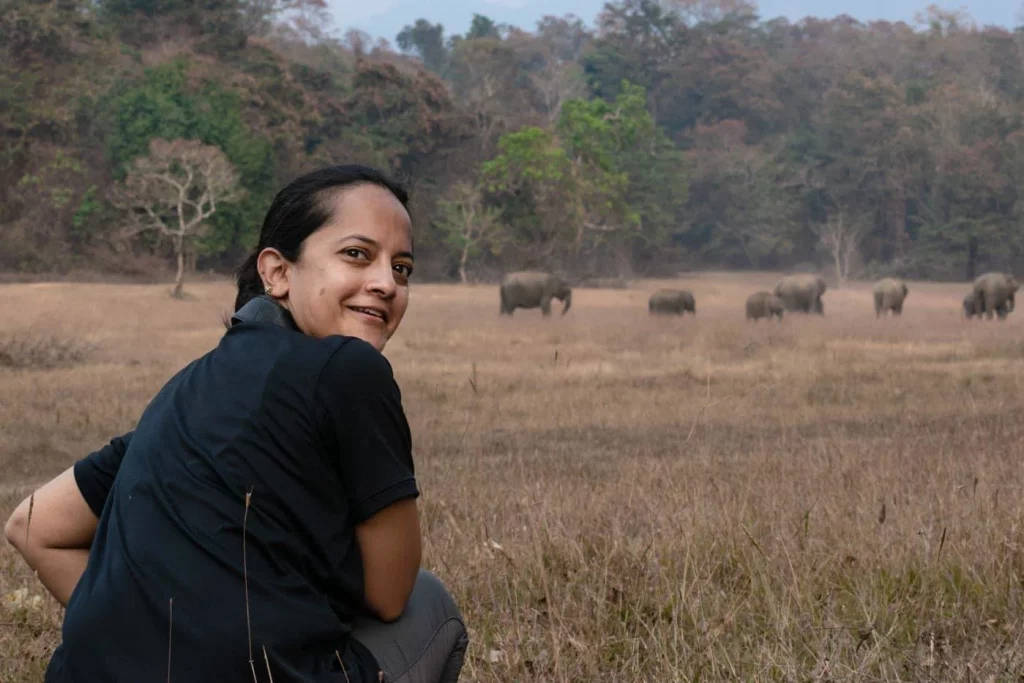
A research project in 2009, tracking the growth and impact of wildlife tourism across ten national parks over six months while overseeing a team of 75 volunteers, only deepened that conviction. “The actual engagement, spending time on the ground and interacting with people helped me realise how much I love being in the field in India,” she said. After twelve years abroad, she returned to India at 31, becoming a Ramanujan Fellow and joining the Centre for Wildlife Studies in Bengaluru as a research fellow. She would eventually rise to lead it as CEO, steering what she describes as work at “the intersection of biodiversity, people, and policy across India and Asia.”
Finding a wider stage
A turning point came in 2011 when she was selected as the 10,000th research grantee by the National Geographic Society, followed by her recognition as an Emerging Explorer the following year. The experience shifted how she thought about the reach of scientific work. “It put me on a public platform for the first time and helped me connect with people, globally,” she said.
It also sharpened a frustration she had been quietly carrying. “Many scientists don’t like being in the public spotlight and communicating why our work matters. We think if you publish a great paper in a top journal, the world will hear about it. They won’t. You have to connect with people in other ways,” she added.
She took that lesson seriously. Her research, which spans species distributions, land-use change, wildlife tourism, and the friction between human settlements and wild animals, has produced more than 150 scientific and popular publications. Her work has been covered by several global media outlets, among them are the New York Times, the BBC, National Geographic, Time, and Scientific American. Wildlife series including The Hunt, Big Cats, and Dynasties have featured research coming out of the Centre for Wildlife Studies.
The science was rigorous. The storytelling was deliberate. As she puts it, her engagement across “science, media, and storytelling” is central to her approach, bridging research with narratives capable of shifting public understanding and policy.
The cost of coexistence
India presents one of the great paradoxes of modern conservation. A country of 1.4 billion people is simultaneously home to roughly half of Asia’s elephants and around three-quarters of the planet’s wild tigers. The land is shared, contested, and alive with consequence. When a leopard takes a goat or an elephant tramples a field of standing crops, the loss is not abstract. It is a family’s income, a season’s work, a child’s school fees.
Karanth had seen this tension up close across nearly three decades of fieldwork, and she understood its cost in both directions. “Kids grow up with a negative, traumatic perspective on wildlife and significant economic hardship. They’re not going to appreciate the fact that India has the highest number of tigers or Asian elephants in the world, that it’s the best place to witness extraordinary animals,” she observed. When livelihoods suffer and grievances go unaddressed, the consequences for wildlife can be fatal.
Building a safety net
To address the immediate economic toll, Karanth developed Wild Seve, a toll-free platform that dispatches trained field staff to document losses caused by wildlife and guide affected families through the government compensation process. The system has helped more than 17,000 families receive remittances, cutting through the bureaucratic friction that had long discouraged people from filing claims in the first place. The logic was straightforward. Uncompensated losses breed resentment. Resentment breeds retaliation. And when communities retaliate, animals pay the price.
Teaching the next generation
Karanth understood that financial relief alone would not build the lasting goodwill that conservation requires. The real work had to begin earlier, in the classroom.
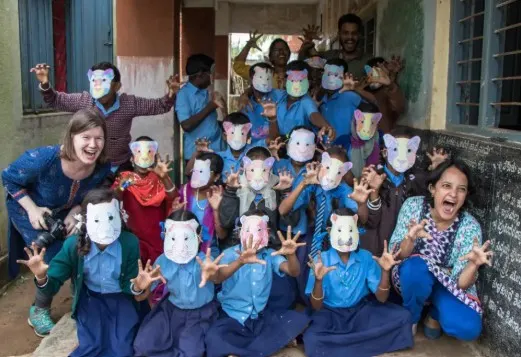
Wild Shaale, which translates to wild school, is a curriculum designed for children living on the edges of India’s wildlife reserves. Through painting, interactive games, storytelling, presentations, and video, it introduces students to the animals that share their landscape, exploring why conflicts arise and how to respond safely. “The idea is that you start by making learning fun and if you make learning fun, then they’re already excited about wildlife. I think that’s what’s really made a difference,” she said.
Piloted in a handful of classrooms in 2018, Wild Shaale now reaches approximately 1,600 schools across India, taught in seven languages. The programme sits within a broader institution-building effort. Karanth has mentored more than 300 early-career scientists and conservation practitioners, and drawn over a thousand citizen scientists into large-scale field initiatives, building what she calls “a distributed network of leaders advancing conservation practice across geographies and disciplines.”
The work goes on
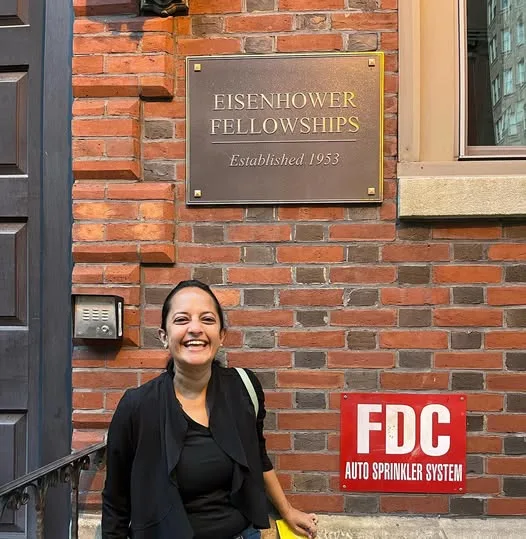
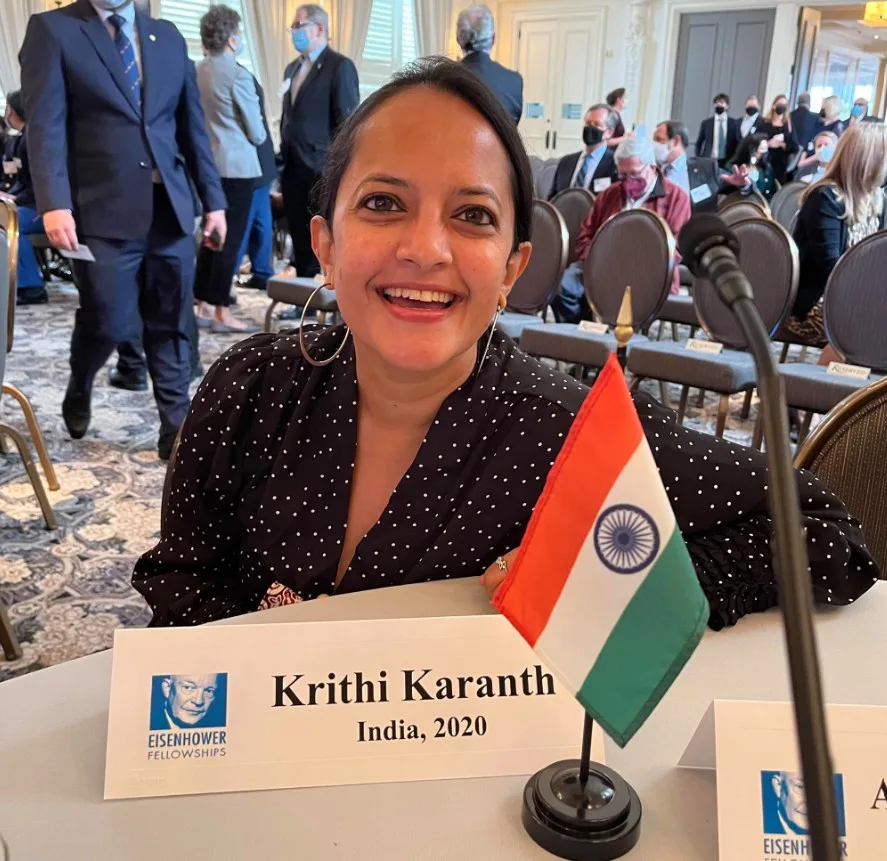
The accolades have accumulated steadily. She became the first Indian and Asian woman to receive the WILD Innovator Award, earned an Eisenhower Fellowship in 2020, and was named a World Economic Forum Young Global Leader. Today she also serves as Adjunct Professor at Duke University and sits on the boards of several conservation organisations. The 2026 Rolex National Geographic Explorer of the Year award, the first time an Indian has received the honour, is the latest milestone in a career that has reshaped what conservation practice looks like on the ground.
She accepts it all with characteristic restlessness. “What I’ve done is not enough. We can do more and can have a greater impact,” she said.
The next horizon is to carry Wild Shaale beyond India’s borders, working with partners in Kenya, Sri Lanka, and Brazil, building a generation of young people who can look at a large and dangerous animal and feel something other than fear or fury. “As long as my mind is working, there is always something I will be able to do.”
In a jungle in Karnataka, more than five decades ago, a three-year-old watched a tiger move through the evening light. The woman who saw that tiger is still doing what may be the most consequential conservation work of all, making sure there will always be someone left who wants to look.
Awards and Recognition
- Rolex National Geographic Explorer of the Year (2026), first Indian to receive the honour
- John P. McNulty Prize (2025)
- WILD Innovator Award (2021), first Indian and Asian woman to receive it
- Eisenhower Fellowship (2020)
- WINGS Women of Discovery Award for Conservation (2019)
- Rolex Award for Enterprise Laureate (2019)
- World Economic Forum Young Global Leader (2015)
- National Geographic Emerging Explorer (2012)
- National Geographic Society’s 10,000th Research Grantee (2011)
- Ramanujan Fellow, Government of India
Follow Krithi Karanth on Facebook, LinkedIn and Instagram
ALSO READ: Meet Barkha Subba and Parveen Shaikh, the conservationists who just won the Green Oscars

Share with


Written By: Amrita Priya
Eye of the tiger: Dr Latika Nath is India’s first female wildlife biologist

Written By: Amrita Priya
Into the Wild with Dr. Koustubh Sharma: Behind the scenes of snow leopard conservation
Written By: Amrita Priya