

(May 6, 2026) Somewhere in the mist-covered hills of Darjeeling, a woman kneels beside a mountain pond, watching for the faintest sign of the Himalayan salamander. Its a lizard-like amphibian so ancient it seems to belong to another era. Thousands of kilometres away, on the sun-baked sandbars of the Chambal river in Madhya Pradesh, another woman is teaching villagers to care about the Indian Skimmer, a striking river bird with a bright orange scissor-like bill that India is on the verge of losing forever.
One is protecting a species almost nobody has heard of. The other is fighting for a bird so rare that barely 3,000 survive globally, of which 90 percent live in India. Both believe that the people who live closest to these creatures are also their most powerful protectors, and both have staked their careers on proving it. This year, the two conservationists were rewarded with the Whitley Award, popularly known as the ‘Green Oscars’.

Winners of Whitley Awards (Green Oscars) 2026, Barkha Subba and Parveen Shaikh in extreme right
Whitley Award: The Green Oscars
Presented annually by the UK-based Whitley Fund for Nature at the Royal Geographical Society in London, the Whitley Award recognises grassroots conservation leaders from the Global South driving community-led solutions to environmental challenges. Winners receive £50,000 to scale their work. This year, six conservationists were honoured, among them are two Indians. Dr. Barkha Subba of Darjeeling, is protecting the Himalayan salamander and its fragile wetlands, while Parveen Shaikh of Mumbai is working to ensure that the Indian Skimmer can nest, breed, and survive along the Chambal. Their causes are different, but the urgency is the same.
Barkha Subba: The girl from the hills who chose to stay
Barkha Subba grew up in the hill town of Darjeeling most Indians associate with tea gardens and toy trains. But she saw something else in those slopes. The landscape was quietly losing something irreplaceable. The mountain ponds and shaded wetlands of the Darjeeling hills are home to the Himalayan salamander, a creature so fragile that even a slight disturbance to the pool where it was born can end its lineage forever. She describes it as resembling “a tiny dragon that swims quietly in a mountain pond” and meeting one, she says, “feels like encountering a messenger from deep evolutionary time, a reminder of how long nature has endured and how quickly it can be lost.”
Unlike lizards, this scaleless amphibian grows up to 17 cm and lives for up to 11 years. What makes it especially vulnerable is philopatry. It returns to the exact pool where it was born to breed. Destroy that pool, and it has nowhere left to go. Only around 30 breeding sites remain across the Darjeeling hills, many outside protected areas.
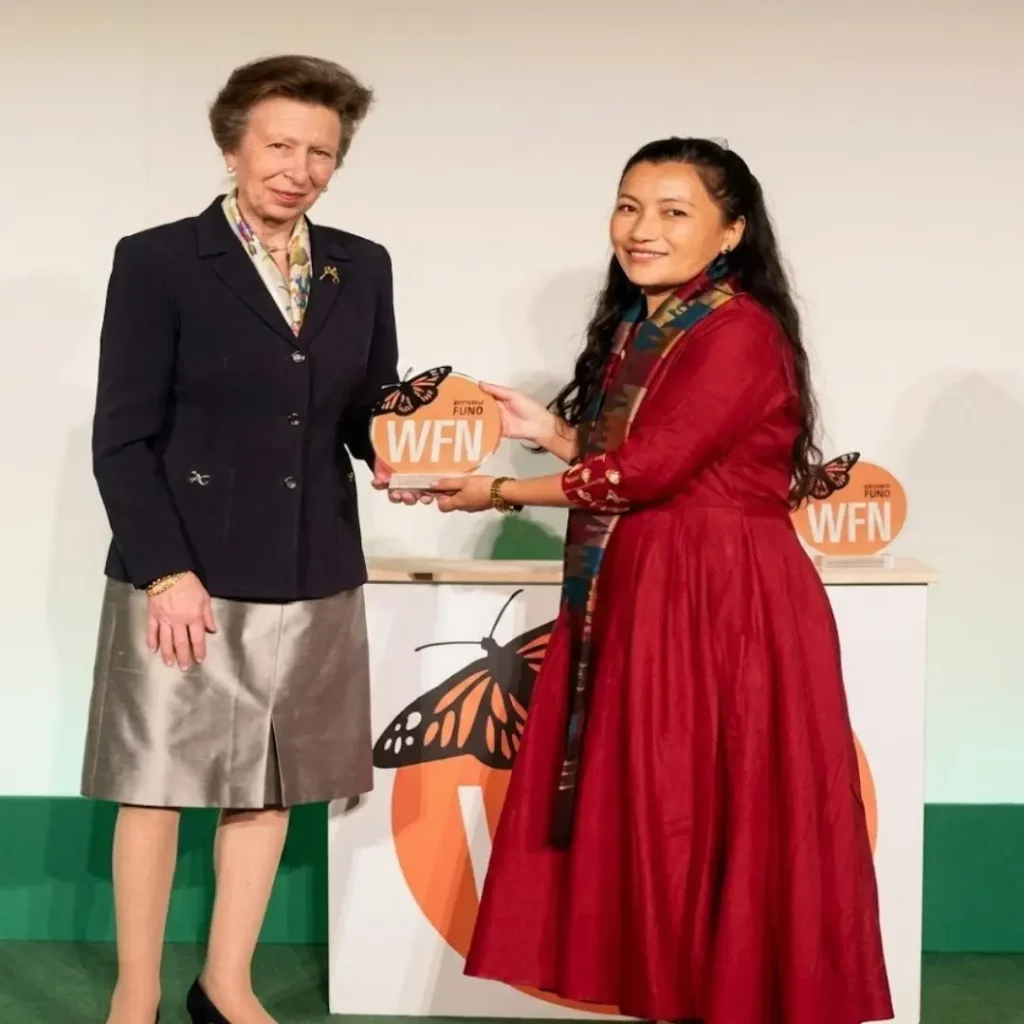
Barkha Subba was conferred Whitley Award 2026 by Princess Anne on behalf of Whitley Fund for Nature
The threats have been mounting. Darjeeling’s famous tea estates covering roughly one-fifth of the hill region are diversifying into tourism as climate change and cheaper Nepal tea squeeze their margins. Wetland drainage, invasive plant species, and the deadly chytrid fungal infection, which has already driven dozens of amphibian species to extinction globally, are steadily shrinking the salamander’s world.
Barkha holds a doctorate in conservation science and sustainable studies from the Manipal Academy of Higher Education. Before joining the Federation of Societies for Environmental Protection (FOSEP) in Darjeeling as a Scientific Adviser, she worked as a Zoo Biologist at the Padmaja Naidu Himalayan Zoological Park and at the Ashoka Trust for Research in Ecology and the Environment (ATREE). Her project, Survivor of a Lost World, focuses on seven critical breeding sites, which are wetlands within tea estates like Margaret’s Hope and Nakhapani, the Namthing Biodiversity Heritage Site, forested areas in Majidhura and Pokhriabong, and privately held wetlands in Mirik. Her work spans wetland restoration, invasive species removal, disease screening, and eco-tourism models that support local livelihoods without harming the ecosystem.
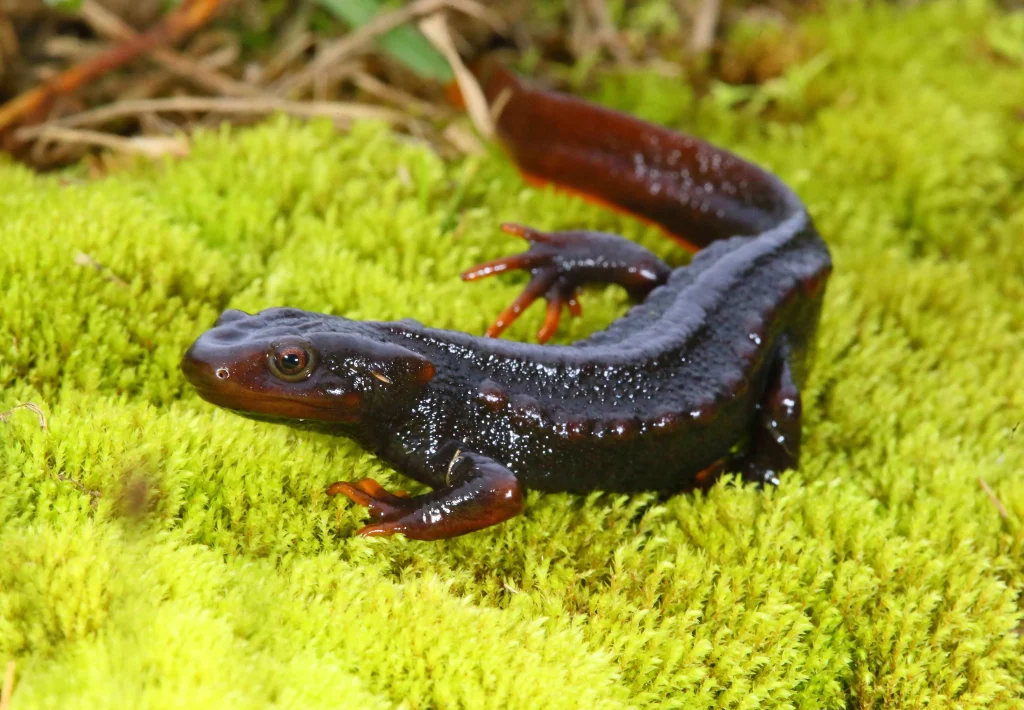
The Himalayan Salamander that Barkha Subba is working to protect from extinction
What makes Barkha’s approach distinctive is her deep respect for what communities already know. The wetlands where salamanders breed are culturally sacred in many villages, associated with local deities and traditional rituals, and disturbing them has historically been discouraged. Barkha has built her work on strengthening this existing commitment rather than replacing it. “Local communities have been protecting this species long before any funding or international recognition,” she has said.
The Whitley prize will help her build a transboundary wetland conservation framework spanning India, Nepal, and Bhutan. She sees the award not just as funding but as a door-opener: “It provides credibility that makes it far easier to build partnerships and work closely with policymakers and institutions so that the conservation project becomes part of regional planning and not just a standalone initiative.” As a woman from an indigenous mountain community, the recognition carries a larger meaning too. The award, she says, will amplify the role of women and indigenous voices in Himalayan conservation at a time when both are urgently needed.
Parveen Shaikh: Making villagers the guardians of the Indian Skimmer
There is a moment Parveen Shaikh often describes from her early days on the Chambal. It was the first time she watched an Indian Skimmer in flight. The bird moves low over the water, its bright orange lower bill cutting the surface like a blade, scooping up fish with effortless precision. It is a creature perfectly built for the river. The trouble is, the river is no longer built for it.
The Chambal, flowing through Madhya Pradesh, Uttar Pradesh, and Rajasthan, was once better known for its ravines and its history of dacoits than for its birds. When Parveen, a researcher with the Bombay Natural History Society (BNHS), first arrived on its banks in 2012, very little was scientifically documented about the Indian Skimmer.
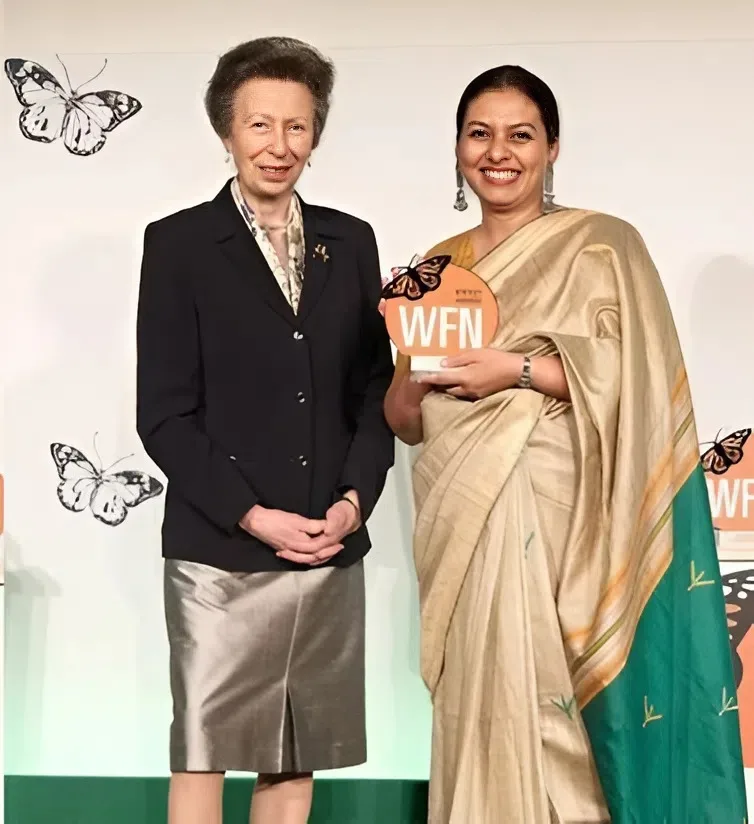
Parveen Shaikh was conferred the Whitley Award 2026 by Princess Anne on behalf of Whitley Fund for Nature
What she found alarmed her. Eggs and chicks were being heavily attacked by free-ranging dogs and jackals, with barely any chick surviving long enough to fly. The birds, she soon understood, were fighting a larger battle against the river itself.
The Indian Skimmer nests differently from most birds. When summer arrives and water levels drop, mid-river sandbars emerge, and skimmer pairs dig a shallow depression directly in the sand to lay their eggs. The surrounding water is meant to protect them from predators but as dams and irrigation reduce river flow, the sandbars connect to the bank, allowing dogs, jackals, and cattle to walk straight to the nests.
Parveen responded by experimenting, testing, and building from the ground up. “One such initiative is the Nest Guardian Programme, wherein locals are stationed around Indian skimmer nests to guard them and chase away predators or livestock wandering nearby. This has proven to be largely effective.” The programme trains and employs local villagers to monitor nests, keep records, and protect colonies through the breeding season. For many, it was the first time they had seen themselves as protectors of the river rather than simply people who lived beside it. “When communities become guardians,” Parveen has said, “conservation stops being an outsider’s job.”
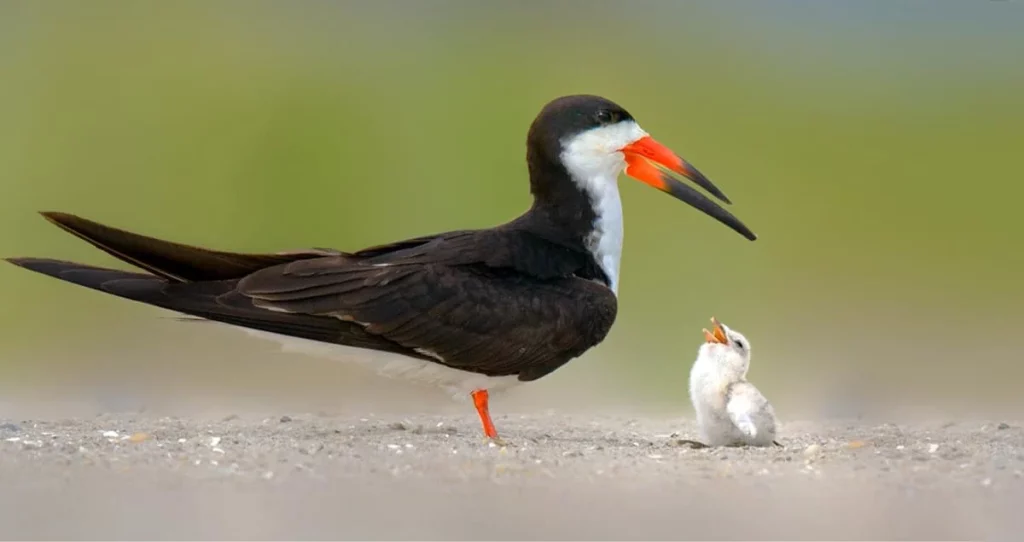
The Indian Skimmer that Parveen Shaikh is working to protect from extinction
The results speak for themselves. In 2017, around 400 skimmers nested at the National Chambal Sanctuary. By 2024, that number had crossed 800. Nest survival rates climbed from under 15 percent to over 25 percent. Other sandbar-nesting species like the endangered Black-bellied Tern, Little Tern, River Tern, and Small Pratincole, as well as riverine turtles have benefited too.
Parveen holds a Master’s degree in Environmental Science, in which she topped her university, and has contributed to national species status reports, shaped conservation action plans, and conducted bird ringing and banding to study skimmer migration. In 2020, she founded the Indian Skimmer Count, a citizen science initiative mobilising birdwatchers nationwide. Her awards tell their own story: the Graeme Gibson Fellowship (BirdLife International, 2023–24), the Conservation Leadership Programme’s Future Conservationist Award (2016) and Continuation Award (2021), the Ravi Sankaran Fellowship (Inlaks, 2018), and the Sanctuary Wildlife Service Award 2025. The 2026 Whitley Award now places her alongside the finest conservation leaders in the world.
With the Whitley funding, she plans to expand her model to Prayagraj where the Ganga and Yamuna meet and are home to breeding Indian Skimmers but also burdened by boat traffic, fishing, riverbank religious activity, and urban pollution. The approach will remain the same. Local people, trained and trusted as standing guard.
Together, Barkha Subba and Parveen Shaikh remind us that the future of India’s most vulnerable species lies not in government offices or international conferences, but in the hands of those willing to listen to the river, to the wetland, and to the people who have always lived beside them.
ALSO READ: Krithi Karanth: Conservation biologist leading efforts to alleviate human-wildlife conflict in India