


(April 13, 2026) Placed first among 1,000 applicants as a college student, Divyanshu Damani won a fully sponsored 10-day study trip to the University of Alberta, Canada, where he studied venture capitalism. It was an early signal of both curiosity and conviction that would later define his entrepreneurial journey.
Today, the Mumbai-based entrepreneur is building at the intersection of technology and the creator economy as the co-founder of TagMango, a platform that enables creators to turn their audiences into sustainable businesses. Backed by Y Combinator — one of the world’s most prestigious startup accelerators known for funding companies like Airbnb, Stripe, and Dropbox — TagMango is part of a global cohort of high-growth startups.

Solving the monetisation gap
The internet has made it easier than ever to build an audience. But turning that audience into a predictable income stream remains elusive. TagMango’s pitch is straightforward: give creators the infrastructure to run their business end-to-end through live workshops, courses, memberships, communities—bundled with payments, hosting, and marketing tools.
But TagMango isn’t really selling tools. It’s selling a shift. “The move is from views to value,” Damani says in a chat with The Global Indian. “From audience to business.” Since launching in 2019, the platform has worked with over 7,000 creators, impacted more than nine million learners, and enabled ₹1,000+ crore in creator earnings.
“We provide the infrastructure to do this seamlessly, with payments, hosting, and community all integrated. “What we enable is ownership — where creators control pricing, experience, and relationships. Over time, this creates more predictable income,” he says.
From content creation to a core insight
Damani’s journey began not with a startup idea, but with content creation during his college years at St Xavier’s College, Kolkata — initially as a strategy to strengthen applications to global institutions. While those plans didn’t fully materialise, what did was an audience of over a million followers — and a deeper realisation about the gap between reach and sustainability.
“In my late teens, I began creating content and eventually built an audience of over a million followers. It started as a strategic move while applying to institutions like Harvard Business School and Stanford. HBS didn’t happen, but content did,” he tells.
What looked like momentum from the outside often felt uncertain on the inside. “I was speaking at platforms like TEDx and Josh Talks, and at institutions like IITs and IIMs. But I kept coming back to one question — if I can reach people, why can’t I sustain myself?” he recalls. That question would go on to shape everything that followed.
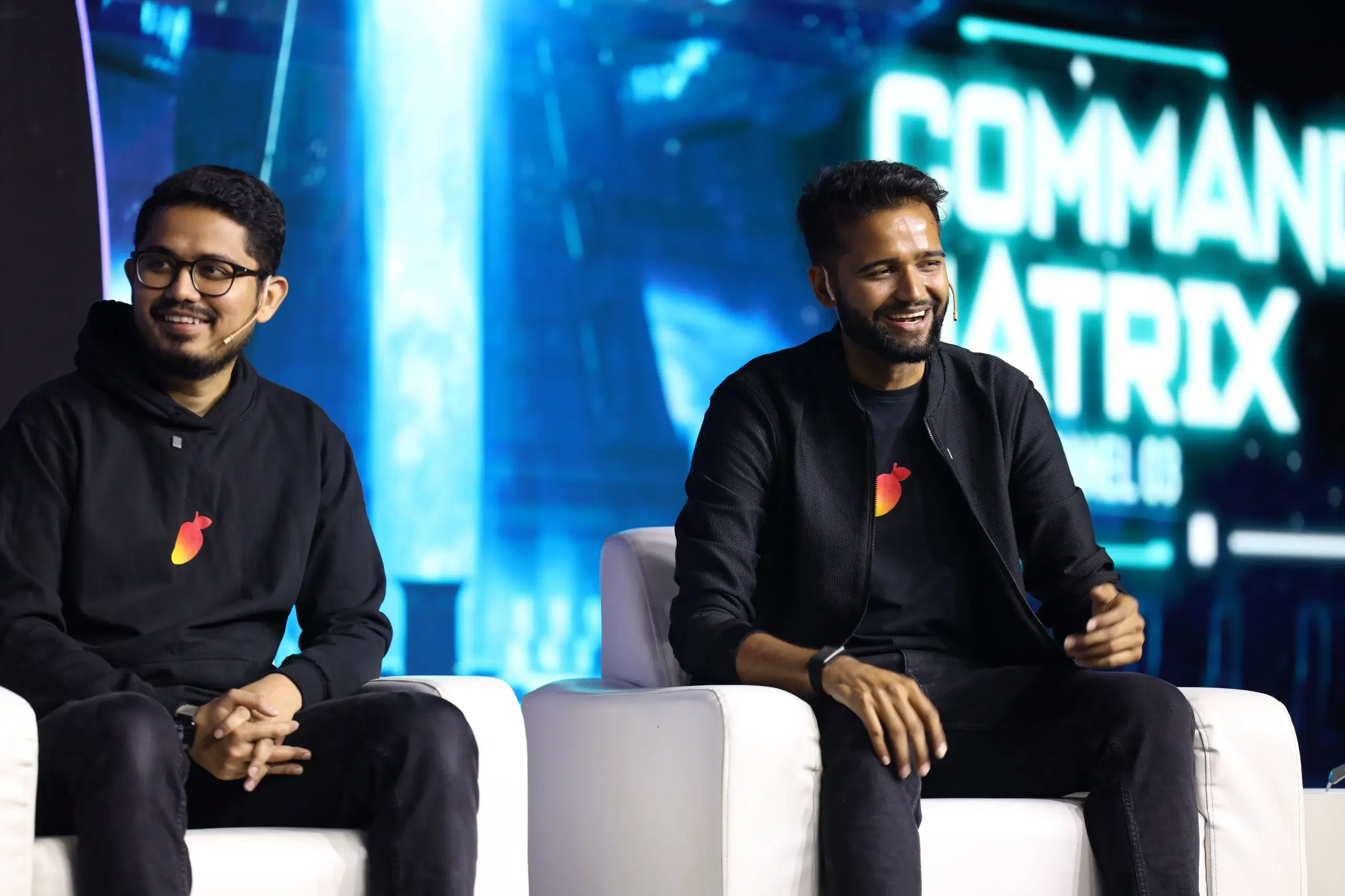
Mohammad Hasan and Divyanshu Damani
Early influences
Damani grew up in Kolkata in a Marwari business family, where entrepreneurship was part of the environment. He pursued his BBA at St Xavier’s College, Kolkata.
During his college years, he was a regional finalist at the Hult Prize, a top contender at IIT Bombay’s Eureka — B-Plan Competition, and won the Best Delegate award at HMUN India, representing Guatemala on the agenda of trafficking in East Asia. These experiences added both global exposure and competitive rigour to his formative years.
Much of his learning, however, came from building early — whether it was WakeUpKid, a social initiative he started at 19, or experimenting with content as a career path. “I think that combination — early visibility followed by real struggle made me more grounded. It taught me that perception and reality are very different things, especially in the creator economy,” he says.
The idea behind TagMango
The idea took shape during a late-night conversation with his co-founder, Mohammad Hasan. “It was a late-night drive — just talking about ambition, doubt, and the fear creators rarely admit out loud. That’s where the line came from: ‘Our time will come.’ At that point, I had distribution — over a million followers and 100 million+ views. But monetisation was broken. The frustration wasn’t just financial; it was emotional,” he says.
When algorithm shifts hit, it exposed something deeper: creators were building on platforms they didn’t control. That insight became foundational — if you don’t own your audience, you don’t own your business. TagMango was built to address that, helping creators move from visibility to more stable, community-driven income.
Chequered journey
Damani admits that the defining moments in his journey weren’t just milestones — they were experiments, failures, and rebuilds. “In the early days, we tried multiple models. We started as a brand–creator marketplace. Then we experimented with Cameo-style shoutouts, Patreon-like subscriptions, and different ways for creators to monetise. Most of these didn’t work,” he says.
At one point, revenues dropped by 85 percent, team members left, and confidence was shaken — a real inflection point for the company. “Even during Y Combinator, we were asked to shut down what we had built and start from scratch. That forced us to rethink everything,” he adds.
The edge that matters
According to Damani, the most successful creators are outcome-driven — across categories like finance, career and upskilling, fitness, wellness, spirituality, and personal growth. “But more than the category, it’s about intent. Creators who focus on transformation, not just content, build more sustainable businesses,” he says.
One of his biggest learnings has been that building a company is as much psychological as it is strategic. “There are phases of momentum and phases of doubt. Profitability gives you control, clarity matters more than speed, and long-term thinking beats short-term wins. Early on, you think confidence is the job. Over time, you realise resilience is.”
What sets TagMango apart
What differentiates TagMango, he says, is that the team sees itself as infrastructure, not just a tool. While many platforms focus on either growth or monetisation, TagMango integrates both. “Our philosophy is simple — creators should own their audience. Monetisation should be built in, not an afterthought, and sustainability matters more than virality,” he says. Built with a strong India-first understanding, the platform is now expanding its global footprint.
Looking ahead
Looking ahead, the company has three clear priorities: becoming the default monetisation layer for creators, expanding globally, and building more community-driven learning formats. They call it “learning social networks.”
Alongside this, AI Fiesta is emerging as an extension of their broader thesis. “If TagMango is about helping creators monetise, AI Fiesta is about how creators will shape the adoption of AI itself. We’re building it as a creator-first consumer AI platform because we believe the future of technology adoption will be driven by trust,” he says. At a broader level, the mission remains consistent: helping creators move from influence to ownership.
ALSO READ: Siddharth Rajsekar: Reviving the Nalanda and Gurukul spirit for today’s digital learner