


(December 6, 2025) At 26, Bengaluru-born singer-songwriter Soha Narayanam is building a career that draws from her varied musical influences and the projects coming her way, with playback credits in Pawan Kalyan’s They Call Him OG and an upcoming song in Prabhas’s Raja Saab. Her music draws from the devotional songs she heard growing up, the international pop she absorbed through her teenage years, and the Afrobeats she discovered in the UK. Afrobeats is a genre that emerged from West Africa and is known for its energetic grooves and dance-led rhythm. Discovering it changed the way Soha thought about melody and movement, and has become a defining influence in her work.
In the indie space, where musicians create original work outside the film industry, Soha has already formed an identity. Her writing is direct and personal, her production modern, and her sound takes shape through the pairing of Afro-inspired rhythms with Indian melodic expression. Her viral track Jhumka Sway demonstrated how naturally she could weave these influences together and make them accessible to a wide audience.
Her versatility reached mainstream listeners with Kiss Kiss Bang Bang in OG, where she brought her distinct voice to a commercial film without losing the individuality she honed independently. Soha Narayanam is now enjoying the response to her latest track Excuses, as she continues to develop a musical language that is ingrained in her own experiences and honed by sounds from a different part of the world.

Soha Narayanam with composer and playback singer Thaman S
Steeped in sound
Soha’s earliest memories are filled with music: an atmosphere rather than an activity. Growing up in Bangalore, she was surrounded by devotional songs sung by her mother, radio hits playing during family drives, and the eclectic world of VH1 on television. “My earliest memories are of my mom singing devotional songs at home. That was probably my first introduction to how powerful and comforting a voice can be,” she reflects in a chat with Global Indian. That world of melody: half traditional, half pop, became the soil from which her musical identity quietly grew.
Her father’s daily drives to school played a surprisingly formative role. “We used to listen to Radio Indigo every morning, and since Bangalore traffic is no joke, we had a lot of time to listen to good music,” she laughs. The city’s thriving indie scene and openness to global sounds seeped into her sensibility long before she even thought of making music professionally. Bangalore taught her that originality thrives when cultures mingle, and today that spirit echoes in every song she writes.
Discovering her voice in the indie space
When Soha eventually entered the indie music scene, it was instinctive. “I think I created a distinct identity in the indie space almost without realising it,” she says. Her life experiences, from Bangalore’s multiculturalism to her time studying in the UK, began to surface as she experimented with melodies. It was in the UK that a significant shift occurred: friends introduced her to Afrobeats, a genre that instantly resonated with her. “I fell in love with its energy and fluidity,” she says. That influence later formed the backbone of tracks like Jhumka Sway, where Afro-Indian grooves and pop sensibilities intertwine effortlessly.
Creative freedom is what ultimately drew her into independent music. “I didn’t want to wait for someone to define my sound. I wanted to make music that genuinely sounded like me,” she explains. What began as posting small ideas gradually turned into full demos, then into original releases that caught the attention of listeners across platforms. As feedback poured in, Soha realised that music was her path. “When people connected deeply with my originals, it clicked. This wasn’t just an experiment anymore; this is what I’m meant to do.”
Foray into playback singing
Unlike many singers who consider playback the pinnacle of their journey, Soha saw it simply as another space to explore. “I’ve always felt that if I’m in music, I want to explore every corner of it. Why limit myself?” she says. So when the opportunity arose to lend her voice to Kiss Kiss Bang Bang from OG, she stepped in with openness rather than expectation.
Hearing her own voice in a theatre for the first time was unforgettable. “Nothing prepares you for the moment you’re sitting in a theatre and suddenly your voice fills the room,” she says. It was surreal, exciting, and grounding at the same time—a validation of her instinct to stay curious and embrace every musical avenue available to her.
An identity rooted in versatility
Soha refuses to choose between indie artistry and playback singing because, for her, both feed different parts of her creative spirit. “I see myself first as a singer, someone who loves exploring everything my voice can do,” she says. Indie music allows her to craft her own world, building soundscapes that are deeply personal. Playback, on the other hand, pushes her into new emotional territories, letting her step into different characters and narratives. Together, they form a musical identity that is fluid, confident, and uniquely hers.
Her songwriting too reflects this blend of honesty and restraint. “I write like I’m talking to a friend: open, but not exposed,” she explains. Rather than detailed storytelling, she focuses on evoking emotion, trusting listeners to fill in the blanks. It’s a style that feels intimate without being confessional, vulnerable without being revealing.
A multicultural influence
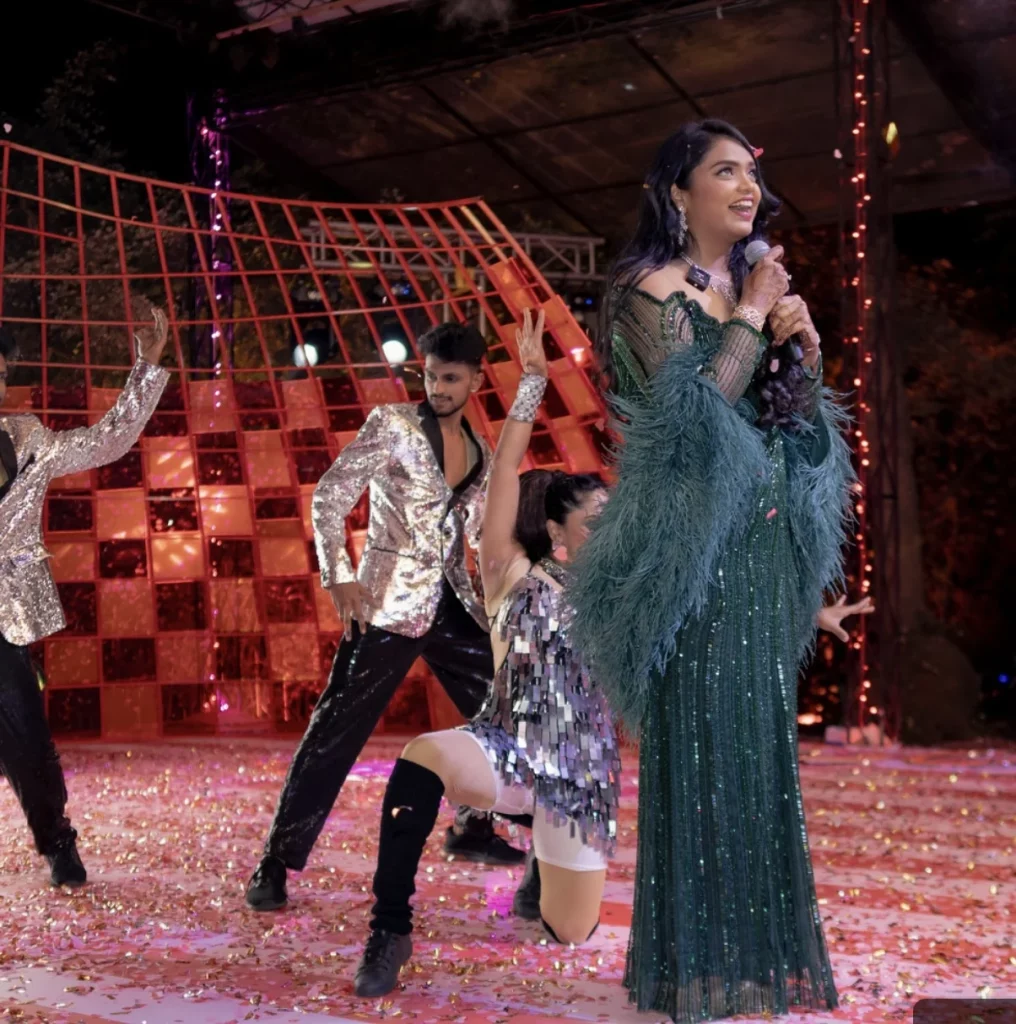
Whether she intends it or not, Soha’s background is embedded in her music. Bangalore’s multicultural rhythms, her mother’s devotional singing, her exposure to indie and global music, and her later love for Afrobeats: all converge into her current sonic identity. “No matter what genre I’m exploring, it always comes back to this blend of cultures: Indian roots, global rhythm, and honest emotions,” she says. This fusion is not a formula but a reflection of her lived experiences, which is why her music feels authentic rather than engineered.
As someone navigating India’s evolving indie ecosystem, Soha acknowledges both the promise and the challenges. “The opportunities are huge, platforms, collaborations, access to audiences. If you’re consistent and authentic, people do discover you,” she says. But she is also aware of the gaps that persist: limited budgets, fewer dedicated spaces for original music, and an audience still primarily tuned to film soundtracks. Building a sustainable audience for indie musicians, she says, requires patience and a shift in cultural mindset.
Looking ahead: A global sound with an Indian heartbeat
When asked about the future, her vision is clear. She sees her music becoming “even more global while staying rooted in the emotions I grew up with.” She isn’t interested in choosing between indie and playback. Instead, she sees herself expanding across languages, genres, and formats: blending pop, Afrobeats, Indian melodies, and global influences in ways that feel honest and refreshing. Live performances are also high on her list. “Connecting with people on stage is one of my favourite parts of being a musician,” she says, hoping for many more shows and festivals in the coming years.
View this post on Instagram
In many ways, Soha represents a new wave of Indian artists: global in taste, grounded in culture, and unafraid to experiment. Her journey, which began in a music-filled Bangalore home, has evolved into a career defined by curiosity, courage, and creative authenticity. Whether she’s crafting indie originals, lending her voice to films, or discovering new rhythms from across the world, Soha Narayanam stands as a powerful example of a young Global Indian shaping a sound that travels across borders but remains rooted in the heart.
- Follow Soha Narayanam on Instagram
ALSO READ: Meet Ridi Oswal, the singer-songwriter and anti-bullying activist