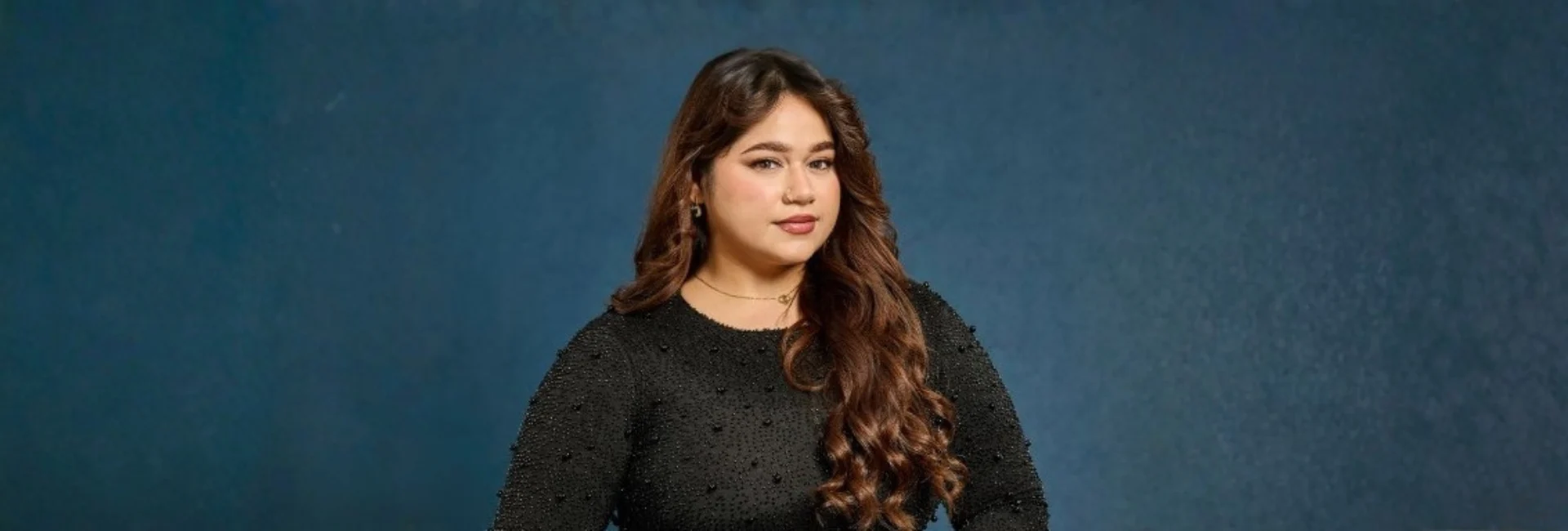


(April 18, 2026) In November 2024, UK-based Karishma Vijay started building skincare-infused cosmetics brand Kishkin from a warehouse basement, running the business without external funding and at her own pace. 14 months later, she stood in the final boardroom of the BBC’s The Apprentice and won its 20th series, securing a £250,000 investment from Lord Alan Sugar, one of Britain’s most prominent self-made entrepreneurs, who built his fortune in consumer electronics and has spent two decades backing emerging business talent through the show.
For Karishma, the win placed her business in partnership with an investor whose reputation in British industry is both longstanding and commercially influential, particularly for early-stage founders seeking scale and market access.
“I can’t believe it. I feel like I’m going to be calling Lord Sugar every other day, saying ‘what do I do now? I don’t know what I’m doing,’” she shared with the BBC after the win. “Because when I was doing it by myself, I was going at my own pace. Now, there’s a bit more pressure, because I have to really convince him that he made the right decision to have picked me.”
She added that the moment felt unlike anything she had experienced before. “Nothing in my life will ever compare.” The shift from a self-funded basement operation in 2024 to securing backing from one of Britain’s most recognisable business figures in 2026 places her story in a different league of visibility and scale.
View this post on Instagram
A second-generation British-Indian founder
Born in Ashford, Surrey, Karishma Vijay is in her twenties and comes from a British-Indian family with a history of entrepreneurship. Business, however, took on a different meaning in her generation. While her family had experience running enterprises, she has described herself as the first woman in her bloodline to formally step into entrepreneurship.
She maintains a strong cultural and emotional connection to India through her family background and heritage, which she has referenced as part of her personal identity.
Her upbringing sits at the intersection of a British environment shaped by education and early career exposure, and an Indian familial lineage where business and ambition were familiar but traditionally male-coded.
Education, early work, and building digital skillsets
Karishma studied Biomedical Sciences at St George’s, University of London. Although trained in science, her career path shifted toward creative and commercial work after graduation.
She worked across sales roles, freelance makeup artistry, and independent marketing consultancy. These roles became the foundation for her understanding of consumer behaviour, branding, and product positioning.
Over time, she developed a focus on digital growth strategies, including influencer marketing, content creation, and social media-led brand building. Alongside this, she also built her own presence online, posting skincare and beauty content on platforms such as TikTok and Instagram, which strengthened her understanding of direct-to-consumer engagement.
Building Kishkin
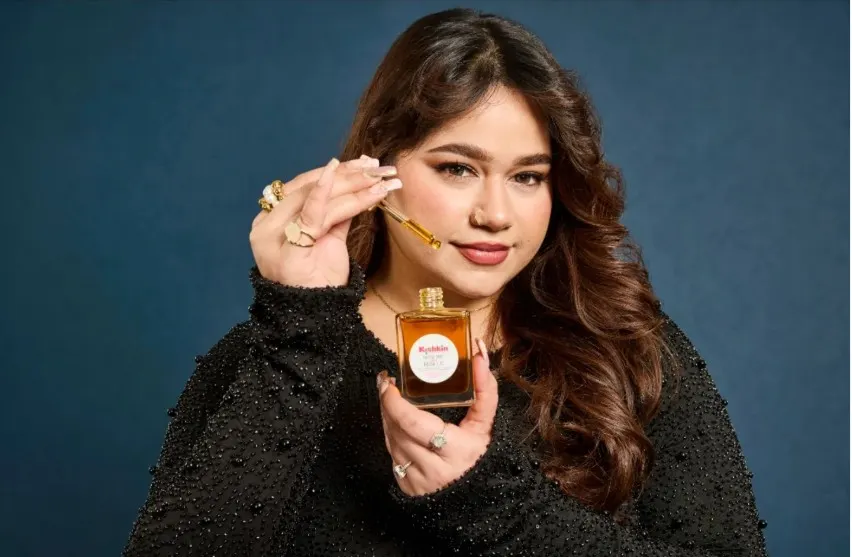
Kishkin was founded in November 2024 in response to what Karishma saw as a structural issue in the beauty industry with overconsumption driven by marketing rather than product performance.
At its core, the brand sits at the intersection of skincare and cosmetics, designed to simplify routines while improving product efficacy through multi-functional formulations. At the start of the 20th series of The Apprentice, Karishma described her goal as scaling the brand into a “global obsession.”
“I am seeking investment to elevate my current business ‘Kishkin, the Skincare Miracle’ into a global obsession,” she had shared with the BBC at the beginning of the show. She criticised the industry’s reliance on “ineffective yet really well marketed products,” arguing that consumers were increasingly buying into cycles of trend-led consumption at the cost of both financial and skin health outcomes.
Kishkin, in contrast, was positioned as a product-led alternative focused on efficacy, simplicity, and long-term use rather than viral cycles.
Entering The Apprentice with a business-first approach
Unlike many contestants who approach The Apprentice as long-time viewers of the programme, Karishma has stated that she was not a regular follower of the series before applying. Her motivation was explicit and transactional, with investment and partnership the sole focus. “I’m here for the investment and to find a business partner, not as a fan,” she said prior to joining the show.
She entered the competition with Kishkin already established and used the platform as a route to scale rather than ideate. Her business plan remained consistent throughout: expand distribution, build visibility, and secure strategic backing.
From early underestimation to frontrunner status
Karishma’s early trajectory on the show was marked by relative underestimation, something she has acknowledged herself. However, her performance across tasks gradually shifted how she was perceived within the competition.
Her strengths emerged in structured commercial thinking, branding execution, and clarity of product positioning. Over time, she transitioned from a quieter presence to one of the most consistently strong performers in the series.
By the middle stages of the competition, she had become one of the bookmakers’ favourites to win, with media coverage describing her as a standout candidate. The progression was incremental rather than sudden, built through repeated task performance and consistent articulation of Kishkin’s market potential.
Recognition within the boardroom process
One of the moments Karishma has highlighted from her experience came through feedback from Baroness Karren Brady, one of Lord Sugar’s long-standing advisors on the show.
Known for her selective praise, Brady’s acknowledgment carried significance within the competitive environment of the programme and marked a shift in how Karishma’s performance was received. These moments of recognition contributed to her growing visibility within the series and reinforced her position as a strong finalist contender.
The final and the investment decision
The final of series twenty saw Karishma compete against fellow finalist Pascha. Both candidates were required to present refined business strategies, branding concepts, and marketing campaigns to Lord Sugar and his advisory panel, alongside former winners and industry figures.
After their final pitches, Karishma was announced as the winner of the series. Lord Sugar described her as “a proper grafter” with “entrepreneurial spirit,” confirming his decision to invest £250,000 in Kishkin in exchange for a business stake.
The investment formalised her transition from independent founder to backed entrepreneur operating within one of the UK’s most visible business platforms.
What the investment unlocks
For Karishma, the investment represents not just capital, but access to mentorship, networks, and structured commercial scaling.
Her ambition for Kishkin includes expansion into major retail environments and international beauty markets. She has referenced aspirations to position the brand in spaces such as Sephora, Harrods, Selfridges, and travel retail channels, with the goal of building global visibility.
A key part of her strategy is also brand independence, shifting Kishkin from being closely associated with her personal identity to operating as a standalone commercial entity. The challenge ahead lies in scaling production, expanding distribution, and transitioning from founder-led marketing to structured brand systems.
Dual role of founder and influencer
Alongside entrepreneurship, Karishma has developed a presence as a social media content creator in the beauty and skincare space. Her content on TikTok and Instagram has contributed to early brand awareness and allowed her to engage directly with audiences.
This dual role of founder and influencer reflects a broader shift in contemporary consumer brands, where visibility and product development often operate in parallel rather than separately.
Following her win, Karishma said that her experience on The Apprentice had made her more confident and more comfortable in public-facing environments.
View this post on Instagram
Personal stakes and longer-term framing
Vijay has spoken about financial responsibility within her family context, including supporting her household since she began working. She has also framed entrepreneurship as both a commercial pursuit and a long-term stability project.
As the first woman in her family to build a business, she situates her journey within a broader generational shift in opportunity and expectation. Kishkin, in this framing, is both a commercial entity and a personal infrastructure for future security and growth.
A shift in scale
From a basement-built startup in 2024 to securing backing from one of Britain’s most established business figures in 2026, Karishma Vijay’s win marks a shift in scale, visibility, and responsibility.
Kishkin is no longer operating in isolation. It is now part of a structured investment ecosystem, with expectations tied to growth, performance, and expansion. The next phase of the business will be defined by scale and expansion.
ALSO READ: Meet Anisa Khan, BBC Apprentice finalist and founder of Bombay Pizza