
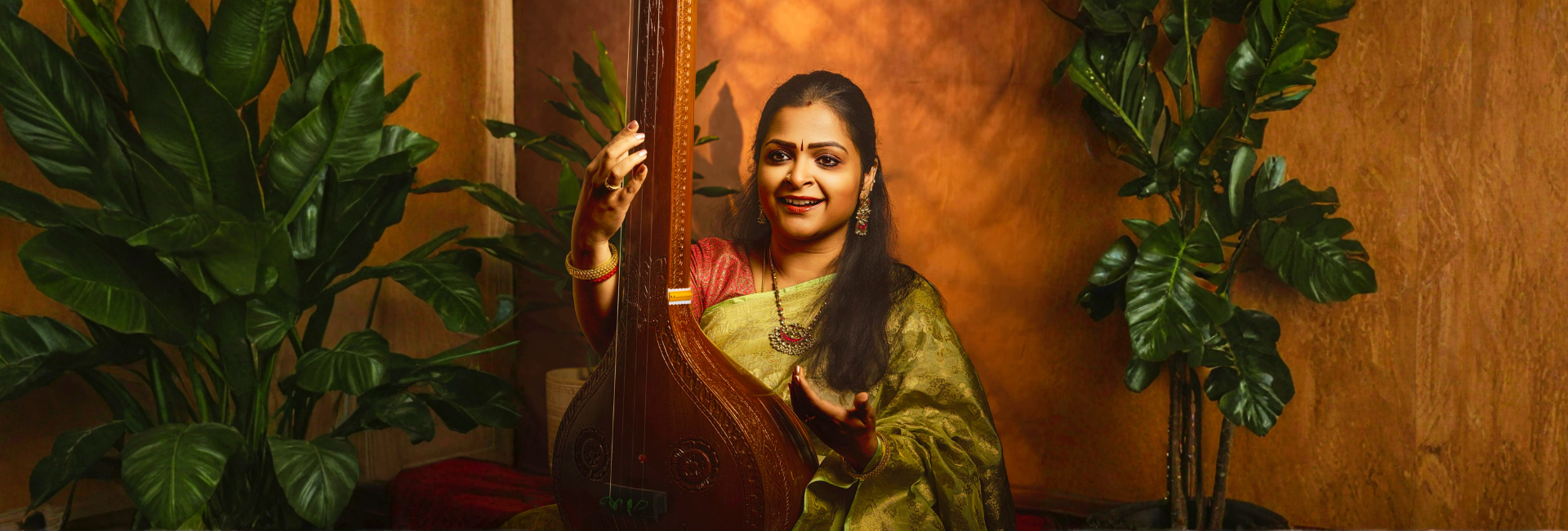


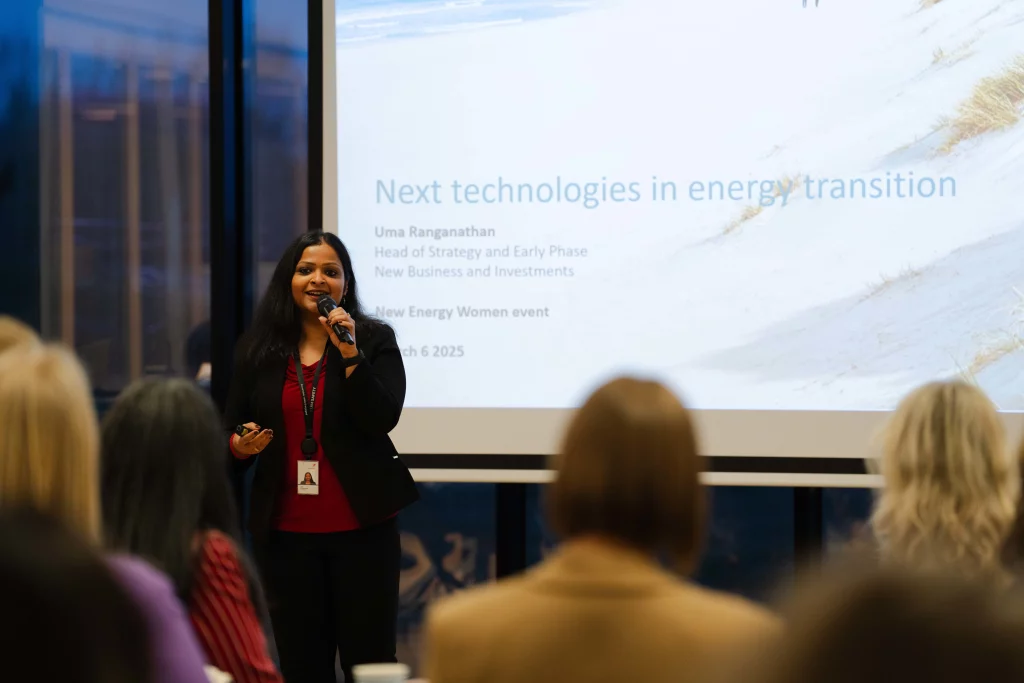
(February 18, 2026) On most days in Oslo, Uma is immersed in conversations about the future of energy, not in the abstract, but at the level where strategy turns into opportunities. As a member of the international energy company Equinor’s Senior Executive Management Committee, she works on building new commercial value chains critical to the global energy transition. Her role sits at the intersection of strategy, early-stage business development, and long-term investment thinking.
The work is analytical, demanding, and firmly future-facing. Yet, when she steps away from investment discussions and strategy decks, the other energy that sustains her comes from an entirely different place, and that is music.
That energy finds expression through Art to Heart, a Norway-based arts and culture initiative Uma founded two years ago and now leads with conviction. Rooted in Asian music and expansive in vision, the institute is built around connecting individuals and communities of Asian and European origin, enabling meaningful cultural collaboration from a part of the world rarely associated with Asian classical traditions.
Top priorities of the institution
Uma is focused on creating platforms for Asian classical and sacred art forms to engage authentically with global audiences, while nurturing young and emerging talent, particularly within the Nordics and Europe, through structured programmes and performance opportunities. Central to her work is positioning art as a tool for dialogue, identity, and well-being in an increasingly interconnected world, and building a sustainable, values-driven institution that balances artistic depth with contemporary relevance.
Art to Heart was never conceived as a hobby or a personal passion project. “It is designed as an institution, and something that could grow steadily, with purpose, and create lasting value,” Uma reflects in a conversation with Global Indian.
Her long-term vision is to develop the initiative into a space where learning, performance, and well-being intersect, and where artists and audiences from diverse backgrounds engage with Asian classical art not as spectacle, but as an ongoing practice. The emphasis is on depth, sustained engagement, and meaningful exchange.
The purpose behind Art to Heart Institute
Art to Heart is built around three clearly defined pillars: development, appreciation, and wellness. Each pillar translates into structured, intentional programming rather than loosely organised cultural activity.
Currently, teaching forms the core of the institute’s work. Art to Heart runs structured programmes in classical music, primarily vocal, supported by percussion faculty and teaching assistants. Classes are conducted both in person and online. Most are held in Oslo, with select hybrid batches delivered via Zoom. “Currently, the institute runs seven batches, five in person and two hybrids,” Uma explains. Over the years, the ambition is to expand into newer faculties and locations across Europe.
The student base spans Norway and parts of Northern Europe, including Sweden, Finland, Germany and the Netherlands. Many learners are of Indian origin, reflecting a strong desire within the diaspora to reconnect with cultural roots through sustained, disciplined learning rather than occasional exposure.
View this post on Instagram
Appreciation through performance
Performance is the second pillar. Art to Heart organises two main festivals each year, both held in person in Oslo. The Raga Rhythm Festival, held in spring, centres on curated performances and mentorship. Each edition is shaped around specific themes. “Last year, we explored Navarasa, the nine emotions through music,” Uma says. “This year, we’re working on Young in Action.” Young in Action brings together a group of young performers whom Uma mentors closely, encouraging them to use music as a medium to engage with social themes and contemporary questions.
The second festival, Høstfest (Fall Fest), is driven by children. “It’s about giving them space to perform, to be seen, and to grow,” she explains. Beyond these festivals, the institute hosts ad hoc performances and invites artists to Norway. Funding received over the past two years has supported essential costs such as artist travel, enabling wider participation and deeper engagement.
Audiences are intentionally mixed. Initiatives such as Carnatic Crossroads, where Indian compositions were paired with Western and Norwegian folk music, attracted Norwegian participation alongside Indian listeners. “Those formats open doors,” Uma notes. “They create curiosity rather than separation.”
Wellness as practice
The third pillar, wellness, is an area the institute continues to develop. “We’re exploring chanting and ragas as tools for healing,” Uma explains, “working with breath, sound, and mindfulness.” These sessions are designed as experiential spaces rather than instructional ones, integrating music into everyday well-being instead of positioning it as something distant or elite.
A career built on strategy and structure
Uma is clear that her work in the arts does not exist apart from her professional life. It is informed by it. She works in strategy and business development at Equinor, shaping early-phase opportunities for the company. That grounding in systems, scale, and long-term thinking shapes how Art to Heart has been built from the outset. The institute is structured, goal-driven, and designed for continuity. It reflects a belief that cultural work, like any other endeavour, benefits from clarity, planning, and institutional rigour.
A lifelong relationship with music
Born and brought up in Delhi, Uma grew up in a Tamil household where education and the arts coexisted naturally. She began performing Carnatic music and Bharatnatyam dance around the age of 11 and started teaching by the time she was 15, initially assisting her own teachers.
Over the years, Uma has taught more than a hundred students. What has remained constant is her belief in what music offers beyond performance. “Art is not just entertainment,” she says. “It shapes how you live, how you listen, how you connect. It improves quality of life.”
While Norway is now home, Uma has lived and worked in multiple global contexts, including Singapore, The United Kingdom and the United States. These experiences have shaped her understanding of how culture travels, adapts, and finds relevance across geographies.
Norway as context and catalyst
Norway offers distance from noise. Its pace is slower than many global centres. There is room for reflection, for patience, and for building institutions thoughtfully, against a backdrop of striking natural beauty.
Living in Norway and the broader Nordic region has reshaped not only Uma’s ambition, but the way she chooses to pursue it. In a society shaped by systems thinking, trust, and a deep respect for balance, she has found a sustainable framework for building, whether in her corporate career, her music, or the institution she is nurturing.
The Nordic emphasis on equality, including the visible presence of women in leadership, resonates with her own cultural grounding in traditions that value women’s agency and contribution.
Surrounded by vast landscapes and a culture that values collective thinking, she has refined her approach to both leadership and artistic expression. “These inspirations are quietly shaping how I build my life and Art to Heart, with clarity, depth, and long-term intent,” she remarks.
Collaboration as the way forward
Art to Heart’s work is deeply collaborative. The institute explores how Asian classical arts can engage meaningfully with European contexts, and how musicians from different traditions can create together.
Recent collaborations have brought together artists from Iran, China, Sri Lanka, India, and the Nordic region. The institute also works closely with Indian musicians travelling through Europe, helping facilitate performances, connections, and longer-term engagement. The focus is as much on cultural depth as it is on dialogue, allowing arts to travel, adapt, and respond to new environments.

An open invitation
At this stage, Uma is focused on expanding Art to Heart through collaboration.
She is looking to connect with artists interested in long-term engagement with Asian music in Europe, educators committed to structured and sustained teaching, and institutions open to building cross-cultural collaborations that extend beyond one-off events.
From Oslo, a city rarely associated with Asian or Indian classical music, Uma is developing Art to Heart as a platform for serious artistic exchange. For collaborators, it offers an opportunity to work across cultures in a creative setting that supports thoughtful structure, continuity, and carefully developed artistic goals.