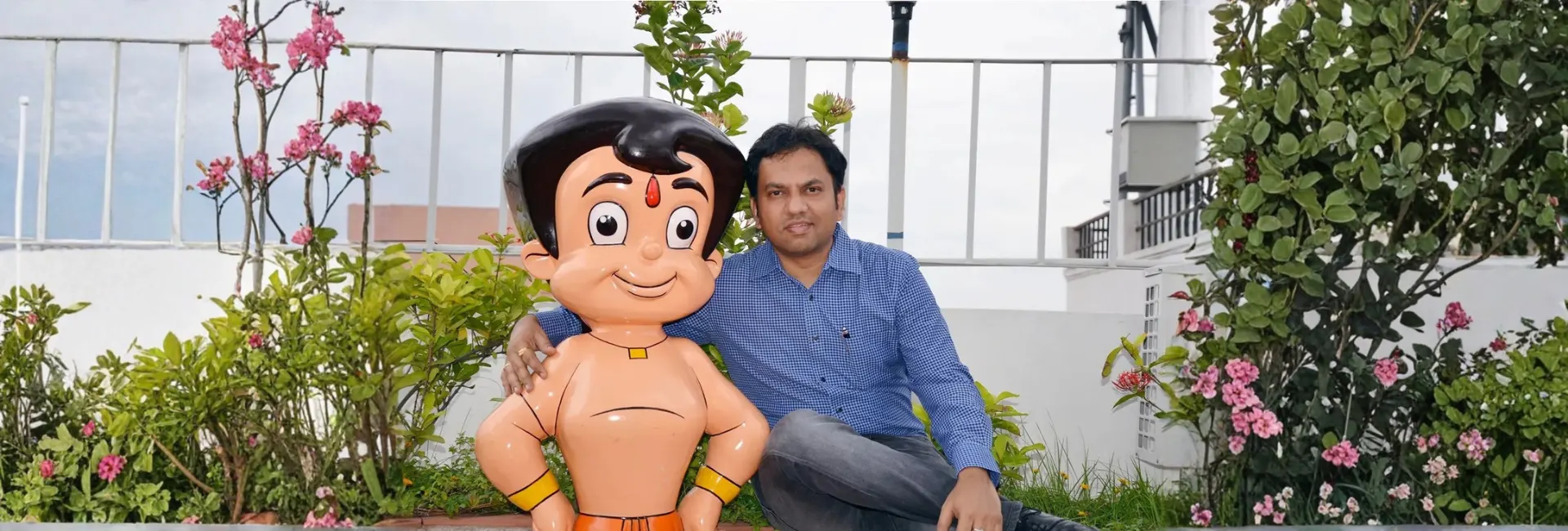


(February 19, 2026) When Rajiv Chilaka watched The Jungle Book at the age of five, he truly believed that Mowgli, Baloo, and Bagheera were real. That world felt so alive to him that he carried it in his head for months — he dreamt of it, lived in it, and wanted to return to it again and again. That was the first time he experienced the true magic of animation, and its power to make you believe.
Superhero comics, mythological films, animated shows like Mickey and Donald, Spider-Man, and above all, his grandmother’s Chandamama stories, further fueled his imagination. All these experiences planted the seed for his passion for animation. It eventually led to the birth of Chhota Bheem — an animated comedy adventure television series that has children worldwide not just watching, but celebrating the character every day.
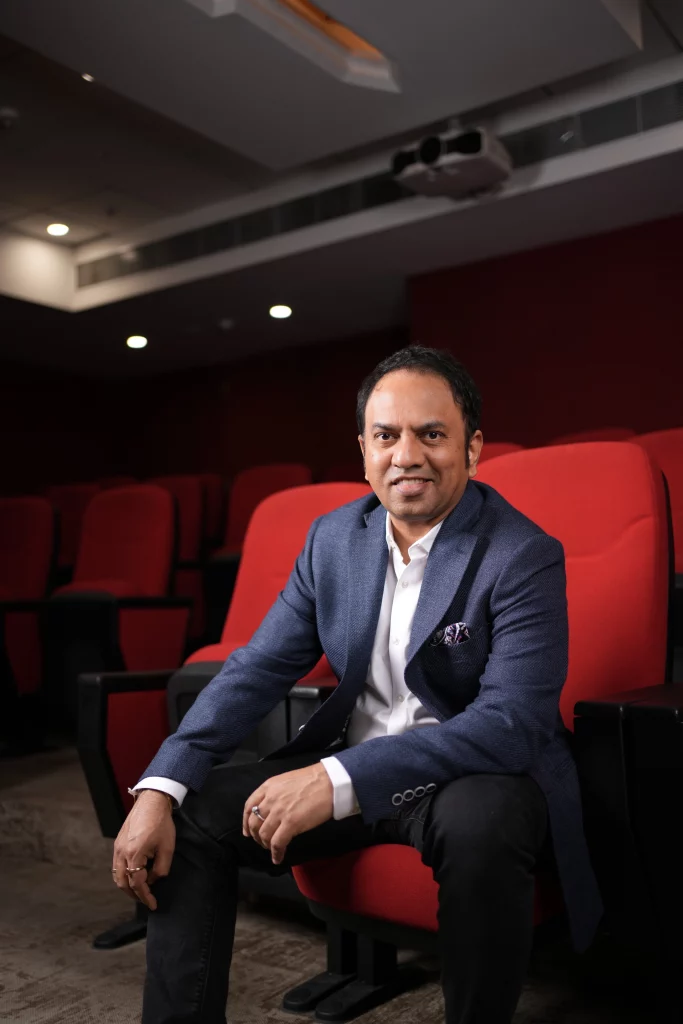
“Chhota Bheem was born from a simple yet powerful idea — why shouldn’t Indian children have a hero they can instantly relate to?” smiles Rajiv Chilaka, co-founder of Green Gold Animation, as he settles down for an interview with Global Indian.
Over the years, Green Gold Animation, one of India’s pioneering original animation studios and the creative force behind some of the country’s most beloved characters and stories diversified its content portfolio with shows like Mighty Raju, Super Bheem, Kalari Kids, and Mighty Little Bheem. These shows became a global sensation on Netflix, reaching children around the world with dialogue-free universal storytelling.
The birth of Green Gold
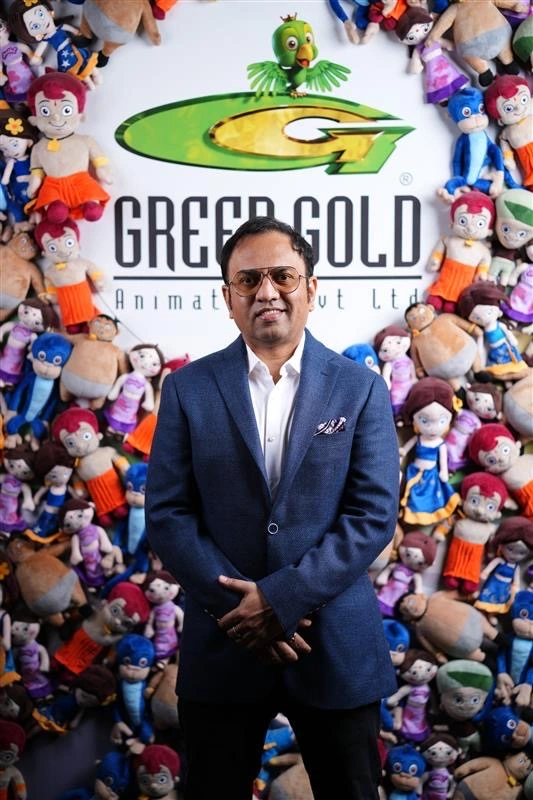
In the early 2000s, Indian TV channels were reluctant to pick up original indigenous animation, and most broadcasters favoured mythological or imported cartoons. At a time when the Indian animation scene was still nascent and dominated by imported content, Green Gold set out to fill a huge gap — original Indian content that kids across the country would feel belonged to.
“That meant the first few years were an uphill battle — creating pilots, refining storytelling, and convincing networks that local characters could succeed,” informs Rajiv.
Green Gold Animation came into being in 2004 with the sole intention of telling stories rooted in Indian culture, values, and imagination, with production quality that could compete internationally. “Samir Jain (co-founder) and I wanted to build an Indian animation studio on par with the best in the world and create home-grown characters that children could connect with,” says Rajiv.
As an entrepreneur, Rajiv saw a powerful opportunity to create animation content for the 350+ million children in India — children who deserve to grow up with their own superheroes, heroes who look like them, speak their language, and reflect their culture.
“Children connect more deeply with characters they can relate to, and that belief became a driving force behind everything we set out to build,” says Rajiv, who ensures that creative ambitions are supported by a solid, scalable business foundation.
Early challenges
The journey was far from easy. In the early years, TV channels were skeptical about local animation content, making it difficult to secure slots and funding. “Persistence, improving quality, and iterative storytelling helped break that barrier.” Building technical and creative talent in India was another challenge, as there wasn’t a large pool of experienced animation professionals at the time. “We invested in training, skills development, and building teams from scratch. Monetising beyond broadcast was uncharted territory in India.”
Rajiv says the early years were challenging and full of trial and error, but they were also deeply rewarding. “Over time, my role evolved from being just a storyteller to building teams, nurturing talent, and creating sustainable IPs.”
A pioneer in licensing
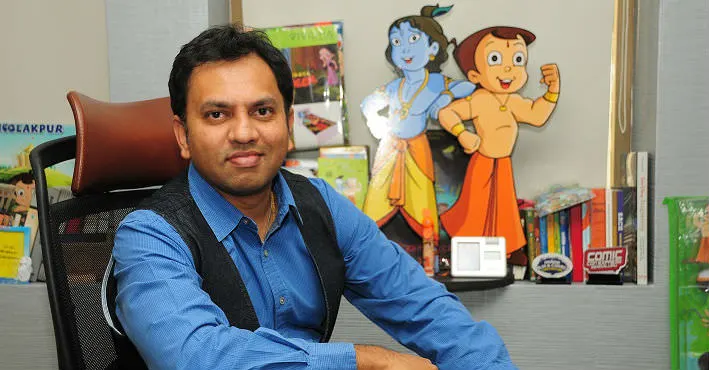
Green Gold pioneered licensing and merchandising strategies that were uncommon in the Indian animation ecosystem, turning characters into products and brands. “Through continuous reinvestment in quality, expanding our storytelling canvas, and maintaining a deep understanding of our audience, Green Gold transformed from a small startup into an industry leader.” The company has won multiple awards for its production and brand excellence, and Rajiv Chilaka who has been widely recognised for his entrepreneurial vision.
The rise of Chhota Bheem
Green Gold Animation produced several series before its breakthrough — including Vikram Betal and Krishna. But Rajiv felt there was a clear gap for home-grown heroes rooted in Indian culture, values, and everyday life. “We set out to create a character who was brave yet imperfect, strong yet kind, and heroic in a deeply human way,” says Rajiv, recalling how Chhota Bheem was born.
He says Bheem’s love for laddoos, his loyalty to friends, and his instinct to stand up for what’s right made him approachable and real. “His strength didn’t come from superpowers, but from courage, empathy, and values children could recognise and aspire to.” Rajiv says Chhota Bheem worked because it respected its audience. “It spoke to children without talking down to them and reflected a world that felt both familiar and aspirational,” he says, highlighting that this emotional authenticity made Bheem a part of childhood for millions. It remains one of the most rewarding chapters of his journey.
From cultural icon to global phenomenon
Chhota Bheem became a cultural phenomenon, loved by children across India and South Asia, transcending linguistic and regional divides. The character’s popularity helped Green Gold expand far beyond television — into licensing and merchandising, movies, games, apps, branded retail stores, and live events. “Today, Chhota Bheem’s presence spans thousands of SKUs and partnerships with major brands, making Green Gold one of the most successful animation licensors in the country,” says Rajiv, beaming with pride.
Did he anticipate the scale of his impact? “Not at all. While I hoped children would enjoy the show, the depth of connection they formed with Bheem was truly humbling.” That emotional resonance would soon travel beyond India. The Mighty Little Bheem series became a global sensation. “What makes it especially meaningful to me is that a character rooted in India — with its innocence, humour, and emotional warmth — was embraced by children across cultures and continents.”
One of Rajiv’s most significant creative decisions was to tell the story visually, without dialogue. “This allowed the character to move effortlessly across language barriers and connect through emotion, physical comedy, and universal childhood behaviour,” he explains. At its core, Mighty Little Bheem is about curiosity, mischief, kindness, and resilience — qualities children everywhere instinctively relate to. The show is also deeply centred on the bond between a mother and her child — a relationship defined by protection, trust, unconditional love, and gentle discipline.
That emotional layer gave the series its heart, helping it connect not just with children, but with families around the world. “It was a quiet but powerful validation that stories created in India can speak to the world, and that animation is truly a universal language.”
The Hyderabad boy
Born in Hyderabad, Rajiv grew up in Narayanguda, a bustling neighbourhood in the city. He is the youngest of three siblings, with an elder sister and brother. His father was a scientist and Deputy Director at DLRL (Defence Laboratories Research Laboratory), and his mother, a homemaker, was a deeply nurturing presence who became his greatest source of inspiration.
“My childhood was marked by energy, curiosity, and freedom,” recalls Rajiv, who spent most of his time outdoors playing cricket, football, badminton, and traditional Indian games like kabaddi, kho-kho, marbles, gilli danda, and kite flying, besides chess, carrom, and table tennis.
Summer camps at the local YMCA further expanded his creative world, exposing him to drawing, painting, clay modelling, acting, dance, and martial arts — early explorations that quietly shaped his future path. He studied at St. George’s Grammar School in Abids from nursery through Grade 12. Academically, he was an above-average student, though not exceptionally disciplined.
From engineering to animation
A turning point came when he watched his brother’s focused pursuit of engineering and postgraduate studies in the U.S., which pushed him to take his own academics more seriously. He went on to study Electronics and Communications Engineering at Deccan College of Engineering, Osmania University, and later secured admission along with a partial scholarship for a Master’s degree in Computer Science at the University of Missouri–Kansas City (UMKC).
It was at UMKC that something unexpected happened. “I discovered that the university’s logo had been designed by Walt Disney himself. Curious, I began reading about Disney’s life and journey, and I found his story deeply inspiring.”
Even as he worked professionally as a software and telecom engineer, that spark never left him. “Eventually, I knew I had to change direction,” says Rajiv, who then enrolled in a semester of animation at the Academy of Art in San Francisco. “That experience gave me absolute clarity about what I wanted to do for the rest of my life.”
Building a global powerhouse
Rajiv is working toward building India into a global powerhouse of original animation and storytelling. Having shown that Indian characters like Bheem can resonate worldwide, his focus now is on creating the next generation of ambitious, diverse, and globally relevant IPs. In recent years, Green Gold has also taken steps toward raising growth capital and scaling further. “We want to expand into new markets and content verticals while building on the legacy of iconic Indian IPs,” he mentions.
Green Gold is already expanding content across formats — series, feature films, digital-first shows, and interactive experiences — while continuing to focus on emotionally driven, character-led stories for audiences ranging from preschoolers to young adults. “We are also exploring live-action to take our characters into new storytelling spaces. Technology will play a big role in everything we do going forward.”
Embracing AI and technology
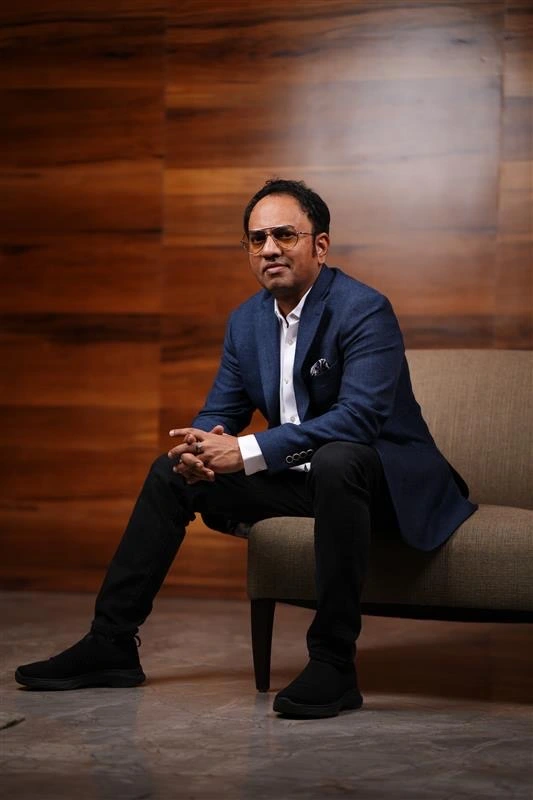
Staying at the cutting edge of AI and new creative technologies is essential, says Rajiv — not just to improve efficiency, but to unlock new ways of telling stories, creating worlds, and engaging with audiences. A big part of the future is also about scale. “That means strengthening our presence on global platforms, growing our licensing and merchandising business, and building deeper partnerships across international markets.”
The Theme Park dream
In the long term, Rajiv also plans to build a Green Gold theme park — an immersive world where children and families can physically step into the stories and characters they love. “At the same time, I’m deeply committed to nurturing creative talent in India — writers, directors, designers, and technologists — so that we can keep raising the quality bar and compete with the best in the world.”
India vs The West
Rajiv says the animation industry in India is at a very exciting and transformative stage. “Over the past decade, we’ve seen rapid growth in both capacity and capability. Indian studios are delivering work that can compete technically with the best in the world, and creators are increasingly telling stories that are original, culturally rooted, and globally resonant.”
When compared with the West, he says there are a few key differences — particularly in scale and maturity. The Western animation industry — especially in the U.S. and parts of Europe — has a long history of large studios, deep investment, and established distribution pipelines across theatrical, TV, and streaming platforms. “That infrastructure has taken decades to build. India’s industry is younger in comparison, but it’s growing at a much faster pace now, especially with the rise of digital platforms.”
He says India has a huge pool of talented artists, designers, and animators, and the cost structure here is often more competitive. “Many global studios outsource a significant portion of their animation production to Indian teams. This has helped build technical expertise and scale.”
The streaming revolution
Rajiv feels studios in the West have traditionally driven the global narrative with characters and franchises that become cultural touchstones worldwide. “That’s beginning to change with Indian content — shows like Mighty Little Bheem are proof that stories created here can find huge global audiences.”
The rise of global streaming platforms has been a huge catalyst. “These platforms are commissioning and showcasing Indian animation in ways that weren’t possible before. That has helped Indian studios learn global standards faster and also launch their own formats internationally.”
Storytelling as a way of life
“Storytelling is not just my profession, it’s also my biggest hobby,” smiles Rajiv, who loves watching films, animated shows, and global content from different cultures. He is constantly observing how stories are told, how characters are built, and how audiences connect with them.
Indian epics and legends, in particular, have always inspired him — they are timeless, emotional, and filled with larger-than-life characters. “Many of the ideas we create at Green Gold are born from those influences,” he says.
Rajiv also enjoys playing sports like cricket, table tennis, badminton, and pickleball, which help him reset mentally and return to work with renewed energy.
Food, coffee and family
Spending time with his children is his biggest stress buster. “I have two boys and a girl, and whether indoors or outdoors, our time together — especially the stories I tell them — reminds me why storytelling matters so deeply to me,” says Rajiv.
He also enjoys music, long walks with his wife, and quiet moments of reflection. “And of course, I have a soft spot for good food and coffee — because great stories are always better when you’re well-fed,” he laughs, adding that if his food and coffee don’t arrive on time while at work, the creative genius in him tends to get a little cranky.
ALSO READ: From Garage Startup to Hollywood’s VFX Titan: Namit Malhotra leads DNEG to its 8th Oscar