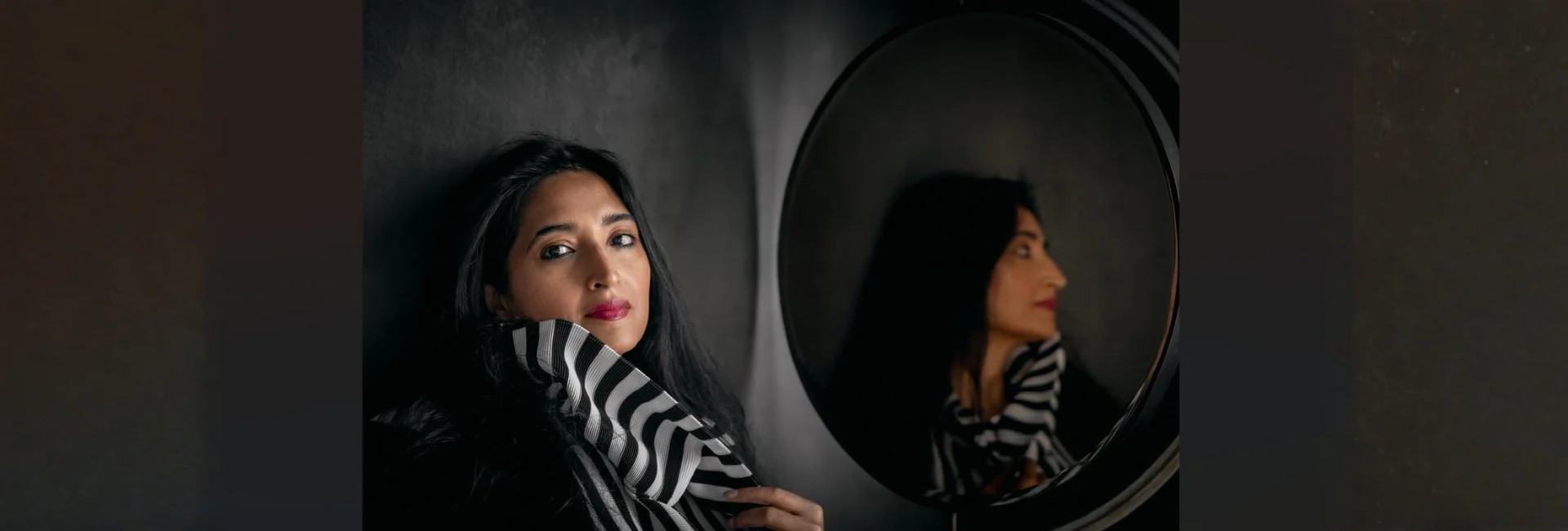


(December 11, 2025) Architecture, for Husna Rahaman, is a kind of borderless poetry — a language shaped by continents, cultures, and the quiet emotional landscapes we carry within us. Born on the emerald island of Mauritius, educated across London, New York and Paris, and shaped by years of movement through Dubai and beyond, her journey is as global as the ideas that animate her work. To her, buildings are far more than functional constructs; they are vessels of memory, identity and emotion — silent witnesses to lives unfolding. Featured among Forbes India’s Top 30 architects, Husna believes architecture is a bridge between the tangible and the transcendent. “Buildings shape who we are, how we think, connect, how we feel and experience the world,” smiles the founder of Bengaluru-based Fulcrum Studio, in a conversation with Global Indian.
Building a studio on soul and structure
Husna launched Fulcrum Studio a little over two decades ago with a clear intention: to create spaces deeply rooted in context yet globally resonant in thought. What began as a small design practice in Bengaluru has evolved into a multidisciplinary studio recognised across India and increasingly beyond. Like every origin story, the early years came with their share of challenges — establishing credibility, building client trust, securing meaningful projects and shaping a team aligned with her belief that architecture must prioritise emotion as much as structure. “What kept us moving forward was conviction, clarity, and the belief that every project must offer a coherent narrative, not just visual appeal.”
Designing with intention and empathy
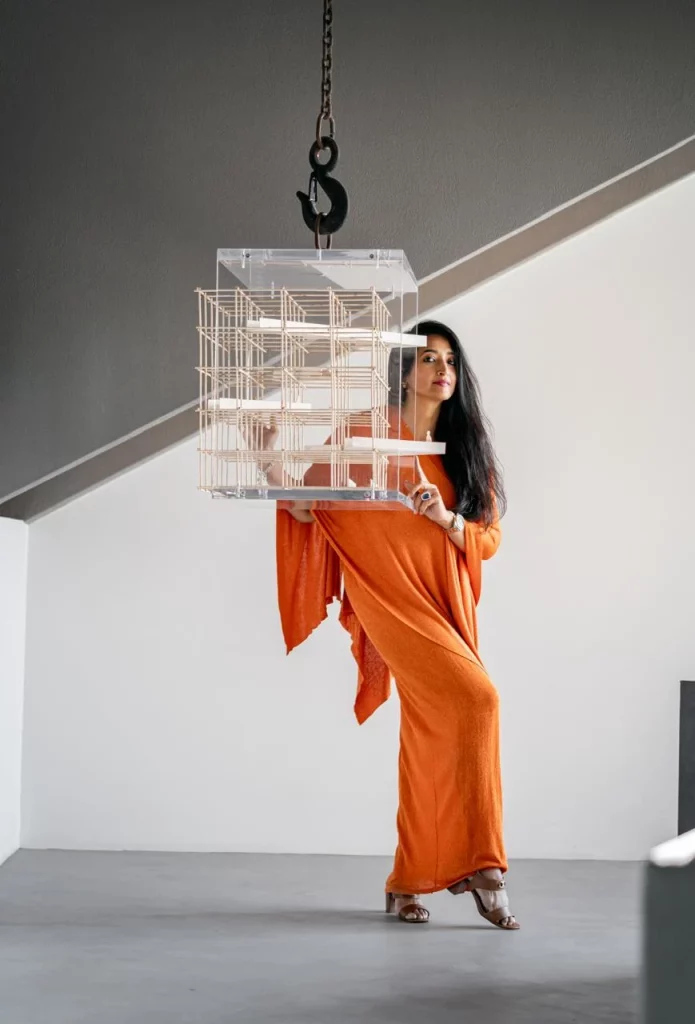
Today, Fulcrum Studio stands apart for its commitment to emotionally intelligent architecture — design that is technically rigorous yet poetic; bold in geometry yet deeply human in intent. “We integrate local craft, climate-responsive thinking and cultural storytelling to ensure every environment feels alive, purposeful and personal,” says Husna, whose portfolio spans residential, commercial and hospitality spaces across India.
HIRA as a milestone in meaning
Among the many highlights of her work is HIRA — a deeply personal project that reflects Fulcrum’s ethos of emotionally resonant, sensory-driven design. Celebrated for its bold geometry and immersive spatial narrative, HIRA received multiple national honours in 2025, including the Design Milestone Award, Trends Excellence Award, Times Design Ikons GoodHomes Award, and IIID National and Zonal Excellence Awards. “From a single-room entrepreneurial beginning to a nationally honoured practice with a growing global presence, Fulcrum remains anchored in its founding philosophy,” she says.
Roots, routes and early creative stirrings
Born in Mauritius and raised largely in India, Husna’s formative years unfolded across places and cultures, each adding a layer to her creative vocabulary. Convent educated and later a student in Bengaluru, she found herself intuitively drawn to the interplay between space and emotion. Even though her mother was a landscape architect, the profession wasn’t an automatic choice. “What truly drew me in was a lifelong curiosity about how spaces make us feel.” As a child, she observed the choreography of light in a room, the way shadows shaped movement, or how silence could shift a person’s mood. Parallel to this awakening was her immersion in poetry — reading and writing taught her the power of rhythm, pause and interpretation.
View this post on Instagram
Learning the world one city at a time
Her formal design education took her across continents — a year in London followed by four immersive years in New York. With her family based in Dubai during those years, travel became second nature: weekends in Paris, spontaneous journeys through Europe and quick hops to the East. At a time when India was still finding its global footing, the world became her classroom. “Those journeys taught me about humanity, language, art, beauty — and the extraordinary way in which our differences make us fundamentally similar.”
Three schools, three continents, one design ethos
At the Inchbald School of Design in London, Husna learned the grammar of space — proportion, scale, materiality and the discipline of design fundamentals. It was here she understood that elegance in design comes from intention, not excess. Parsons School of Design in New York expanded her worldview entirely. “I learned to think globally and socially — to see architecture as a responsibility, not just a craft.” At Parsons, design became a cultural force, capable of influencing behaviour, equity and community life. Her time at École refined her conceptual lens further, teaching her to trust abstraction, philosophy and narrative as powerful catalysts in design. “It encouraged me to ask why long before asking how. And in between classrooms, travel became my constant education.”
Conversations that shaped an architect
Husna reflects on the conversations with strangers, sunsets in unfamiliar cities, and the shifting skies across continents — all of which reinforced that while space may be felt differently everywhere, emotion is universal. “Those lessons urged me to create architecture that transcends the physical — where connection, introspection and experience become the true program of a building.”
Emotion as the first blueprint
For Husna, every design journey begins with a single question: How should this space make you feel? Only after the emotional framework is clear does she consider materiality and form. “Should it energise you in the morning? Or hold you gently at the end of a difficult day?” She believes context is not a constraint but a collaborator — its light, climate, cultural memory and craft traditions infusing life into design. Texture, shadow, silence and rhythm become characters in the spatial narrative. “A well-designed space doesn’t merely look beautiful; it changes how we breathe, interact, think and dream. It reveals not only what is seen, but what is felt.”
Crossing borders with new projects
The next chapter for Fulcrum Studio is one of expansion and deeper intention. “We are already working on international projects that I look forward to revealing soon — each one offering the chance to explore emotional architecture in new geographies, cultures and climate conditions.” She also plans to take on projects within India that challenge established typologies and redefine how people inhabit and experience space. Ultimately, Husna wants to build structures that make people feel seen — places that offer comfort, joy, belonging and, at times, transformation. “Spaces should hold our stories, not just our furniture.”
A writer who builds and a builder who writes
Writing has always been Husna’s parallel language. “I believe creativity flows from the same source — whether through words, walls or windows.” Architecture allows her to build stories in space; writing allows her to explore those stories in silence. Her book Spice Sorcery celebrates the culinary heritage of the Kutchi Memon community — a culture where recipes carry memory, ritual and identity. Through food, she explores belonging, nostalgia and the subtle ways tradition shapes lives. “Writing gives me space to pause, reflect and empty myself so something new can emerge. It reconnects me with the cultural intuition that enriches my design practice.” She hopes to begin her next book soon — perhaps an exploration of architecture as poetry, purpose and healing, or perhaps another celebration of cuisine and memory.
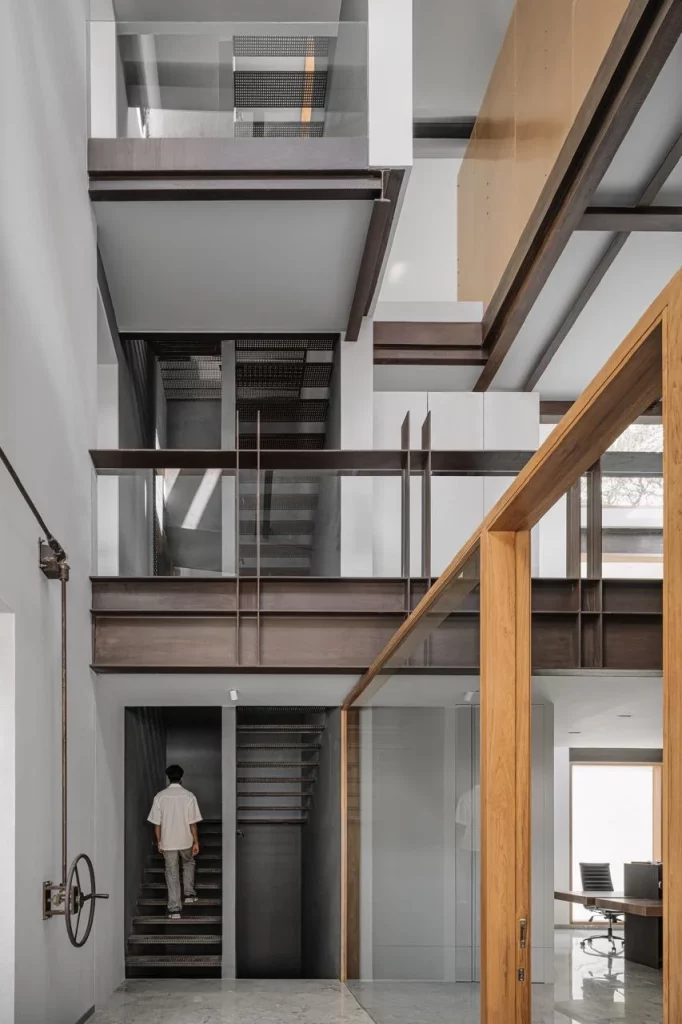
One of Husna Rahaman’s Projects
A life in motion, a practice in stillness
Husna’s days begin quietly with reflection, planning and a bit of movement to awaken the mind and body. After her son leaves for school, her professional day unfolds — guiding her team through design reviews, visiting project sites or meeting clients to ensure that imagined spaces take shape with integrity and intention. A cherished pause is her daily call with her daughter, who is forging her own architectural path at Parsons — a full-circle moment that inspires her deeply. By evening, she shifts fully into mother mode. “Listening to my son talk about his day, laughing over little stories and ending the night with a simple home-cooked meal is what grounds me,” says the TEDx speaker.
Finding new languages of expression
Husna remains nourished by creative and contemplative pursuits. Reading and writing continue to be sources of joy, while learning French, the language she has long admired for its elegance offers her a new cultural lens, one that parallels her fascination with nuance in design. Beyond books and ideas, she returns often to the coastline of Mauritius, her home away from home. “The ocean, the breeze, the shifting light — nature there has a way of restoring clarity and stillness,” she signs off.
ALSO READ: How a life across continents shaped Nilasha’s distinct design voice