
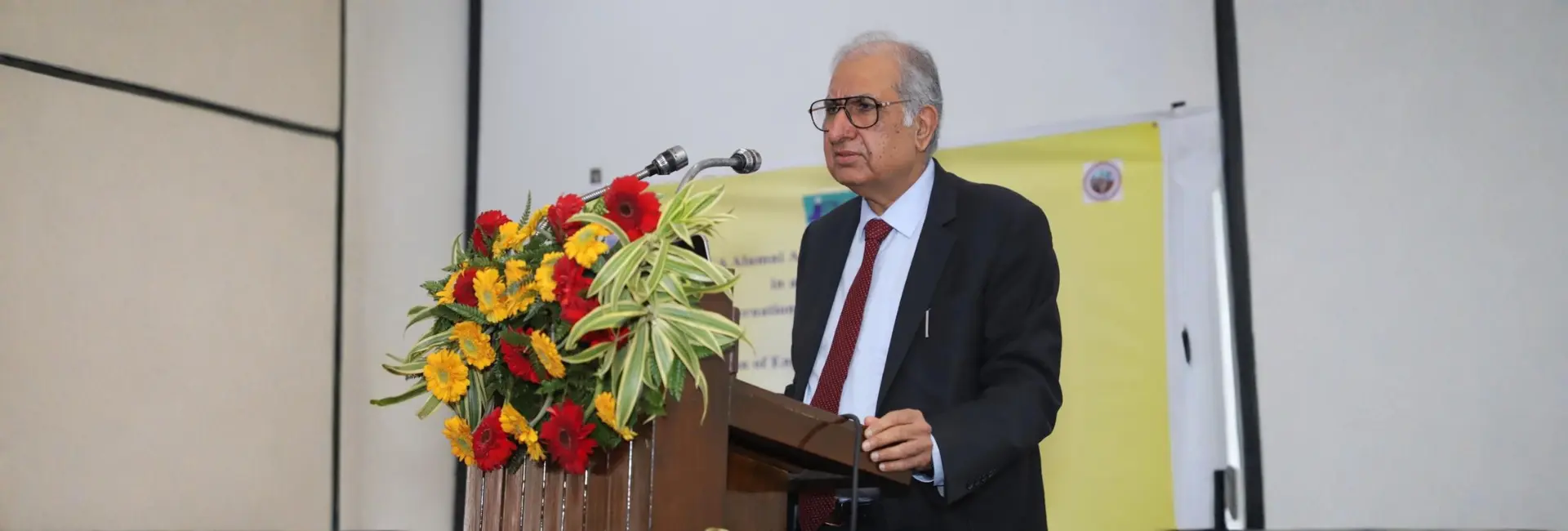


(January 26, 2026) A globally respected pulmonologist and former World Health Organization expert, Dr Gopi Chand Khilnani has helped shape India’s Air Quality Index (AQI), advised governments, and cared for the country’s highest constitutional authorities, including three Vice Presidents, cabinet ministers and VVIPs abroad. Yet his life began far from conference halls and policy rooms.
The wounds of Partition were still raw among millions of displaced families when Gopi Chand Khilnani was born in 1954. Just seven years earlier, his parents who were both freedom fighters deeply committed to India’s independence struggle, had been forced to leave their ancestral home in Sindh, Pakistan, and migrate to India. Like countless refugees of the time, they rebuilt their lives from scratch, eventually finding refuge in Jaipur.
Growing up in a resettlement colony within Jaipur’s walled city, young Gopi, the youngest among five siblings, witnessed firsthand the pain, loss, and resilience of families who had survived the horrors of 1947. Those early years, shaped by stories of displacement and sacrifice, left a deep imprint on him, instilling empathy, resilience, and a strong moral compass that would guide his life.
For the Khilnani household, education and values were non-negotiable. Despite limited means, their parents ensured that learning remained central. Four of the five siblings, including Gopi, went on to become globally renowned doctors. “My inspiration to become a doctor came from my elder sister, who was a gold medallist and the first in our family to join medicine,” smiles Dr Gopi Chand Khilnani, Chairman of the PSRI Institute of Pulmonary, Critical Care and Sleep Medicine, in conversation with Global Indian.
From attending a school where classes were sometimes held under a tree or inside a makeshift shack, to graduating from the prestigious SMS Medical College in Jaipur, and later completing a Fellowship in Critical Care at the Mount Sinai Medical School in New York, USA, Dr Khilnani’s journey is a striking example of how determination can transcend circumstance.
Care rooted in empathy
“Even as a child, I deeply admired two doctors in our neighbourhood,” he recalls. “They were treated like God. Everyone respected them for their selfless service and dedication.” That reverence stayed with him, quietly shaping his vocation.
With over 41 years of clinical experience, Dr Khilnani has worn many distinguished hats. He served as Head and Professor of the Department of Pulmonary Medicine and Sleep Disorders at AIIMS, New Delhi, and has been physician to three Vice Presidents of India over the last two decades. His patient list has included senior officials, cabinet ministers, and members of the family of a former Prime Minister. He has also been deputed to provide expert medical advice to VVIPs abroad.
“Whether rich or powerful, or poor and vulnerable, I treat everyone with the same zeal and intensity,” he says. “Caring for people suffering from serious health issues has always been my passion.”
A strong advocate of trust and compassion in medicine, Dr Khilnani believes that a healthy doctor–patient relationship is as important as clinical excellence. His philosophy of care remains rooted in empathy, without discrimination or hierarchy.
Taking India’s health concerns to the world
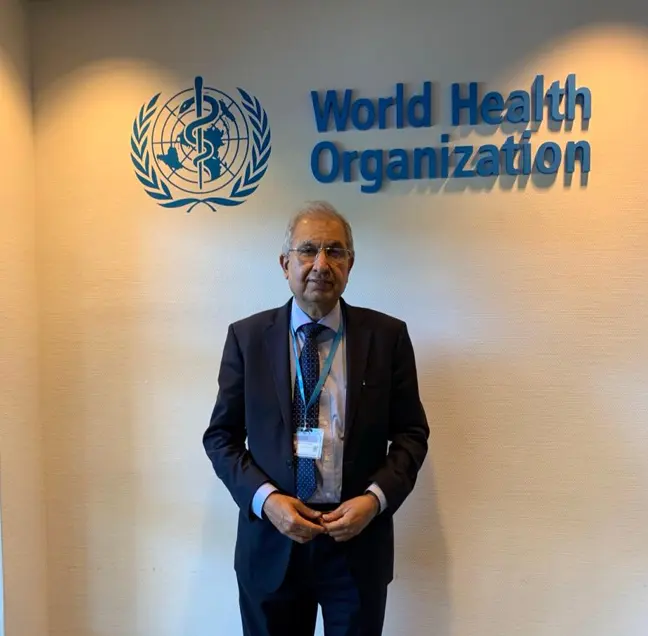
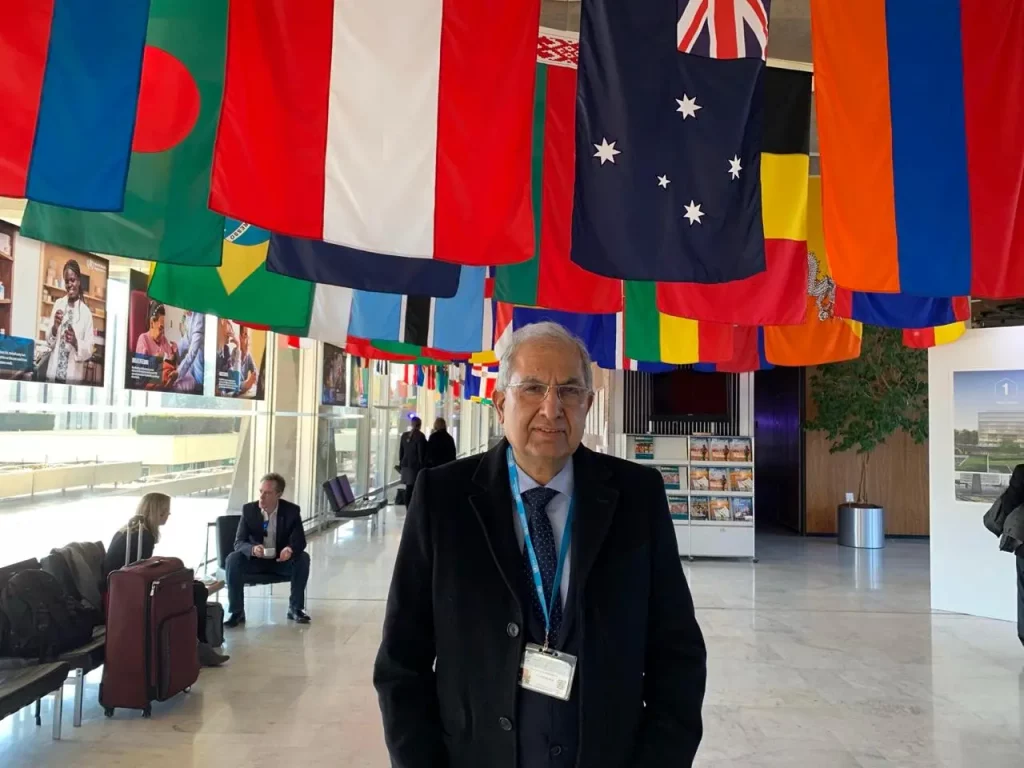
A member of the WHO Expert Committee on Air Pollution and Global Health, Dr Khilnani has authored multiple practice guidelines on asthma, COPD (bronchitis), pneumonia, and other respiratory conditions. His research work led to his invitation as an expert member to the World Health Organization in Geneva, where he contributed to framing global public health advisories.
As air pollution emerged as a public health emergency, especially in cities like New Delhi, Dr Khilnani became a familiar face on national television, regularly advising citizens on preventive measures and health risks. “The health effects of air pollution are a serious issue for India as a whole,” he says. “While policy interventions are crucial, individuals can still take preventive steps to reduce harm.”
He also served on the Government of India committee that developed the Air Quality Index (AQI), now used daily across the country to assess and communicate pollution levels.
At the frontlines during COVID-19
When the COVID-19 pandemic struck, Dr Khilnani was involved right from the outset. He served as a member of the Delhi government’s expert committee tasked with preparing the healthcare system for the impending crisis.
“Throughout the pandemic, I continuously advised the medical fraternity and the public, issuing advisories, participating in webinars, and sharing updates through national television,” he says. He also served on the adjudication committee for the Covaxin trial, contributing to India’s vaccine evaluation process during a critical moment in history.
Humble beginning and a life marked by distinction
Dr Khilnani’s journey began at Bal Mandir, Moti Doongri, where the monthly school fee was just one rupee. “The school placed special emphasis on practical skills like gardening and carpentry to prepare us for life,” he recalls. He later studied at a Hindi-medium school, Adarsh Vidya Mandir, where he completed his schooling with distinction. His academic excellence earned him a National Merit Scholarship that supported him for seven years, right through his medical graduation.
“My father dedicated his life to social service for the poor and lived a saintly life,” says Dr Khilnani. “His values continue to inspire me to uphold the highest moral standards.” A multi-talented student, he excelled in badminton, winning several prizes despite never receiving formal coaching, and was also passionate about singing, performing regularly on stage during his younger years.

Delhi, research, and the academic calling
After completing his MD, Dr Khilnani moved to Delhi and joined Safdarjung Hospital as a Senior Resident, where he gained extensive clinical exposure. It was here that pulmonary and critical care medicine drew him toward academics and research.
He went on to work closely with the late Professor J.N. Pande as a Senior Research Officer. It was a mentorship that proved transformative. “Professor Pande’s discipline, dedication, and commitment to medicine inspired me deeply. I often worked day and night, far beyond assigned duties,” he recalls.
In 1991, Dr Khilnani mastered bronchoscopy at a time when this specialised investigation was performed only at AIIMS in northern India. Two years later, in 1993, he joined the faculty as Assistant Professor, formally embarking on a lifelong journey in academics and research as critical care medicine rapidly evolved.
Leadership beyond AIIMS
After superannuating from AIIMS, New Delhi, Dr Khilnani joined PSRI as Chairman. There, he turned his attention to one of modern medicine’s gravest challenges—antibiotic resistance.
Recognising its growing threat, he led multiple ICU-based infection studies and, in 2019, framed national guidelines for antibiotic prescription in ICUs under the Indian Society of Critical Care Medicine. These evidence-based guidelines were revised and updated in 2024 and are now widely used across India. A pioneer in the clinical application of non-invasive ventilation, Dr Khilnani also developed standardised guidelines to help physicians adopt this life-saving intervention effectively.
Fellowships, recognition, and teaching as a calling
Over the years, Dr Khilnani has been nominated as a Fellow of several prestigious bodies, including the National Academy of Medical Sciences, Indian College of Physicians, Indian Chest Society, Indian Sleep Disorders Association, and the National College of Chest Physicians.
He served as Vice Chairman of the National College of Chest Physicians from 2007 to 2009 and later as its President for two terms. Last year, he delivered a distinguished oration in Kathmandu and was conferred Life Membership of the Nepalese Respiratory Society.
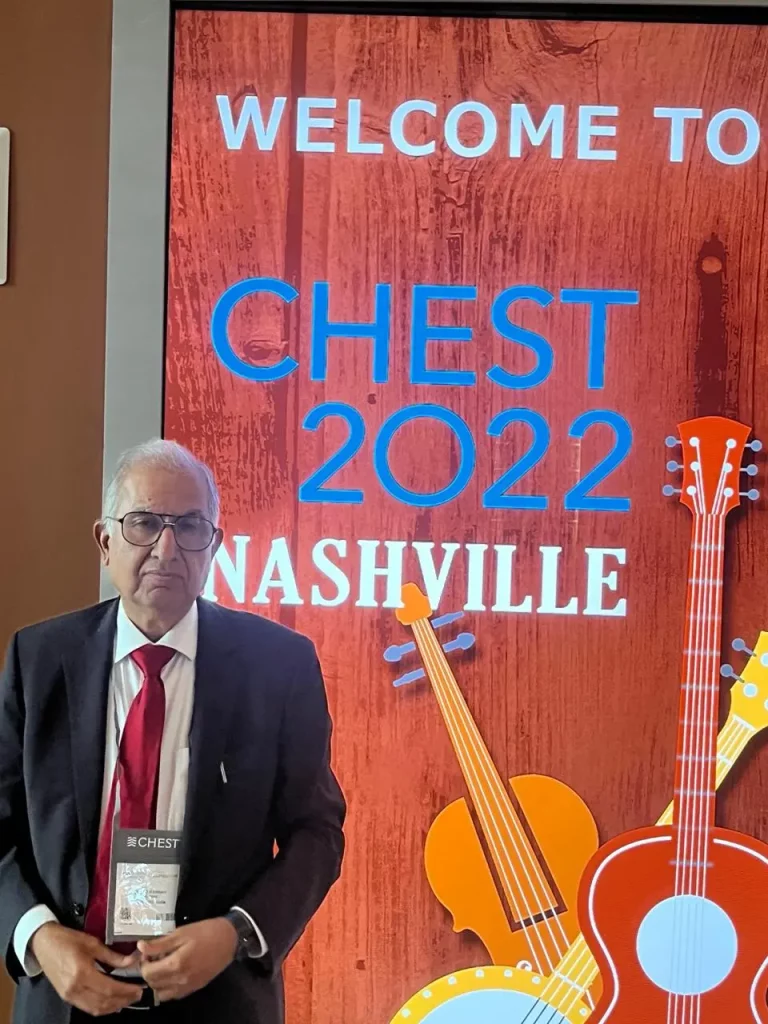
Yet, beyond titles and accolades, teaching remains his greatest passion. “Training the next generation of doctors gives me immense satisfaction,” says Dr Khilnani, who has mentored generations of MBBS, MD, and DM students in pulmonary and critical care medicine. Known as a strict disciplinarian, he is nonetheless deeply admired by his students. He is respected not just for his rigour, but for the integrity and excellence he brings to the profession.
ALSO READ: Dr Kasu Prasad Reddy: From a distinguished UK career to a homecoming that restored sight to millions



Having known Dr G. C. Khilnani for his excellent work in deteriorating air quality and addressing health concerns of people, I congratulate him for his distinguished contribution and leadership in society
I have known Dr Khilnani from my college days at SMS jaipur. He was 2 yrs my senior. Unassuming, caring & friend to ebverybody. He is an inspiration to many including myself. Wish him a happy, healthy & fulfiling life. I a।m sure that he will do great as advisor to WHO.