

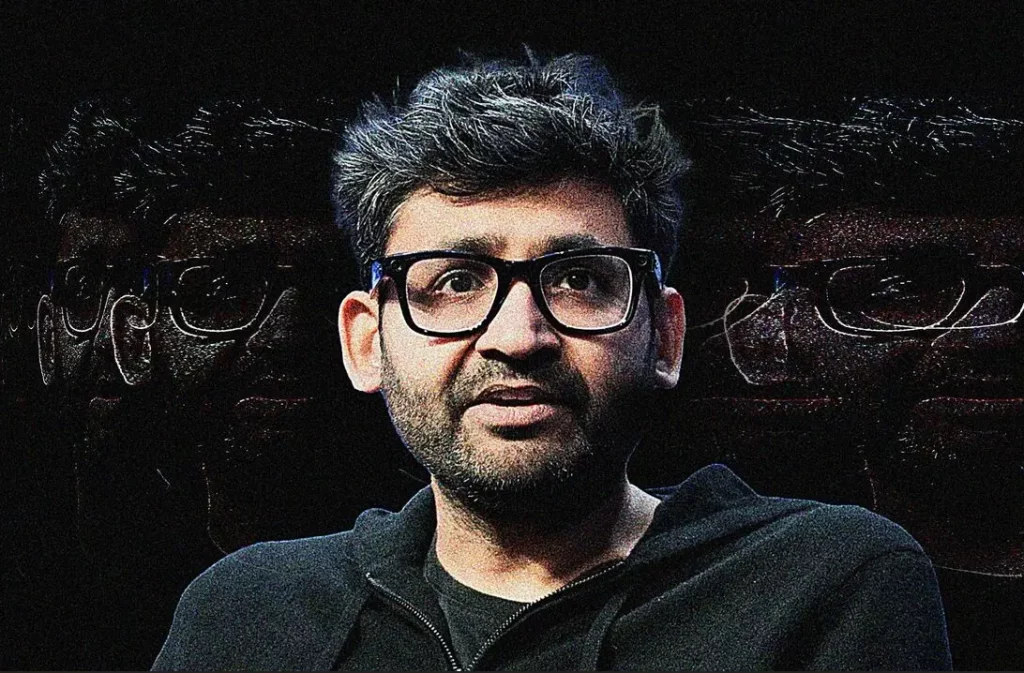
(February 12, 2026) When Elon Musk completed his takeover of Twitter in October 2022, the headlines moved fast. The deal was dramatic. The shake up at the top was immediate. Among the first to exit was Parag Agrawal, the Indian American technologist who had risen from software engineer to CEO in eleven years.
For many watching from the outside, it seemed like a sharp fall. A young CEO, handpicked by Jack Dorsey, suddenly removed from one of the world’s most influential platforms. It would have been easy to assume that Agrawal’s most defining chapter had already been written. Instead, it was only the preface.
Today, Agrawal is building something far more foundational than a social media platform. His new venture, Parallel Web Systems, is attempting to redesign the internet itself for a future in which artificial intelligence becomes its most active user. This is not a comeback story in the conventional sense. It is a story about reinvention, about thinking several years ahead of the curve, and about betting that the web as we know it is on the verge of its biggest transformation yet.
Parallel Web Systems has raised over $100 million from marquee investors including Khosla Ventures, Index Ventures, and First Round Capital. The funding signals strong belief in an idea that sounds deceptively simple but could reshape the internet.
Tinkering after Twitter
The idea did not emerge from a corporate strategy offsite. It began quietly. After leaving Twitter, Agrawal did not immediately step into another high profile role. Instead, he returned to something more personal. “I was just writing a bunch of code, tinkering around,” he says.
He began building AI agents that would collect information from the web and bring it back for him to read. As he experimented, he noticed the friction. The web was cluttered with formats and interfaces built for human consumption. AI systems had to work around those layers rather than through them.
He had spent more than a decade building large scale machine learning systems at Twitter. He knew what intelligent systems could do. He also knew the limitations imposed by the current web. Everything, as he puts it, had been built for humans over the past 30 years. The needs of AI systems are fundamentally different. That gap is what Parallel is trying to close.
At Parallel, we’re obsessed with the open web. We believe that AI will use the web a thousandx, a millionx more than humans ever have. And as a result, the web will need to transform.
Parag Agrawal
A big vision
Building new internet infrastructure is not a modest ambition. It requires capital, talent, and long term conviction. Parallel raised around 100 million dollars at the outset from investors including Khosla Ventures, Index Ventures, and First Round Capital. For a company that had not yet released a consumer product, it was a strong show of confidence.
Agrawal explains the scale of the bet. “To really transform what the open world looks like requires reimagining from the ground up every part of the infrastructure,” he says. That means rethinking how information is crawled from the web, how it is indexed, how it is ranked, and how AI systems reason over it. It also means designing new interfaces that are built specifically for AI, not retrofitted from human tools.
The team he has assembled reflects that ambition. Many of the engineers around him previously built the systems that define the current human web, including social networks and digital marketplaces. In his words, the people who built the first version of the web are now coming together to build the next one.
From public conversation to open intelligence
Agrawal’s time at Twitter shaped his thinking deeply. Born in Ajmer, Rajasthan, he grew up in a family steeped in science and academia. His father worked in India’s Department of Atomic Energy and his mother was an economics professor. As a teenager, he won a gold medal at the International Physics Olympiad. He went on to earn a degree in computer science from IIT Bombay and a PhD from Stanford University, where his research focused on managing uncertainty in data.
He joined Twitter in 2011 as a software engineer. Over the next eleven years, he helped build the machine learning systems that powered timelines and recommendations for hundreds of millions of users. He became chief technology officer in 2017 and later led Project Bluesky, an effort to develop a decentralized social networking protocol. In November 2021, Jack Dorsey stepped down and named Agrawal as CEO. He looks at his journey with pride.
We built, over 11 years that I was at Twitter, one of the most consequential platforms to exist. It allowed everyone to speak and hear directly from others. And there is nothing like it.
Parag Agrawal
His tenure as CEO ended abruptly when Musk completed the acquisition in October 2022. Agrawal was fired the same day. For many leaders, that kind of public exit might define their legacy. For Agrawal, it appears to have clarified his next mission. Today, he frames his work at Parallel as part of a broader effort to keep the web open.
“There is a risk on the open web wherein we might have a bunch of walls and silos,” he says. In a world dominated by powerful AI models, access to information could become fragmented. Some systems might have privileged access to certain data, while others are locked out. “That’s not the future I want.”
Why this matters to ordinary users
At first glance, infrastructure for AI agents may sound abstract. But its consequences will touch everyday life. If AI systems can access and reason over the open web more effectively, they can help solve complex problems more quickly.
But that only works if the web remains open and structured in ways that support intelligent systems. Parallel envisions a web where data, computation, and reasoning are tightly integrated. It imagines systems where AI can state what it needs and let the infrastructure determine how to retrieve it. It emphasizes transparent attribution so that sources are credited and contributions are measurable. It argues for open markets in which participants are rewarded based on the value they add.
In essence, it is trying to ensure that as AI grows more powerful, the internet does not become a closed garden controlled by a handful of players.
What was unfortunate about the public attention I did receive during the Twitter era was that in that moment I couldn’t say very much… Now I want to harness public attention towards the future I want to build
Parag Agrawal
Rise, fall, reinvention
Parag Agrawal’s career arc is striking not because it follows a straight line but because it does not. From a physics prodigy in India to a Stanford researcher, from an engineer at Twitter to its CEO, from a high profile firing to launching a well funded AI infrastructure startup, his journey has been marked by sharp turns. The lessons he draws from Twitter still guide him. “What remains similar is the mindset of solving problems end to end, understanding evolving systems, dealing with stochastic systems,” he says.
Only now, the system he is trying to shape is larger than a single platform. If his first act was about enabling public conversation at scale, his second is about enabling machine reasoning at scale. If Twitter was about connecting voices, Parallel is about connecting intelligence to the vast memory of the web.
The internet has had one primary user for three decades. Humans. Agrawal is betting that its next era will belong just as much to machines. And he wants to make sure that when that shift happens, the web does not shrink or fracture, but expands.
For a technologist once defined by being fired, this may be the more enduring legacy. Not the platform he led, but the foundation he is trying to build for what comes next.
- Follow Parag Agarwal on LinkedIn
ALSO READ: Aravind Srinivas and Perplexity AI: Helping the world sleep wiser than it woke up