

(December 19, 2025) Sanskrit, the ancient classical Indo-Aryan language, is now finding its way back into classrooms in Pakistan. In a historic move, the first since Partition, the Lahore University of Management Sciences (LUMS) has launched a four-credit course in Sanskrit, marking a rare moment of cultural and academic exchange. The initiative grew out of a three-month weekend workshop that evoked keen interest from students and scholars alike. While Sanskrit has already become part of curricula in educational institutions in the UK, US, Australia, New Zealand, and South Africa, this is the first time a university in the Islamic Republic has introduced the ancient language. Unsurprisingly, the move has been warmly received in India, where many see it not merely as an academic development, but as a reaffirmation of Sanskrit’s universal and inclusive legacy.
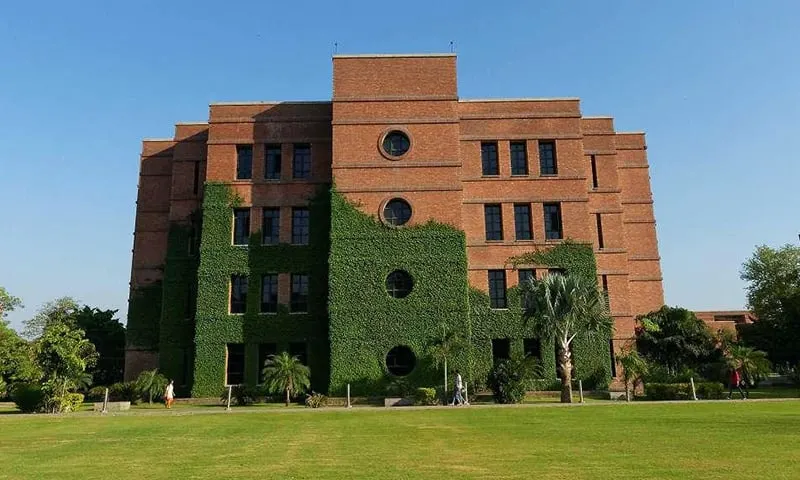
LUMS, Pakistan
An unlikely catalyst
The introduction of Sanskrit at LUMS was made possible through the efforts of Dr Shahid Rasheed, Associate Professor of Sociology at Forman Christian College, Lahore. As part of the course, students are also being exposed to the Urdu rendition of “Hai katha sangram ki”, the iconic theme from the Mahabharat television series. “Classical languages contain much wisdom for mankind. I started with learning Arabic and Persian, and then studied Sanskrit,” said Dr Rasheed, who relied on online platforms and studied under Cambridge Sanskrit scholar Antonia Ruppel and Australian Indologist McComas Taylor. It took him almost a year to cover classical Sanskrit grammar, and he continues to study it.
A language with a vast footprint
The Sanskrit language’s historic presence is attested across a wide geography beyond South Asia. Inscriptions and literary evidence suggest that Sanskrit was already being adopted in Southeast Asia and Central Asia in the first millennium CE through monks, religious pilgrims, and merchants. Beyond ancient India, significant collections of Sanskrit manuscripts and inscriptions have been found in China—particularly in Tibetan monasteries as well as in Myanmar, Indonesia, Cambodia, Laos, Vietnam, Thailand, and Malaysia.
A global resurgence of interest
Spiritual educator and popular columnist for publications across India, Nepal, and the UK, Rajyogi Brahma Kumar Nikunj ji says there has been a growing global curiosity towards ancient Bharatiya languages and scriptures in recent years. “This is not just an academic trend; it is indeed a sign of a deeper awakening taking place in human consciousness,” he tells Global Indian. For too long, he says, people believed ancient wisdom belonged only to a particular geography or community. “Yet the sages who gave us these languages never intended their knowledge to be restricted,” says the Rajyogi, explaining why Sanskrit—long regarded as the mother of many linguistic traditions and the carrier of profound spiritual insight is finding its way back into classrooms, research institutions, and cultural study circles around the world.
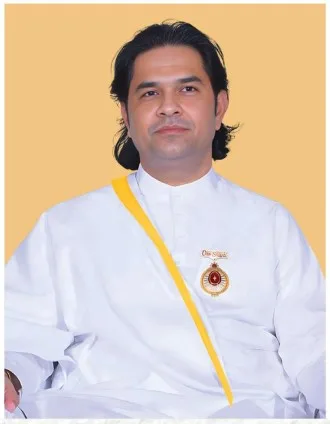
Rajyogi Brahma Kumar Nikunj
A language of precision and purity
Alongside this resurgence, he notes, even iconic verses from epics like the Mahabharata are being translated into diverse languages and sometimes sung in forms that resonate with new audiences. “Sanskrit was crafted as a language of precision, of elevated thinking, of inner purity. It was created so that the highest truths could be expressed clearly and preserved accurately.” When any society anywhere in the world chooses to explore this language today, he says, it is not merely learning grammar; it is reconnecting with a universal treasury of wisdom.
When intent matters more than script
What is especially beautiful, he adds, is the way these teachings are being rediscovered across languages. “When verses like ‘Hai katha sangram ki’, or other expressions of the Mahabharata, are rendered in Urdu, English, or any modern tongue, it shows us that spiritual knowledge does not depend on the script we read, but on the intent with which we receive it.” The Mahabharata, after all, is not a story of external battle; it is the eternal tale of the soul’s inner war against anger, ego, greed, and attachment. “Whether recited in Sanskrit or sung in any other language, its message remains unchanged: transform the self, and the world around you transforms.”
A search for meaning beyond division
This cross-cultural embrace of ancient wisdom reflects a subtle but significant shift. He says humanity today is tired of division and conflict, and people everywhere are seeking meaning, peace, and clarity. “In such a climate, languages and teachings that focus on dharma, viveka, and inner mastery naturally attract the sincere seeker.”
“As Rajyoga teaches, when we step beyond labels and identities, we begin to recognize ourselves as souls, children of one Supreme Father. In that awareness, all knowledge becomes shared heritage, not personal possession,” says the Rajyogi. He adds that the revival of Sanskritic studies across different societies serves as a reminder that unity is not created through agreements or declarations; it is created through understanding. “When cultures make space to appreciate each other’s philosophical foundations, they nurture respect. And respect is the seed of harmony,” he says, pointing out that just as the Gita teaches that every being has a unique swadharma, every civilisation too has a unique contribution to make to humanity.
Carrying timeless values forward
He feels rediscovering ancient scriptures in new contexts allows people to celebrate that richness together. “Ultimately, the renewed interest in ancient languages is not about turning back to the past but about carrying timeless values into the future. It signals a collective longing to rise above the noise of the world and reconnect with what is eternal.” Summing it up, he says as more people engage with these teachings—whether in their original form or in heartfelt translations—they move one step closer to a world where hearts are open, minds are elevated, and souls recognize their shared journey.
‘It is ours too’
Dr Rasheed says people often question his choice to study Sanskrit. “I tell them, why should we not learn it? It is the binding language of the entire region. Sanskrit grammarian Panini’s village was in this region. Much writing was done here during the Indus Valley Civilisation.” He describes Sanskrit as a mountain—a cultural monument. “We need to own it. It is ours too; it’s not tied to any one particular religion.” Dr Rasheed believes South Asia will see a more cohesive future if people try to learn each other’s classical traditions. “Imagine if more Hindus and Sikhs in India started learning Arabic, and more Muslims in Pakistan took up Sanskrit. It could be a fresh, hopeful start for South Asia, where languages become bridges instead of barriers.”
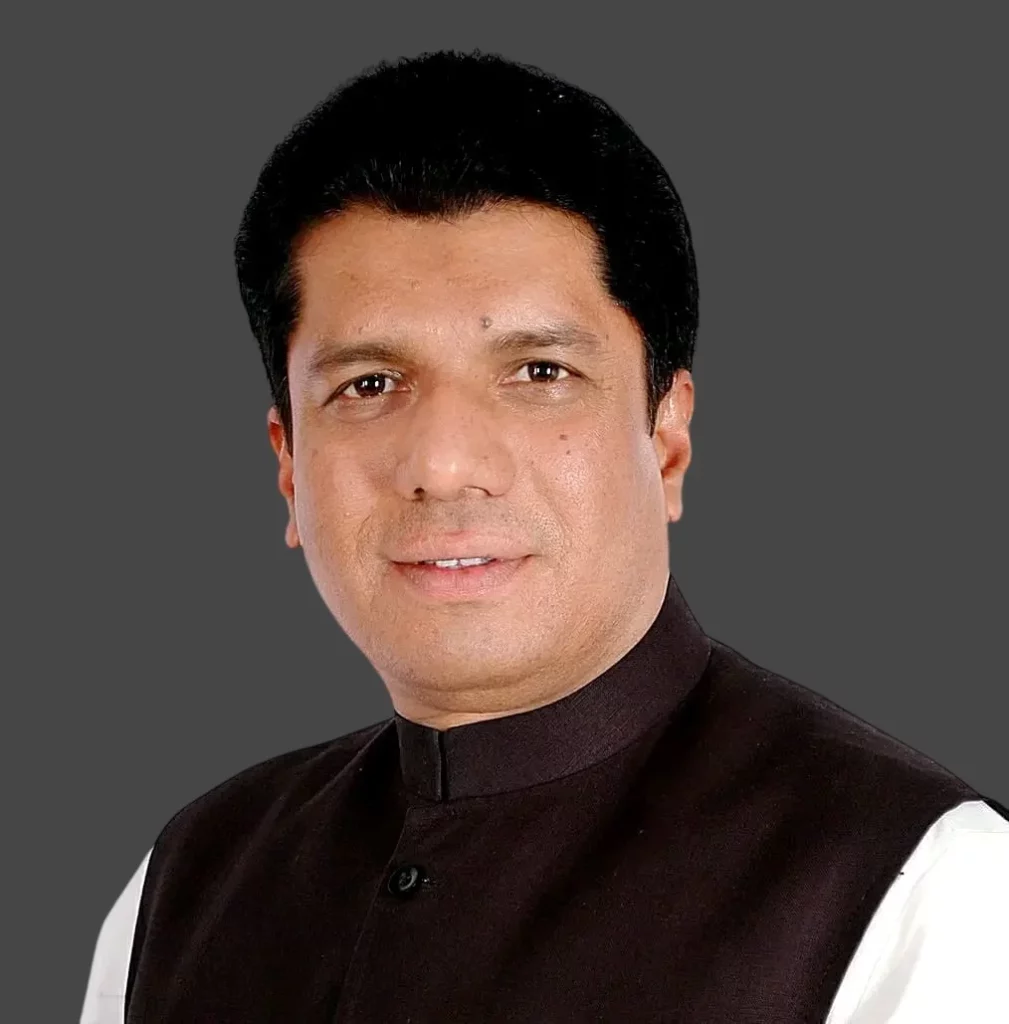
The academic who helped bring Sanskrit to LUMS: Dr Shahid Rasheed, Associate Professor of Sociology at Forman Christian College, Lahore
Neglected treasures, future scholars
Interestingly, Pakistan has one of the richest yet most neglected Sanskrit archives at the Punjab University library. “A significant collection of Sanskrit palm-leaf manuscripts was catalogued in the 1930s by scholar JCR Woolner, but no Pakistani academic has engaged with this collection since 1947,” says Dr Ali Usman Qasmi, Director of the Gurmani Centre. Only foreign researchers use it. “Training scholars locally will change that.” The university also aims to expand with upcoming courses on the Mahabharata and the Bhagavad Gita. “In 10–15 years, we could see Pakistan-based scholars of the Gita and the Mahabharata,” Dr Qasmi adds.
Sound as sacred science
Speaking to Global Indian, Ashwini Guruji of Dhyan Ashram says Sanskrit is not a language; it is a frequency of sound through which one connects to all dimensions. “Often, we tend to consider Sanskrit as just another language, like English, Hindi, Arabic, Urdu etc. Sanskrit, in fact, is not a language; it is the science of dhwani coded in the form of mantras, shlokas and uchharans that were revealed to the Vedic rishis in heightened states of dhyan. It is the vani of devas.”
A logical architecture of sound
Elaborating further, he explains that in English, the alphabets from A to Z are not arranged in any logical or rational manner. “There is no reason why F is followed by G or why P is followed by Q. On the other hand, Panini in his first 14 Sutras arranged alphabets in the Sanskrit language in a very scientific and logical manner, after close observation of the sounds in human speech,” he says, adding that no language in the world has its alphabets arranged in such a rational and systematic way. “Hopefully this dhwani, if it vibrates in Pakistan, some sense will prevail and they will refrain from subversive acts,” adds Ashwini Guruji, an authority on Vedic sciences whose book Sanatan Kriya: The Ageless Dimension is an acclaimed thesis on anti-ageing.
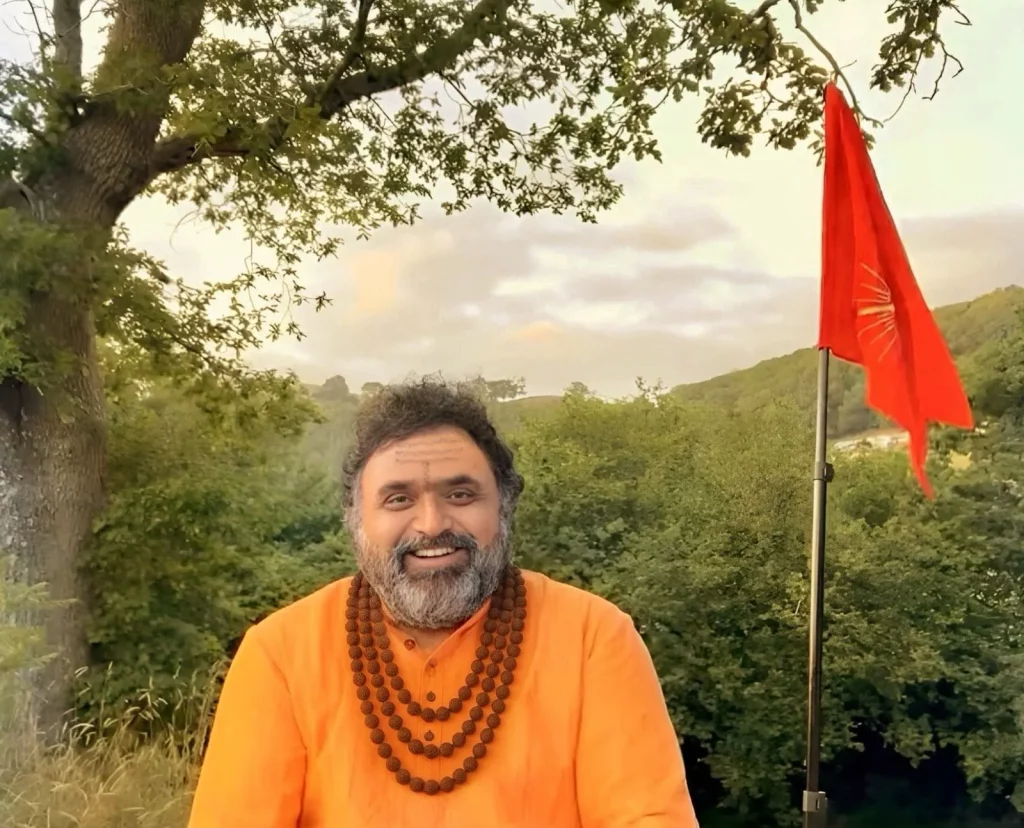
Ashwini Guruji
Cultural diplomacy beyond politics
Mohd. Khaleequr Rahman, AICC National Coordinator and political analyst, sees the reintroduction of Sanskrit as an academic subject at a Pakistani university as a welcome and positive step. “It goes beyond the classroom and has political and diplomatic relevance, especially in a region where culture, identity, and history are often sensitive and contested,” he tells Global Indian. From a diplomatic perspective, he says studying a classical language that belongs to a shared civilisational past sends a quiet but meaningful signal of openness. “It shows an understanding that the cultural and intellectual history of the subcontinent is much older than the political boundaries created in 1947.”
The use of Urdu adaptations of stories from the Mahabharata further underscores how deeply connected South Asian cultures have always been. “It reminds us that languages and traditions have influenced each other for centuries, even if modern borders suggest separation.” In global diplomacy, Rahman says, cultural and academic initiatives like this often act as confidence-building measures. “They may not change official policies, but they do help reduce distance, improve perceptions, and create space for dialogue.” Seen this way, he believes the step is not about altering political positions, but about engaging with history thoughtfully and in balance, recognising shared cultural inheritance while fully respecting present-day geopolitical realities.
A civilisational homecoming
Celebrated author and historian Aabhas Maldahiyar feels Sanskrit returning to a Pakistani university is not a cultural experiment but a civilisational homecoming. “History has a way of outliving those who try to amputate it,” he says.
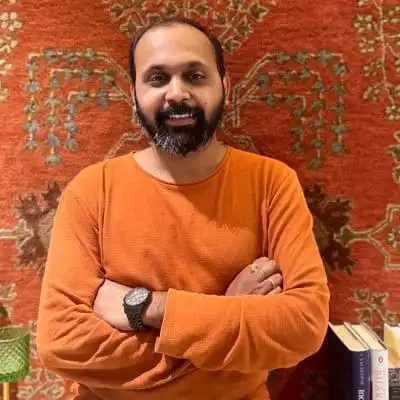
Abhyas Maldahiyar, historian
Speaking to Global Indian, he notes that the land that is today Pakistan is repeatedly named, mapped, and sung in the Vedic corpus—Sindhu is not a metaphor but a geography. “The irony is stark—a heritage erased at home in the name of ideology had to be rediscovered in classrooms, while the same civilisation is studied, celebrated, and preserved aloud across the world,” says Aabhas, whose highly anticipated sequel Babur: The Quest for Hindustan, a meticulously researched and powerfully written exploration of one of South Asia’s most complex figures, hit the stands recently.
In the return of Sanskrit to Pakistani classrooms lies a profound truth that civilisations may fracture politically, but their languages remember, endure, and eventually find their way home.