

(December 27, 2025) In 2025, some of the most consequential global stories involving Indian women did not begin overseas. They took shape within India, at Indian institutions, classrooms, teams, and lived realities, and travelled outward, influencing global conversations in sport, literature, national security, social reform, and frontier technology. These women drew attention not through spectacle, but through outcomes that carried global weight. At Global Indian, we documented these journeys as they unfolded.
This was a year when excellence spoke across domains with a long-awaited World Cup win that changed the narrative of Indian sport, a literary voice who brought regional literature into global focus without dilution, two uniformed officers came to symbolise resolve in a moment of national crisis, an education reformer proved scale and empathy can coexist, and a policy leader helped shape the future of artificial intelligence from India. These women did not ask to be seen. Their work ensured they could not be ignored.
Take a look at our top picks. While many more women made their mark this year, these stories stood out for the scale, timing, and global resonance of their impact.
India’s women’s cricket team won their first World Cup in 2025
When the Indian women’s cricket team lifted the ICC Women’s World Cup trophy in Navi Mumbai in November 2025, it felt both historic and inevitable. Historic because it was India’s maiden title. Inevitable because it was the result of nearly five decades of persistence, investment, and belief in a sport that once existed on the margins. The journey began in the 1970s, when women cricketers played with borrowed equipment, sparse support, and little visibility. Over time, that resilience evolved into structured systems, professional contracts, and a generation of players unafraid of pressure. The World Cup win was not an overnight miracle, rather the culmination of years of near-misses, recalibration, and growing confidence.
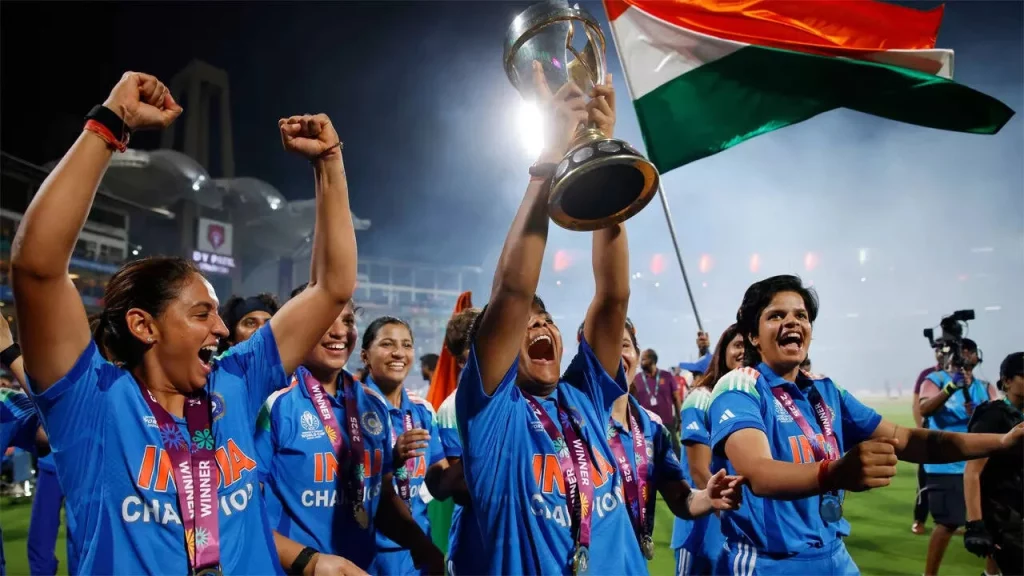
Jubiliant Indian Women’s Cricket team after winning the World Cup
India’s 52-run victory over South Africa in the final capped a tournament defined by composure. Much like the men’s 1983 victory transformed Indian sport, the 2025 triumph of the women’s cricket team signals not just sporting excellence, but a cultural shift, where women’s cricket is no longer an adjunct story, but a central chapter in India’s sporting identity. Read More
Sofiya Qureshi and Vyomika Singh became the face of Operation Sindoor
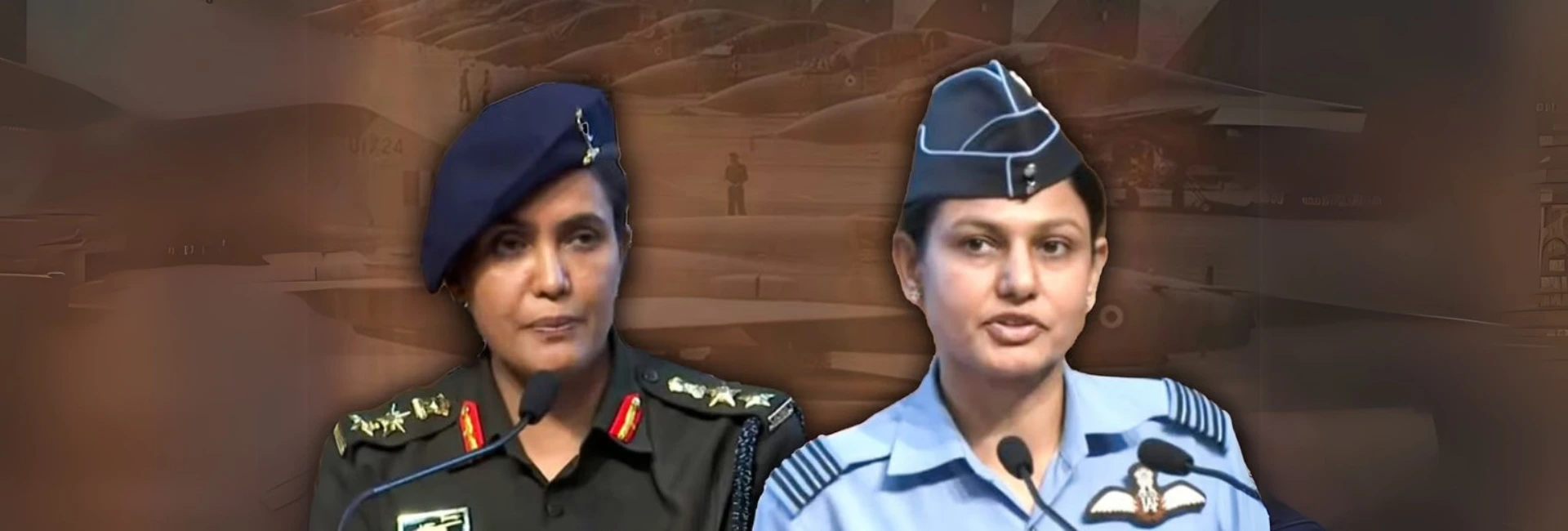
On May 7, 2025, as India briefed the world on a decisive counter-terror operation, two women stood at the podium. Colonel Sofiya Qureshi of the Indian Army and Wing Commander Vyomika Singh of the Indian Air Force were not only explaining military action, they were embodying a modern image of Indian leadership under pressure. Operation Sindoor followed the April 22 terror attack in Pahalgam that killed 26 civilians and left deep national wounds. Named after the vermilion symbolising marriage and loss, the operation targeted nine terror camps with precision, based on credible intelligence and with care to avoid civilian casualties.
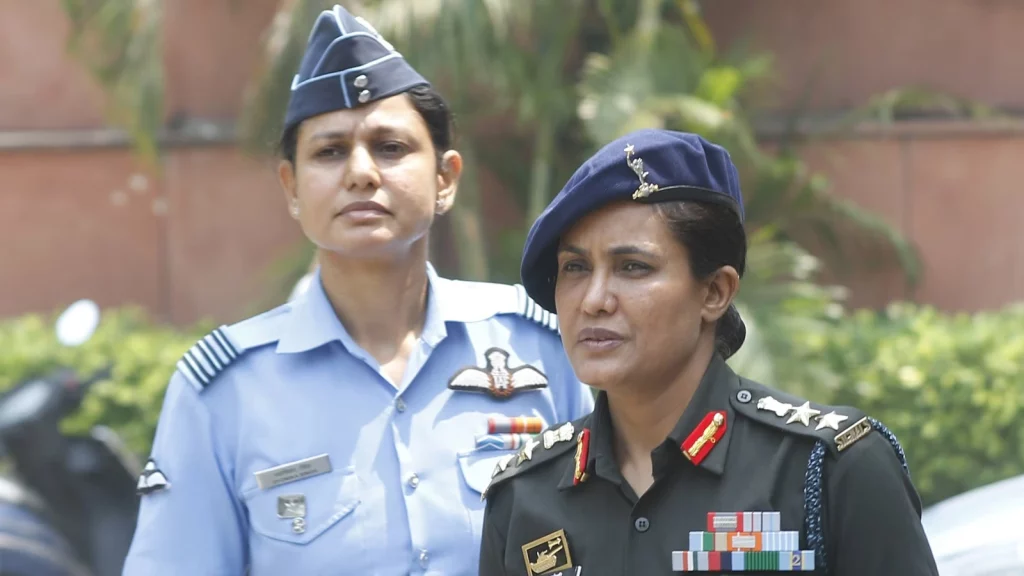
Wing Commander Vyomika Singh (left) and Colonel Sofiya Qureshi
The briefing itself became a moment of significance. Calm, assured, and authoritative, the two officers addressed global media without theatrics. Their presence conveyed resolve, professionalism, and an unmistakable message that India’s response would be firm, measured, and led by competence. While Colonel Qureshi brought decades of experience in the form of UN peacekeeping in Congo, leadership in multinational military exercises, Wing Commander Singh, a seasoned helicopter pilot with over 2,500 flying hours and a record of high-risk rescue missions, represented operational excellence at the sharpest edge. Together, they turned a military update into a visual of inclusion, command, and national confidence. Read More
Banu Mushtaq became the first Kannada writer to win International Booker Prize
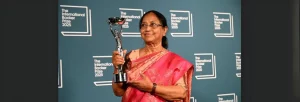
At 77, Banu Mushtaq became the first Kannada-language writer to win the International Booker Prize, proving that literary power does not depend on global languages, youth, or metropolitan approval. Her short story collection Heart Lamp, translated by Deepa Bhasthi, earned international acclaim for its intensity and moral clarity. As a lawyer, activist, and author, Mushtaq has spent decades chronicling the lives of women navigating faith, patriarchy, and personal agency, particularly within Muslim communities of southern India.
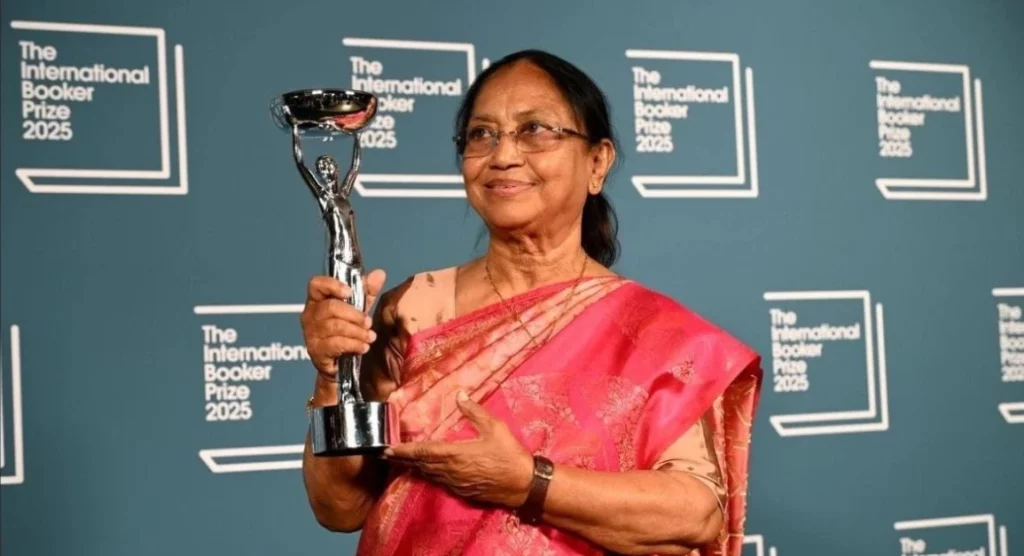
Banu Mushtaq
The Booker win in May 2025 triggered an outpouring of celebration across Karnataka, and whole of India. Villages and cities alike stayed awake through the night, following the announcement as if it were a shared victory while Mushtaq accepted the award not as an individual triumph but as a collective one, describing it as “a thousand fireflies lighting a single sky.” In an era dominated by speed and spectacle, her recognition made space for nuance, translation, and stories that travel far without losing where they come from. Read More
Safeena Husain’s Educate Girls won the Ramon Magsaysay Award
When Educate Girls became the first Indian non-profit to receive the Ramon Magsaysay Award, it was recognition not just of impact, but of a model that combines scale with community trust. Founded by Safeena Husain in 2007, the organisation focuses on one of India’s most persistent challenges of girls being left out of the education system in rural and marginalised regions.
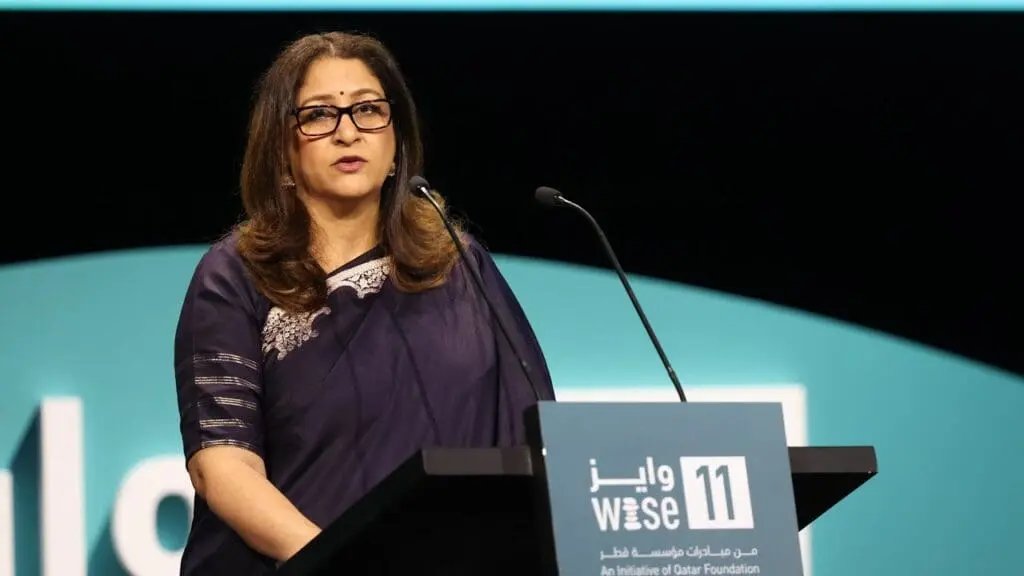
Safina Husain
A graduate of the London School of Economics, Husain returned to India after working in San Francisco, determined to address female illiteracy at the grassroots. Starting in Rajasthan, Educate Girls built partnerships with village communities, local governments, and volunteers. So far, the organisation has enrolled over 1.1 million out-of-school girls and impacted more than 15.5 million people. Its success lies in its insistence that data-driven solutions and cultural sensitivity are not opposites. By focusing on enrollment, retention, and learning outcomes, Educate Girls has shifted both mindsets and measurable results. The Magsaysay Award placed a global spotlight on a people-powered movement that began with one girl in one village and grew into a national framework for change. Read More
Pragya Misra became OpenAI’s first hire in India
In 2025, India’s growing influence in the AI ecosystem became impossible to ignore when Pragya Misra, became OpenAI’s first official hire in India and its public policy lead for the country. Misra’s appointment signalled OpenAI’s strategic intent to engage deeply with India’s government, civil society, and developer community. A former national-level golfer and seasoned policy professional, she brings an unusual blend of discipline, reflection, and strategic clarity to one of the world’s most consequential technology companies.
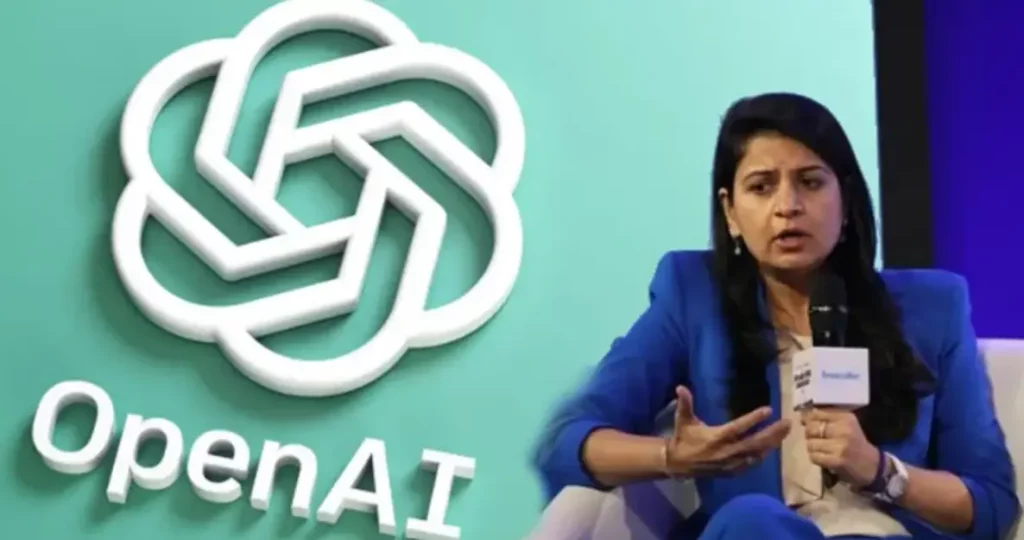
Pragya Mishra
Before OpenAI, Misra played a pivotal role at Truecaller and earlier became WhatsApp’s first employee in India, navigating misinformation crises, privacy debates, and landmark product launches. The symmetry of being the first India hire for both WhatsApp and OpenAI reflects how global tech firms view her as a trusted bridge-builder. Today, splitting her time between San Francisco and India, Misra is helping shape how AI governance, access, and ethics evolve in one of the world’s largest democracies. Read More
Across sport, literature, national security, social reform, and technology, these achievers worked from India, influenced outcomes beyond its borders, and helped set new benchmarks on the global stage.
ALSO READ: Gagandeep Kang: India’s Vaccine Godmother on a mission to heal and serve