
October 29 2025
TERNing Point: How Avinav Nigam is empowering Indian healthcare professionals to thrive abroad

(October 29, 2025) Years ago, Avinav Nigam’s former nanny, a trained ICU nurse, paid ₹40 lakhs to an agent for what she believed was her dream job in the UK. When she arrived, she discovered she had been deceived. It was a blow that shattered her hopes and left her devastated.
By then, Avinav had already worked in Japan and the UK, and experienced firsthand how lonely migration can feel when systems fail to support individuals abroad. Moved by his nanny’s plight, and shaken when a close friend died because she couldn’t find a hospital bed in the UK when cancer returned, he decided something had to change.
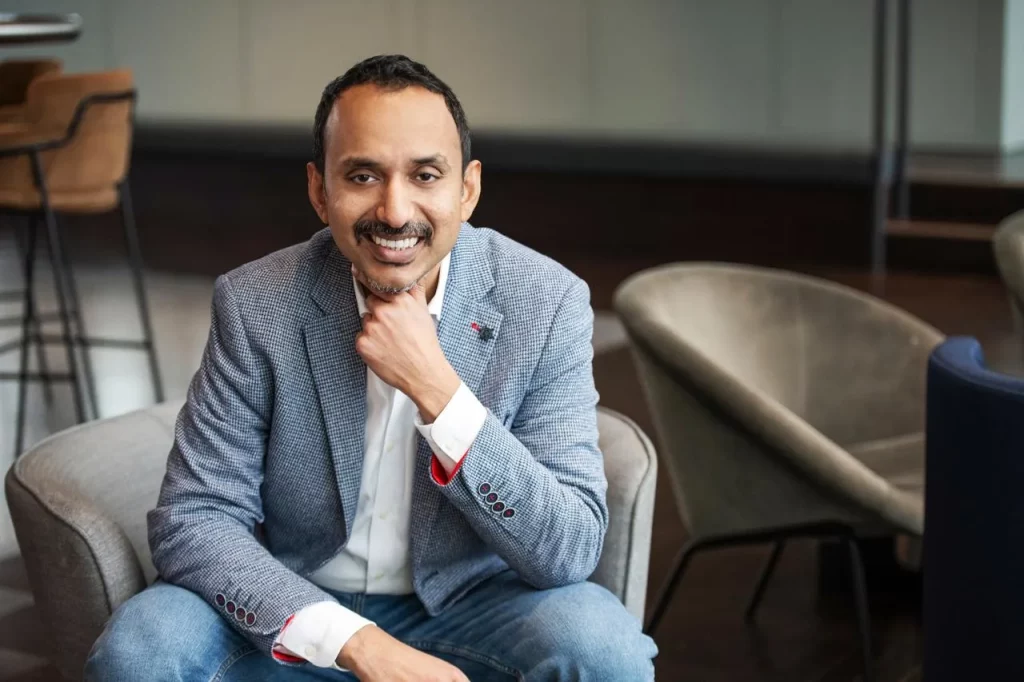
These experiences led to the birth of TERN, a comprehensive, transparent, and efficient platform designed to connect skilled talent with recruiters, addressing the challenges faced by both sides. “We’re building not just a platform, but a system that connects skills to purpose, and in doing so, perhaps making the world a little fairer for the people who build it,” says Avinav Nigam, Founder and CEO of TERN, in a chat with Global Indian. Today, TERN has trained thousands of nurses in India, In just two years, it has grown from an idea to operations in 13 countries, connecting more than 650,000 professionals with over 100 hospitals and care groups.
A global mindset, rooted in empathy
An IIT Bombay alumnus and veteran of leading tech firms like IMMO Capital, CARS24, and PayU, Avinav has lived and worked across Japan, the UK, Germany, and now the UAE. “Each move reinforced my belief that talent is universal, but opportunity is not,” he says.
His first job was in rural Japan, at a Procter & Gamble production facility, where he was the only non-Japanese employee among 300 workers. Though he didn’t speak the language or understand the culture, he learned to observe deeply, listen carefully, and respect process-driven precision.
“The idea for TERN Group didn’t come from a boardroom,” he says. “It came from life. While working across Asia and Europe, I saw both the power and pain of migration.” If global healthcare systems are short of people, and countries like India are full of talent, why couldn’t there be a bridge that’s faster, fairer, and more ethical? That question became his life’s mission.
Building bridges, not just platforms
Avinav founded TERN to revolutionize international recruitment through proprietary technology, culturally attuned teams, and a deep well of empathy. “Today, we’ve built an AI-powered workforce platform that helps healthcare professionals move across borders safely and transparently,” he says. “TERN is not just a company—it’s a mission to make opportunity borderless and migration ethical.”
The scale of impact
Backed by $33 million in funding from investors such as Notion Capital, RTP Global, Leo Capital, EQ2 Ventures, and Presight Capital, TERN now functions as an operating system for global healthcare talent. “This isn’t recruitment—it’s an infrastructure for the future of work, built for the dignity of the people who power it,” says Avinav. Named after the Arctic Tern, a bird known for its extraordinary migratory journey, the company now records over ₹200 crores in annual revenue, with a goal to cross ₹1,000 crores within two years from now. Avinav alsp plans to expand the company across the GCC, DACH countries, and Japan, while building advanced AI and training infrastructure to prepare tens of thousands of healthcare professionals every year.
View this post on Instagram
Shaped by movement
Born in Ajmer, Avinav didn’t grow up in one place. He migrated nine times as a child, living across different cities in India and later between India and the UK. “Each move meant a new language, a new school, and a new way of fitting in,” he recalls. “That constant movement taught me that mobility isn’t just about geography—it’s about adaptability.”His father worked with the Indian Railways, heading HR in one of the world’s largest employers. “So people, systems, and mobility were dinner-table conversations long before I knew they’d become my life’s work.”
Avinav describes his childhood as one of restless curiosity. “I didn’t have a single clear dream like most kids. I was curious about everything and certain about nothing. I’d spend hours taking things apart just to see how they worked.” That mix of curiosity and restlessness, he says, shaped him far more than he realised back then.
The IIT Bombay chapter
Studying engineering at IIT Bombay completely changed how he saw the world. “IIT Bombay was my launchpad. It taught me that intelligence alone doesn’t solve problems—persistence does.” He learned not just to solve problems but to dissect them—to think in systems, collaborate fast, and find clarity in chaos. “The energy there was infectious; everyone was building, experimenting, failing fast, and trying again.”
It was also where he met his TERN co-founder, Krishna Ramkumar. As the head of Techfest, then Asia’s largest student technology festival, while Avinav led initiatives that brought technology to uplift rural India. “We focused on bridging grassroots realities with innovation,” he says. Beyond academics, he valued the extracurricular life that helped him grow. “Winning the dramatics competition in my first year helped me come out of my shell and be more expressive,” he recalls.
Reframing the global talent crisis
Avinav believes there’s a misconception that the world has a people problem. “It doesn’t,” he insists. “It has a planning problem.” “We’re heading toward a shortfall of 85 million skilled workers by 2030, while countries like India continue to produce millions of graduates each year.”
The issue, he says, lies in outdated systems. “India’s migration, training, and credentialing processes haven’t kept up. We need technology and policy to work together. AI can help predict shortages, match skills to demand, and make migration safer—but it must be built with ethics at the core.”
Mission to make India the skill capital
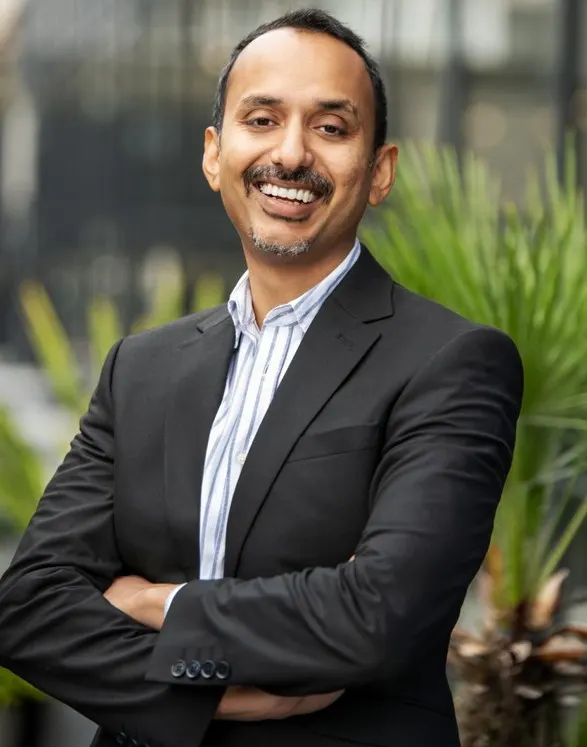
Avinav’s mission at TERN is to make India the skill capital of the world while strengthening global healthcare systems. “We’re building the infrastructure layer for global workforce mobility—AI that predicts where talent is needed, training that prepares people for those roles, and systems that move them safely and fairly.” The vision, he adds, “is not just to move people but to repair broken systems, making global work equitable and accessible.”
Balancing work and life
Avinav’s mornings start with his children—playing, getting them ready for school, and fitting in a workout before work begins at 8:30 a.m. “I travel most weeks, but when I’m not, I enjoy going down to our offices in Dubai or London, hanging out with the team, or meeting clients,” he says. His days are spent on product discussions, strategy, operations, and partnerships. “I start my mornings with strategy and end most days reflecting—or swimming.”
A lifelong learner
Avinav reads obsessively, especially on technology, geopolitics, and behavioral economics. “When I can, I love playing silly games with my kids, golfing, swimming, or exploring new cities on foot,” he says. For him, travel is “a way to listen—to cultures, to people, to perspectives that challenge your own.”
- Follow Abhinav Nigam on LinkedIn
ALSO READ: Dr. Kavitha Das: Driving health access and longevity in the United States

Share with



Written By: Vikram Sharma
Dr Know: Dr Harshit Jain’s Doceree is revolutionising healthcare advertising through AI, tech


Written By: Amrita Priya